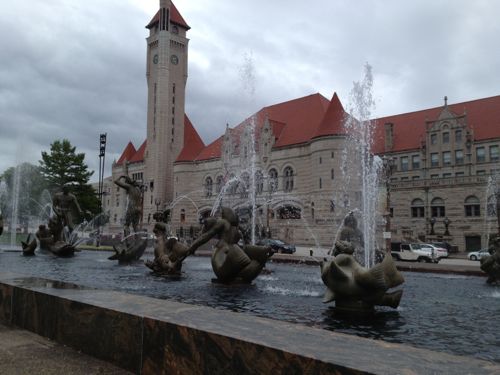
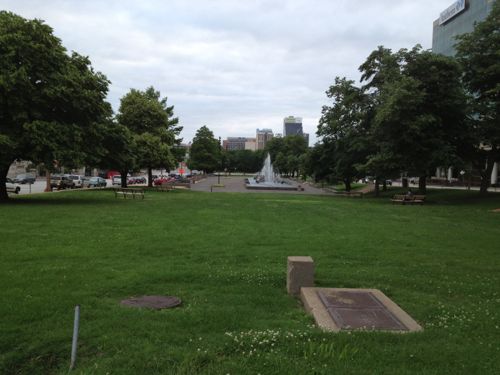
Returning to our loft from a visit to Union Station last week, my boyfriend and I decided to check out the Meeting of the Waters fountain by Carl Milles in Aloe Plaza.
The beauty of Carl Milles’ work with Union Station in the background
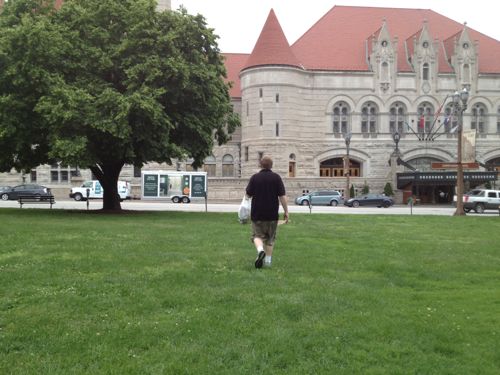
Timidly DFS asked me if I minded if he picked up some trash while we were there. Mind? Of course not! Knock yourself out…
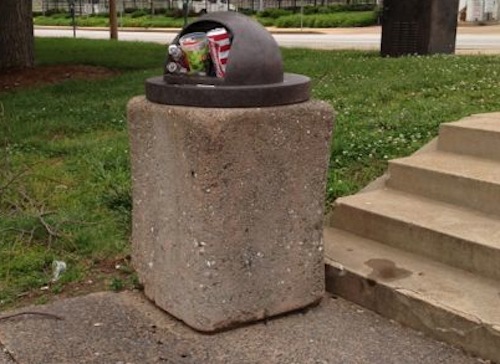
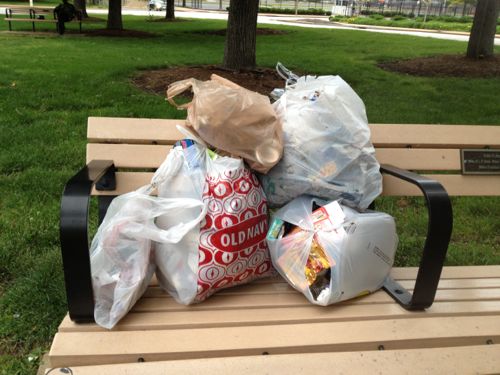
For the next 90 minutes we covered the two blocks of Aloe Plaza until it was cleanWe quickly realized many of the trash cans were already overflowing with trashDFS collected quite a bit of trash, thankfully we found a nearby trash can that had room
A few times since he’s gone back to Aloe Plaza, and parts of the Gateway Mall to the east, to pick up more trash. He’s been looking for the right volunteer opportunity and helping clean the Gateway Mall seems to be a perfect fit.
Aloe Plaza isn’t always this clean, but it looked nice when we left
Picking up trash allows him to volunteer on his schedule and doesn’t require coordination with others. DFS hasn’t even lived in St. Louis for four months but already he’s making a small impact. DFS is the perfect boyfriend for me!
The issue of form & style is a hard one to address, but this is exactly where I think St. Louis has failed over the years. The form of buildings, how they relate to the street/sidewalk, has been totally ignored.
Here’s how it often plays out in St. Louis: One story building set back surrounded by parking on a block with 2-4 story buildings built up to the property line. No problem, just be sure to wrap it in red brick with some stone elements so it fits in. Frustrating!
The other view taken in some neighborhoods is the new infill building, in the above scenario, should be detailed from the period of the neighbors on either side so the untrained eye wouldn’t know it was built 100 years later. Also frustrating, they wouldn’t have done this 75 years ago…or 64 years ago.
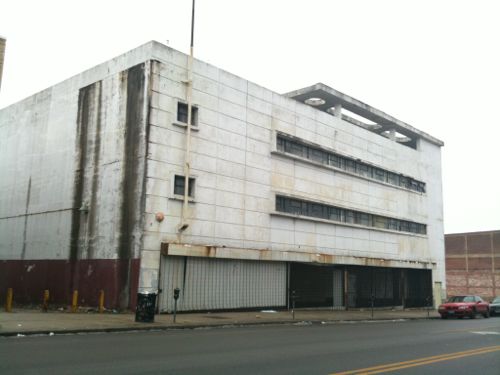
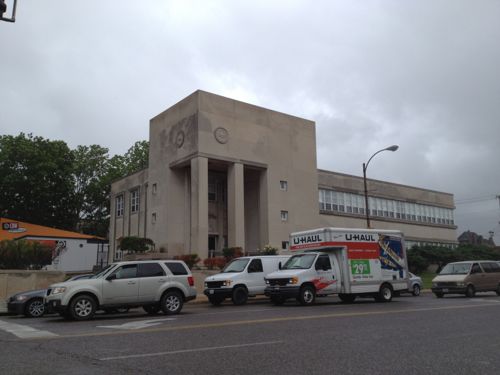
This former JC Penny store was built in 1949 on MLK in the Wellston Loop in the modern style with an urban form, rather than style of its red brick neighbors that are 20-40 years older.
If the Wellston Loop in 1949 had a design code based on the one used by many St. Louis neighborhoods this structure, which I love, wouldn’t have been permitted. That is the problem I have with how we tend to define “fits in.” Granted, this would be shocking to see on Park Ave in the commercial area east of Lafayette Park. Was it shocking to Wellston Loop shoppers in 1949? Very likely, but freezing an area in whatever period can be the opposite — boring or even offensive.
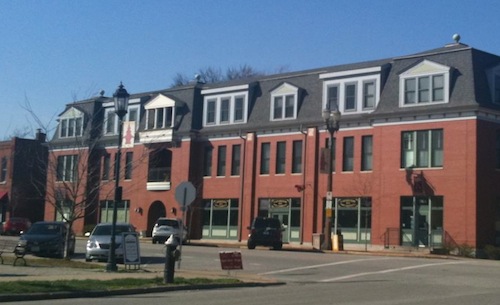
This 2005 building at 1801 Park Ave has an urban form but a poorly executed attempt at blending in.
I don’t have the answers, I just think we need to give more attention to form and less to particulars of style.
Here are the results from the poll last week:
Q: New construction should…
…have an urban form in whatever style the owner desires 34 [41.98%]
…replicate period of surrounding buildings in some historic districts 24 [29.63%]
…look like older buildings, so a lay person might think it is an old building 7 [8.64%]
…NOT be a replica of an older style 7 [8.64%]
Other: 6 [7.41%]
…have any form (urban/suburban) in any style the owner desires 3 [3.7%]
Unsure/no opinion 0 [0%]
And the six “other” answers provided by readers:
New construction should entice people/business to want to be in and/or around itAdd as a poll answer
This guestion isnt a very good one for a poll steve-o
Needs to be complementary to existing architecture.
modern and fit/funtion well on its site
The owner should decide what his new building will look like. MONEY TALKS!
not as simple as the other choices – more dtls req’d
As I’ve done for the last month, this is another post on potential development sites along the proposed initial route of the St. Louis Streetcar. The sections already reviewed are as follows:
This post will cover the section from Olive & Compton to Lindell & Vandeventer (map). For those unfamiliar with the area, Olive splits off to the north but to motorists Olive becomes Lindell (pronounced Lindle). The entire south side of this stretch of Olive/Lindell is the campus of Saint Louis University (SLU). The north is a mix of SLU, private, and institutional properties.
We’ll start at Compton and head west.
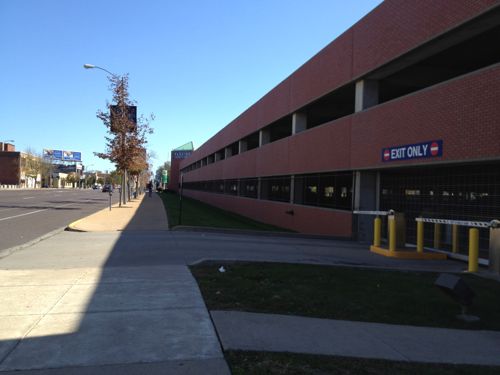
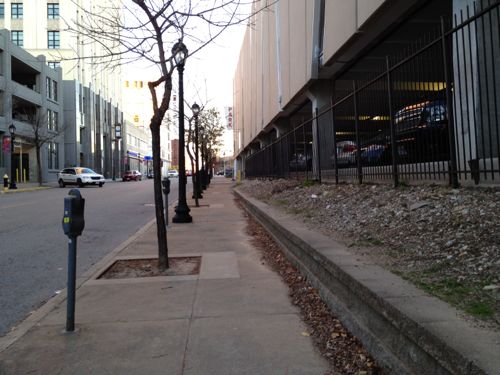
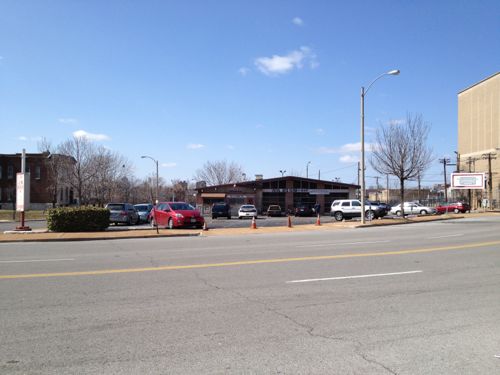
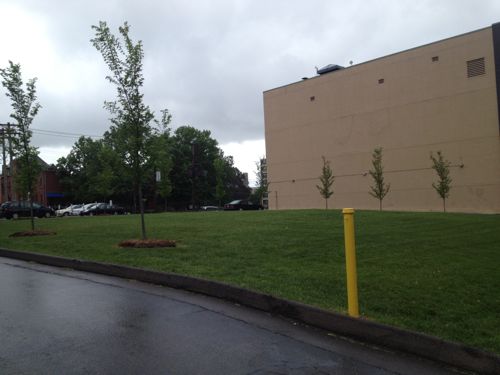
Massive SLU parking garage could be fronted with a shallow “liner building” to create a relationship with the sidewalk.
The buildings & land on the other side of Lindell from SLU’s Compton Garage are ripe for development, I’m just lacking images of them.
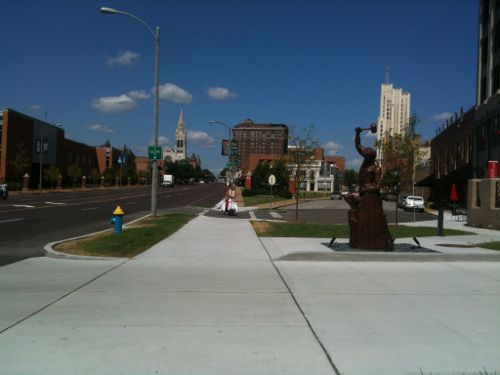
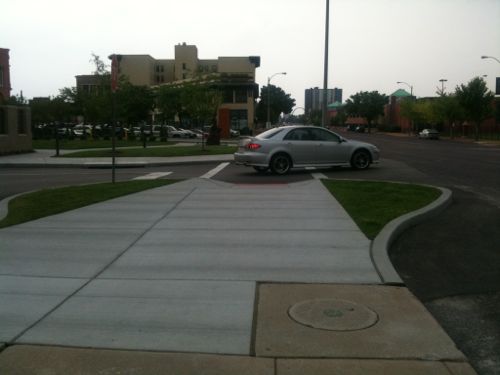
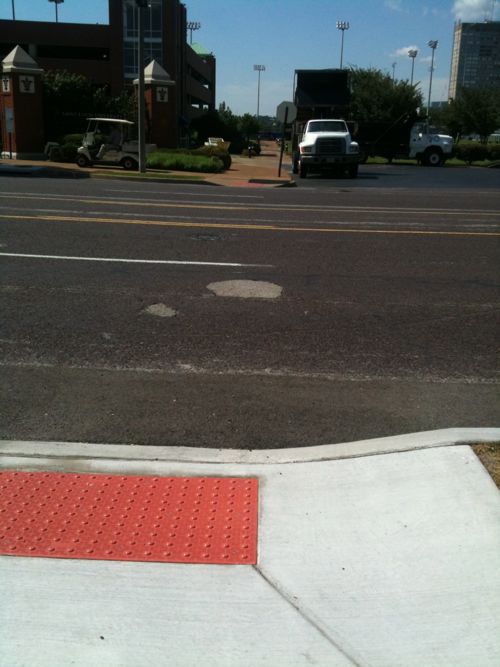
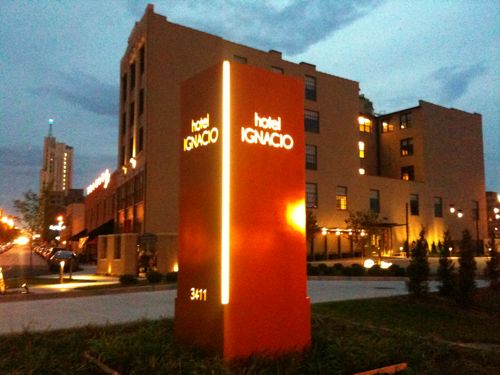
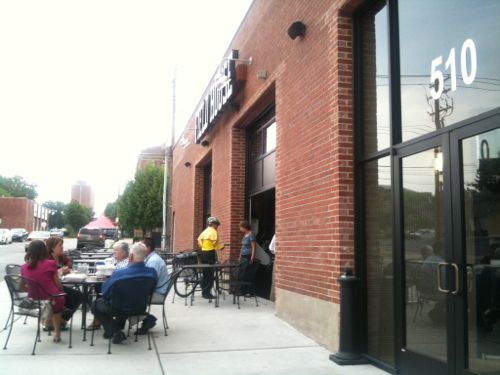
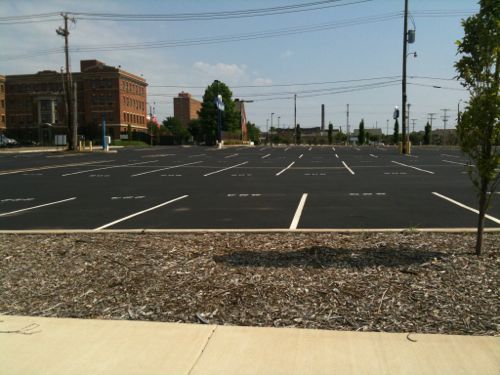
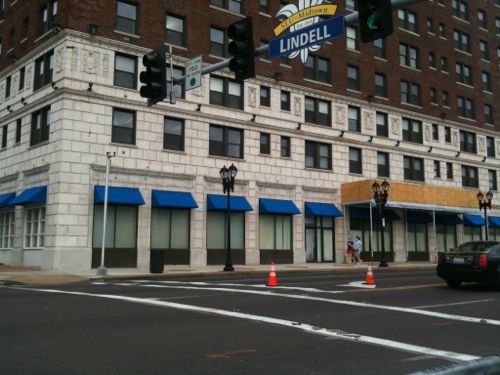
The intersection where Olive splits off to the right was redone a few years ago.gLooking the opposite directionIt shouldn’t take a streetcar to make it safeHotel Ignacio is just part of the development activity that has taken place here.The Field House Pub & Grill at 510 N. Theresa is an example of positive things already underway in MidtownThe streetcar can help the existing momentum and reduce the need for the excessive amount of surface parking.SLU could reskin this former state office building at 3545 Lindell, adding storefronts and new floors.The SLU campus east of Grand has a prison feel, fences everywhere. SLU could remove the fencing to connect to the street, like the campus west of Grand.With a new building on the right, street trees along Grand would make this a pleasant route to take to reach the streetcarIdeally SLU will build a new building on the SE corner of Lindell @ GrandAs well as the NE corner. I’d love to see a Trader Joe’s on the ground floor, with apartments above.
The corner of Lindell & Grand should get major new buildings. There are already substantial buildings in the area, especially to the north & west. These two corners were land banked by SLU so the streetcar is the perfect time to withdraw them and put them to good use activating the intersection.
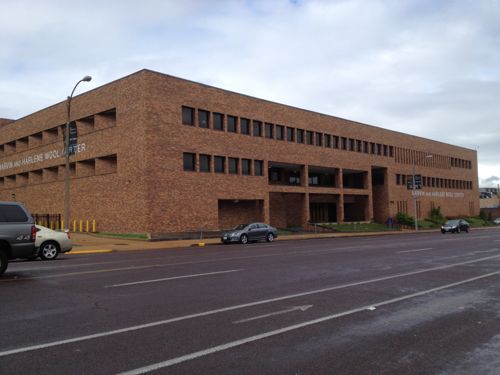
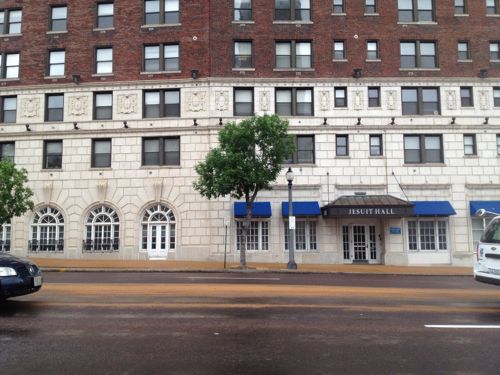
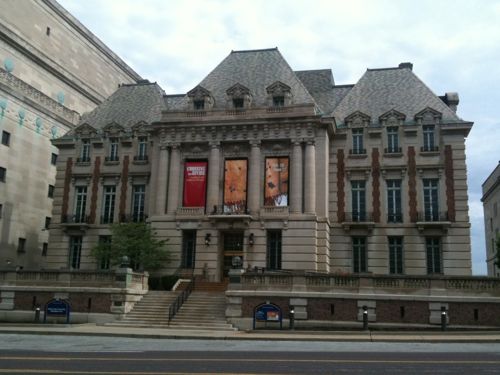
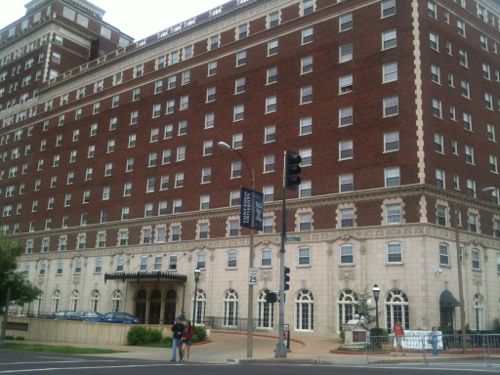
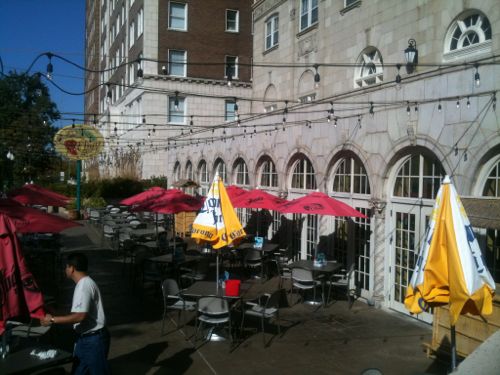
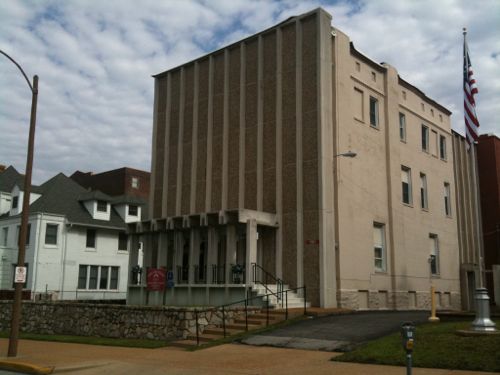
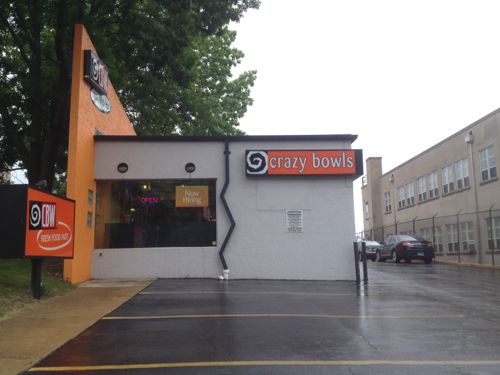
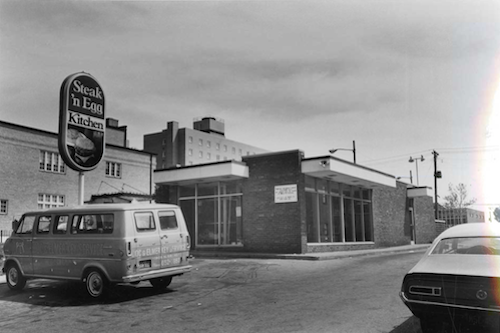
I’d love to see the ground floor of Jesuit Hall activated with a cafe or bakeryThe Lindell facade of Jesuit Hall also has opportunities for activity.The Masonic garage on Olive is awful, I can’t see this staying long-termThis section of Lindell has some stunning buildings, this is SLU’s museumThe few gaps can be filled in with massive structures, student housing over retail would be nice at Lindell & SpringMaybe we can widen the sidewalks along SpringEventually the owner of the auto repair shop at 3699 Olive @ Spring will retire and sell.The Coronado was vacant for years until the Gill’s renovated.Hopefully someone will find the right formula for the lower level space, several places have failedA few years ago SLU razed two buildings here to make room for expansion of the law school. With the law school opening downtown this land plus the old law school are availableThe various modifications to the 1914 structure at 3765 Lindell has made it rather odd looking.The Crazy Bows & Wraps location might be developed. This 1961 structure was extensively remodeled in the 90s.In 1978 it was mentioned in the Midtown Historic District nomination as a “unfortunate intrusion which should not have been allowed”, click image to view district nomination.This building, originally built for the Brotherhood of Railway & Airline Clerks, contributes to the 1978 midtown historic district. This building should be saved as it contributes to both Lindell & Vandeventer.
An interesting paragraph from the 1978 midtown nomination:
Unfortunately, Midtown is still perceived by many as a dangerous area riddled with street crime and all manner of urban ills, the most prominent of which is the current “black sploitation” fare served at the Fabulous Fox. In spite of this onus, a 1977 walking tour sponsored by the St. Louis Chapter of the American Institute of Architects and New Town/St. Louis, Inc. drew hundreds of curious and concerned
St. Louisans to Midtown. The solution for the revitalization of existing structures and the continuing education of the general public will not be easy, but to abandon Midtown is to dismiss one of the strongest concentrations of architecturally significant buildings in St. Louis.
There is more developable area north of Lindell and west of Spring, both vacant buildings and vacant land.
Tenant management of public housing projects was a new thing forty years ago:
In 1971, brought together by frustration with poor management and maintenance, the residents of the Bromley-Heath public housing development In Boston formally Incorporated the nation’s first resident management corporation That same year, St. Louis’ public housing residents waged a rent strike against their housing authority to protest poor maintenance and rising rents In the wake of the strike settlement, the authority eventually delegated control over a number of management functions to newly-formed resident organizations at several Sites, Including Carr Square and Cochran Gardens. These events marked the beginning of the resident management movement, which today is viewed by resident advocates and policy makers as a potential solution to many of the problems facing America’s public housing stock and the people who live In it. (HUD – Evaluation of Resident Management in Public Housing – 1992)
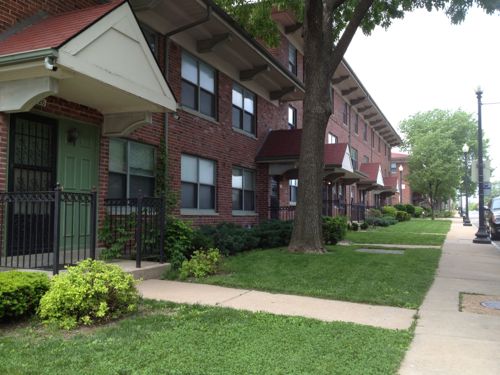
Carr Square, built by the St. Louis Housing Authority in the 1950s, has been updated over the years
The St. Louis Rent Strike actually took place in 1969, it took a few years to get to tenant management. The Carr Square Tenant Corporation was incorporated as a non-profit on September 27, 1972, before Cochran Gardens. Initially tenant management corporations had limited roles but over the years this has expanded greatly, especially at Carr Square. Rodney Hubbard Sr. is the Executive Director of the Carr Square Tenant Corporation.
Cochran Gardens leader Bertha Gilkey became a high-profile face of tenant management with a May 3 1991 visit by President George H.W. Bush to Cochran Gardens (read speech) and was honored by Oprah Winfrey in 1992. In 1998 the Post-Dispatch discovered Gilkey had charged thousands of dollars on Cochran credit cards for personal use. The Housing Authority demanded the return of the credit cards and questioned expenses at Carr Square:
The new leaders of the St. Louis Housing Authority are questioning hundreds of thousands of dollars of expenditures at the Carr Square housing complex.
The biggest expense in question: a contract for at least $ 616,000 for telephone work at the development.
Meanwhile, Thomas P. Costello, interim executive director of the Housing Authority, said he also wants top officials of another public-housing development, Cochran Gardens, to return their credit cards. That demand followed publication Sunday of a Post-Dispatch investigation that showed that Cochran board chairwoman Bertha Gilkey made thousands of dollars of purchases for herself and her consulting firm on her Cochran- issued credit card. (St. Louis Post-Disptach 1/14/1998)
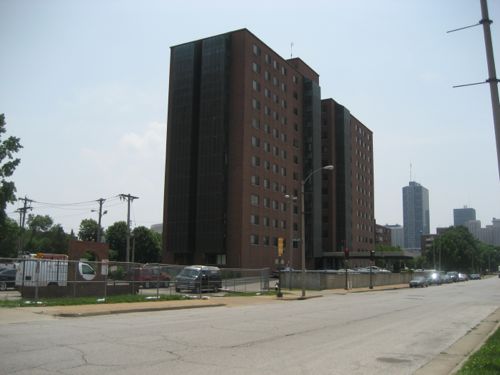
The Last high-rise tower at Cochran Gardens was razed in 2011
What’s this about deficit spending? Take a look:
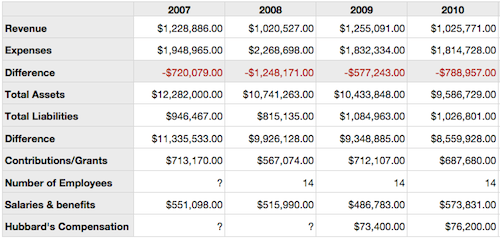
Summary of selected figures from 990s.
I obtained the 990s (non-profit tax return) for 2008-2010, the 2008 return also includes figures for the prior year, 2007. I’ve uploaded these to Scribd for review:
In the four years covered above they had revenue of $4,530,275 and expenses of $7,864,725, for a cumulative deficit of -$3,334,450. I’m not an accountant, but I know you want revenue to be higher than expenses. Much of their revenue is from HUD and other government agencies. I don’t understand how this continues.
The St. Louis Comptroller’s Office has reviewed compliance for an annual daycare contract of less than $40,000. In December 2001, May 2009, and November 201o the results were the same: “Conclusion: The Agency did not fully comply with federal, state, and local CDA requirements.”
Last week we learned Ald. Freeman Bosley Sr. (D-03) sent a letter asking help covering $14,276 of a $38,890 bill to the private Xavier College in Chicago.
So the longtime city politician sent an unusual letter to friends and supporters, asking them to provide $14,274 he says is the outstanding balance of his daughter’s upcoming bill at St. Xavier University in Chicago.
“Although the help from scholarships and grants has paid for nearly twenty-five thousand dollars, the remaining balance is still a challenge,” Bosley wrote in the undated letter obtained this week by the Post-Dispatch. (stltoday)
You can view the letter here. Freeman Bosley Sr. is 78, his son, former mayor Freeman Bosley Jr. will turn 59 next month. Just how old is this daughter? Forty-five?
Bosley tells us that his daughter, Kenya Young-Bosley, who is turning eighteen next month, will attend St. Xavier University in Chicago this fall and eventually wants to go to law school. He says that she has maintained a 4.0 GPA and is in the top 2 percent of her class. (Riverfront Times)
Many bright young people attend public colleges, but Bosley seems to have a different view:
But it is a comment made to News Channel Five that continues to ruffle feathers. Bosley,Sr said, “Why would I want to send a child that can do that (get 97%) over four years over to a public university when her intent is to become a lawyer?
“It doesn’t make sense to send her out to Forest Park, now would it.” (KSDK)
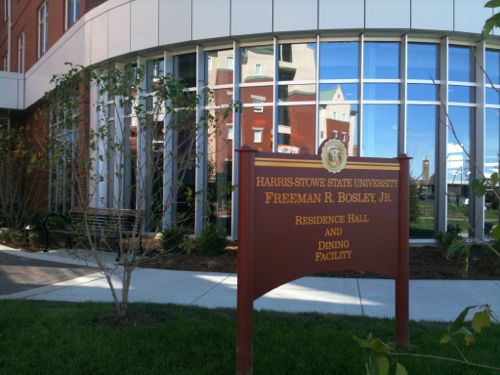
Bosley Jr. residence & dining hall at Harris Stowe was dedicated in 2011, click image for article from the St. Louis American
Bosley Jr. attended Saint Louis University, a private school, for undergraduate & law school. As mayor he helped Harris Stowe take over part of the land that was once LaClede Town, part of the urban renewal project that razed the area known as Mill Creek Valley.
Back to Bosly Sr.; apparently officials from the Missouri Ethics Commission say he didn’t violate any laws. Not surprising, Jefferson City isn’t keen on regulation of industry or politicians.
When questioned by numerous news outlets, Ald. Bosley indicated he would return any checks if he receives any.
Which brings me to the poll question for this week: Ald Bosley sent a letter to supporters asking for help paying the remaining $14,276 private college tuition for his daughter he couldn’t cover. Reaction?
Has the media blown this out of scale? Is this a major violation of public trust? Vote in the poll in the right sidebar then add your comments below.
AARP Livibility Index
The Livability Index scores neighborhoods and communities across the U.S. for the services and amenities that impact your life the most
Built St. Louis
historic architecture of St. Louis, Missouri – mourning the losses, celebrating the survivors.
Geo St. Louis
a guide to geospatial data about the City of St. Louis