Readers: No Revote on Reducing Board of Aldermen

November 30, 2016 Board of Aldermen, Featured Comments Off on Readers: No Revote on Reducing Board of Aldermen

Writing this post on my iPad Monday morning while from the juror lounge at Civil Courts

HHHHHHHHHHHHHHHHHHHHHHHHHHHHHHHH

The recent Sunday Poll was about the size of our legislative body. Four years ago we voted to cut the size in half — from 28 to 14. The change is still more than four years away, but some want voters to reconsider

There are lots of pros & cons either way. Here are the non-scientific poll results:

Q: Agree or disagree: We should vote again on reducing board of aldermen from 28 to 14, voters approved this in 11/2012

  • Strongly agree 13 [24.53%]
  • Agree 1 [1.89%]
  • Somewhat agree 2 [3.77%]
  • Neither agree or disagree 2 [3.77%]
  • Somewhat disagree 1 [1.89%]
  • Disagree 6 [11.32%]
  • Strongly disagree 26 [49.06%]
  • Unsure/No Answer 2 [3.77%]

As you can see above, more than half don’t think we should vote again. While I agree, I also acknowledge we need to do a significantly better job addressing perceived & real voter disenfranchisement.

I don’t think reducing to 14 is a magic bullet, no more than staying at 28.

— Steve Patterson


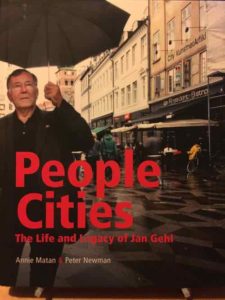
Reading: People Cities: The Life and Legacy of Jan Gehl by Annie Matan & Peter Newman

November 28, 2016 Books, Featured Comments Off on Reading: People Cities: The Life and Legacy of Jan Gehl by Annie Matan & Peter Newman

One of my favorite memories is attending the 2006 Rail-Volution conference in Chicago, the closing plenary session in particular:

Participate in this lively presentation and discussion about the strong commitment to pedestrian accessibility in European cities — a critical hallmark of those cities’ livability and sense of community — and how some of those attitudes can “jump the pond” and be adapted in U.S. cities. Learn from one of the world’s premier pedestrian experts and hear how Europeans’ attitudes toward pedestrians have evolved during the past 50 years. Hear his views on what U.S. cities need to do to increase their pedestrian potential. Also hear from the current CNU president, who has been described as a “fiscally-conservative socialist” and who is nationally recognized for his commitment to light rail and innovative, effective urban design. Learn about his views on the applicability of European pedestrian approaches in the U.S. — what could work, what challenges lie ahead, and what some U.S. cities have already done.

The two speakers were former Milwaukee  mayor and then-Congress for the New Urbanism president & CEO John Norquist and Danish architect Jan Gehl. They debated if Gehl’s ideas were universal or limited to his European home turf. Seeing them debate pedestrian issues a decade ago was fascinating to me. At the time I’d just started grad school, later my unfinished capstone project was on pedestrian malls in North America.

Though I disagree with Gehl about the universal application of pedestrian streets, I have huge respect for his lifetime of work and his deep understanding of the European pedestrian. This is what makes him so important — he studied pedestrians in Copenhagen and the obstacles they faced. By the early 1960s cars had severely degraded the public realm there, but over many decades he pushed, studied, and pushed for more change.

Apeoplecities-gehluthors Annie Matan & Peter Newman in People Cities: The Life and Legacy of Jan Gehl look at his work and influence. It’s an inspiring celebration of a man who refused to give up on pedestrians and their role in healthy cities.

From the publisher:

“A good city is like a good party—you stay for longer than you plan,” says Danish architect Jan Gehl. He believes that good architecture is not about form, but about the interaction between form and life. Over the last 50 years, Gehl has changed the way that we think about architecture and city planning—moving from the Modernist separation of uses to a human-scale approach inviting people to use their cities.

At a time when growing numbers are populating cities, planning urban spaces to be humane, safe, and open to all is ever-more critical. With the help of Jan Gehl, we can all become advocates for human-scale design. Jan’s research, theories, and strategies have been helping cities to reclaim their public space and recover from the great post-WWII car invasion. His work has influenced public space improvements in over 50 global cities, including New York, London, Moscow, Copenhagen, Melbourne, Sydney, and the authors’ hometown of Perth.

While much has been written by Jan Gehl about his approach, and by others about his influence, this book tells the inside story of how he learned to study urban spaces and implement his people-centered approach.

People Cities discusses the work, theory, life, and influence of Jan Gehl from the perspective of those who have worked with him across the globe. Authors Matan and Newman celebrate Jan’s role in changing the urban planning paradigm from an abstract, ideological modernism to a people-focused movement. It is organized around the creation of that movement, using key periods in Jan’s working life as a structure.

People Cities will inspire anyone who wants to create vibrant, human-scale cities and understand the ideas and work of an architect who has most influenced how we should and can design cities for people.

The last sentence says it all, though his solutions for other cities might not work here, we can be inspired to find ways to make our cities work for us.

Available through Left Bank Books, publisher, Amazon, and others.

Here’s an hour-long presentation by Jan Gehl, note a few words are not safe for work:

In St. Louis we need to change the culture.

— Steve Patterson


Sunday Poll: Should We Reconsider Reducing The Board of Aldermen?

November 27, 2016 Board of Aldermen, Featured, Sunday Poll Comments Off on Sunday Poll: Should We Reconsider Reducing The Board of Aldermen?
Please vote below
Please vote below

In November 2012 more than 130,000 city residents voted on Proposition R — the measure to reducer the size of the Board of Aldermen.

Turnout for that election was 74%, but nearly 14,000 voters skipped Prop R. Turnout for the proposition was 66.9%. The following explains 2012’s Prop R:

The 14 wards called for by Proposition R would be drawn after the 2020 census. The first election in the new wards would take place in 2023. Odd-numbered wards would start with two-year terms, while the Board president and even-numbered wards would run for a full four-year term from the beginning. (St. Louis Public Radio)

Over eighty-thousand (61.5%) approved the proposition. Though it is still years away, some are wanting voters to reconsider the decision. Perhaps holding a new vote in four years.

This is the basis for the today’s poll:

The poll is open until 8pm.

— Steve Patterson


Opinion: Service Workers Rarely Get Holidays Off

November 23, 2016 Featured, Retail Comments Off on Opinion: Service Workers Rarely Get Holidays Off
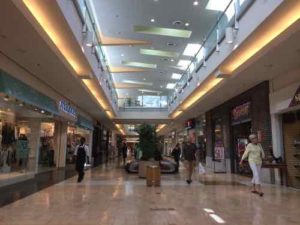
South County Center is one of four area malls that will be closed Thanksgiving Day, August 2015 photo

This afternoon we’re driving up to Springfield IL for Thanksgiving with my husband’s family tonight, his uncle has to work tomorrow. Like many service workers, my husband is off this afternoon & tomorrow only because he requested unpaid time off.

Though only a 90-minute drive, we stay overnight in a hotel to avoid a late night drive back to St. Louis. Tomorrow we’ll drive home, grab a casserole dish from our fridge, and head to my 20+ year tradition of a vegetarian Thanksgiving with long-time friends. Though we won’t stop at any malls or traditional retail stores like Target, we will encounter people working on Thanksgiving Day. .

The first people we’ll encounter working on Thanksgiving will be hotel staff — preparing breakfast and working the front desk. We won’t see them, but after we check out, a cleaning crew will get our room ready for the next guests. We may get gas before we leave Springfield — even with pay-at-the-pump someone is working inside. I’ll set the cruise control at the speed limit because the highway patrol will be working. Hospital, fire & EMS crews will also be working, as always.

If we’ve forgotten anything we might stop at a convenience or drug store, where more people will be working. Many of them will reach their jobs via public transit — bus drivers & train operators don’t get holidays off. The airport isn’t closed either.

My point is many people have to work on holidays, cities just don’t shut down completely. This is related to one of the few areas where I strongly disagree with Sen. Bernie Sanders’ push for a federal election holiday.

Big businesses like banks and the white collar jobs at pharmaceutical companies shut down, and all the employees get a day off with pay. Schools and universities shut down, giving teachers and professors time to vote.

But you know what doesn’t shut down for federal holidays? Retail. Restaurants. Hospitals. Smaller businesses that can’t afford to lose a day of revenue, and if they do, they certainly can’t afford to pay people for the time off. (Inc)

Interestingly, in the Sunday Poll nobody voted that retail stores should be open.

Q: Agree or disagree: Brick & mortar retail stores, shopping centers, malls, etc. should be closed on Thanksgiving DayStrongly agree 25 65.79% 65.79%

  • Agree 4 [10.53%]
  • Somewhat agree 2 [5.26%]
  • Neither agree or disagree 5 [13.16%]
  • Somewhat disagree 0 [0%]
  • Disagree 0 [0%]
  • Strongly disagree 0 [0%]
  • Unsure/No Answer 2 [5.26%]

Hopefully everyone who encounters anyone working tomorrow will think about how their day would be impacted if they weren’t working. Don’t get me wrong, I’m not saying retail stores should be open on Thanksgiving.  I’m saying service workers are an under-appreciated part of society.

A friend who works retail will be off tomorrow, his employer will be closed. Unfortunately, he can’t go visit the person he’d like to because he only has the one day off.

— Steve Patterson


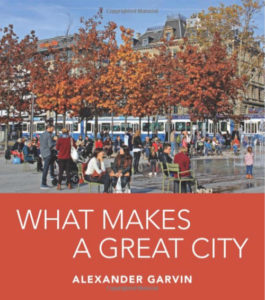
Reading: What Makes A Great City by Alexander Garvin

November 21, 2016 Books, Featured Comments Off on Reading: What Makes A Great City by Alexander Garvin

whatmakesagrearcity-coverWhen I saw the author’s name it looked familiar to me, but I searched the last 12 years of blog posts — no mention. Ah, the answer is in his bio:

Alex Garvin is currently an adjunct professor at the Yale School of Architecture and President and CEO of AGA Public Realm Strategists, Inc., a planning and design firm in New York City that is responsible for the initial master plans for the Atlanta BeltLine as well as other significant public-realm projects throughout the United States. Between 1996 and 2005 he was managing director for planning at NYC2012, the committee to bring the Summer Olympics to New York in 2012. During 2002–2003, he was Vice President for Planning, Design and Development of the Lower Manhattan Development Corporation. Over the last 46 years, he has held prominent positions in five New York City administrations, including Deputy Commissioner of Housing and City Planning Commissioner. He is the author of numerous books including The American City: What Works and What Doesn’t, now in its third edition. 

I’ve often referred to my first edition (1996) copy of his book The American City: What Works and What Doesn’t when researching a topic.

From the publisher:

What makes a great city? Not a good city or a functional city but a great city. A city that people admire, learn from, and replicate. City planner and architect Alexander Garvin set out to answer this question by observing cities, largely in North America and Europe, with special attention to Paris, London, New York, and Vienna.

For Garvin, greatness is not just about the most beautiful, convenient, or well-managed city; it isn’t even about any “city.” It is about what people who shape cities can do to make a city great. A great city is not an exquisite, completed artifact. It is a dynamic, constantly changing place that residents and their leaders can reshape to satisfy their demands. While this book does discuss the history, demographic composition, politics, economy, topography, history, layout, architecture, and planning of great cities, it is not about these aspects alone. Most importantly, it is about the interplay between people and public realm, and how they have interacted throughout history to create great cities.

To open the book, Garvin explains that a great public realm attracts and retains the people who make a city great. He describes exactly what the term public realm means, its most important characteristics, as well as providing examples of when and how these characteristics work, or don’t. An entire chapter is devoted to a discussion of how particular components of the public realm (squares in London, parks in Minneapolis, and streets in Madrid) shape people’s daily lives. He concludes with a look at how twenty-first century initiatives in Paris, Houston, Atlanta, Brooklyn, and Toronto are making an already fine public realm even better—initiatives that demonstrate what other cities can do to improve.

What Makes a Great City will help readers understand that any city can be changed for the better and inspire entrepreneurs, public officials, and city residents to do it themselves.

Publisher summaries always sound good, the place to start is the table of contents — does it cover the right subjects:

Preface: What Makes a Great City

Chapter 1: The Importance of the Public Realm

  • Defining the Public Realm
  • Streets, Squares, and Parks
  • Beyond Streets, Squares, and Parks
  • Making Cities Great

Chapter 2: The Characteristics of the Public Realm

  • Open to Anybody
  • Something for Everybody
  • Attracting and Retaining Market Demand
  • Providing a Framework for Successful Urbanization
  • Sustaining a Habitable Environment
  • Nurturing and Supporting a Civil Society

Chapter 3: Open to Anybody

  • Overwhelmingly Identifiable, Accessible, and Easy to Use
    • Plaza Mayor, Salamanca, Spain
  • Creating an Identifiable, Accessible, and Easy-to-Use Public Realm
    • The Paris Metro
    • Federal Center, Chicago
    • Piazza del Campo, Siena, Italy
    • The Squares of Savannah
    • Sixteenth Street, Denver
  • Keeping the Public Realm Safe
    • Gran Via, Barcelona
    • Piet Heinkade, Amsterdam
    • The Streets of Paris
    • Feeling Comfortable
    • Jardin du Palais Royale, Paris
    • Commonwealth Avenue, Boston
    • Kungstradgarten, Stockholm
    • Via dei Condotti, Rome
    • Via Aquilante, Gubbio, Italy
    • Worth Avenue, Palm Beach
    • Levittown, Long Island
  • Forever Welcoming

Chapter 4: Something for Everybody

  • A Reason to Return Again and Again
    • Boulevard des Italiens, Paris
    • Jardin du Luxembourg, Paris
    • Washington Park, Chicago
  • Having Fun
    • Playgrounds
    • Piazza Navona, Rome
  • Animating a Multifunctional Public Realm
    • Market Square and PPG Place, Pittsburgh
  • A Place for Everything and Everything in Its Place
    • Central Park, New York City
    • Passeig de Gracia, Barcelona
  • Reclaiming Bits of the Public Realm for Public Use
  • Plenty of People

Chapter 5: Attracting and Retaining Market Demand

  • Using the Public Realm to Trigger Private Development
    • Place des Vosges, Paris
    • The Revival of the Place des Vosges
    • Regent’s Park, London
    • Avenue Foch, Paris
  • Enlarging the Public Realm to Accommodate a Growing Market
    • An Administrative Center for the Modern City of Paris
    • North Michigan Avenue, Chicago
  • Responding to Diminishing Market Demand by Repositioning the Public Realm
    • Kärntner Straße, Vienna
    • Bryant Park, New York City
  • Continuing Investment

Chapter 6: Providing a Framework for Successful Urbanization

  • Alternative Frameworks
    • Atlanta
    • Dubrovnik, Croatia
    • Rome
    • St. Petersburg, Russia
    • The Paris Street Network
    • Ringstrasse, Vienna
    • Radio-Concentric Moscow
    • Houston’s Highway Rings
    • The Manhattan Grid
  • Maintaining the Public Realm Framework
    • Thirty-Fourth Street, Manhattan
  • Determining the Location of Market Activity

Chapter 7: Sustaining a Habitable Environment

  • What Does It Take to Sustain a Habitable Environment?
    • Eastern Parkway, Brooklyn
  • Using the Public Realm to Create a Habitable Environment
    • Boston’s Emerald Necklace
    • Long Island’s Network of Parks, Beaches, and Parkways
  • Reconfiguring the Public Realm to Improve Habitability
    • The Public Squares of Portland, Oregon
    • New York City’s Greenstreets Program
  • Transportation Alternatives that Improve Habitability
    • Union Square, San Francisco
    • Post Office Square, Boston
    • Congestion Pricing in London
    • Congestion Targets in Zurich
  • An Ever More Habitable Public Realm
    • The Chicago Lakeshore
    • Reviving the San Antonio River
  • Operating the Public Realm
    • Park Management in New York City
  • An Ever-Improving Public Realm

Chapter 8: Nurturing and Supporting a Civil Society

  • The Nurturing Role of the Public Realm
    • The Streets of Copenhagen
    • Palace Square (Dvortsovaya Ploshchad), St. Petersburg
    • Red Square, Moscow
  • Ensuring that the Public Realm Continues to Nurture a Civil Society
    • Times Square, Manhattan
  • The Public Realm as a Setting for Self-Expression

Chapter 9: Using the Public Realm to Shape Everyday Life

  • Whose Realm Is It?
  • Determining the Daily Life of a City
    • The Squares of London
    • The Minneapolis Park System
    • The Madrid Miracle
  • The Key to Greatness

Chapter 10: Creating a Public Realm for the Twenty-First Century

  • The Patient Search for a Better Tomorrow

    • Place de la République, Paris
    • Post Oak Boulevard in the Uptown District of Houston
    • Brooklyn Bridge Park
    • Atlanta’s BeltLine Emerald Necklace
    • Waterfront Toronto
  • What Makes a City Great

In my view this book covers the right topics, including market demand. In chapter 5 sections discuss the public realm in both growing & shrinking market demand.  The public realm can impact market demand.

This book can be ordered through Left Bank Books, Amazon, or your favorite bookseller.

— Steve Patterson


Advertisement


[custom-facebook-feed]

Archives

Categories

Advertisement


Subscribe