Last year I wrote about pedestrian access to the two high rise towers at the Council Plaza complex on Grand (see: Pros & Cons of Saving the 1960s Flying Saucer at Grand & Forest Park). With the renovation of the saucer the pedestrian access for residents of the two towers has improved…somewhat.
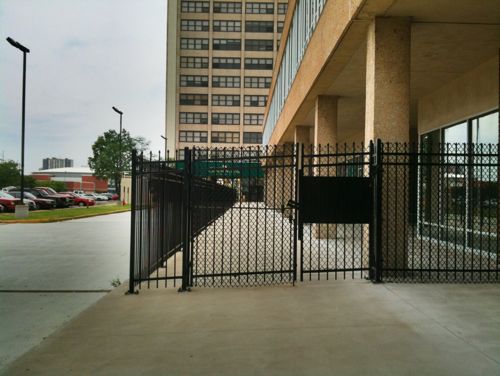
ABOVE: recently added fence cuts off the two east towers to Grand, residents forced into long auto driveway, June 2011
The problem noted last year was the developer fenced off an area around the lower building between the first tower and Grand. This forced residents, many seniors and disabled, to use the long auto driveway. This change reduced access — a clear violation of the ADA.
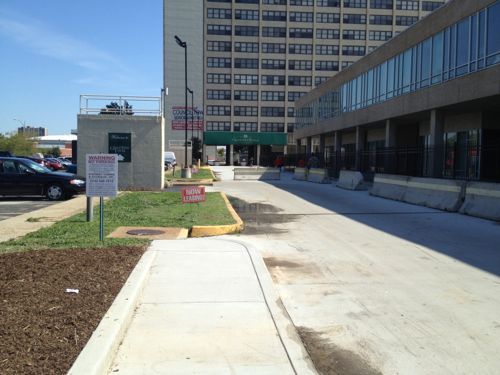
ABOVE: As part of the Saucer renovation, a new sidewalk was added along the north side of the drive into the Council Plaza complex.ABOVE: Unfortunately it stops well short of reaching the first tower, much less the 2nd tower.
Hopefully the developer plans to continue this sidewalk as part of a future project. Unfortunately it is not as wide as the sidewalk that got fenced off — two wheelchair users going in the opposite direction couldn’t pass each other. At this site, that might happen several times a day.
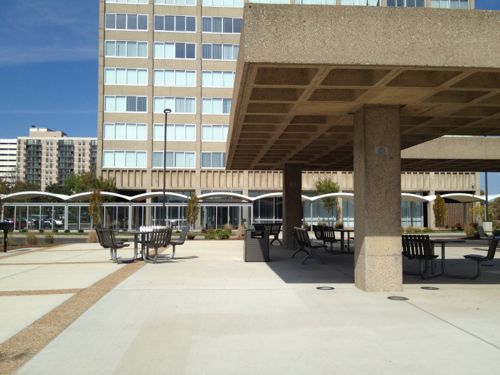
ABOVE: The 2nd tower at the far east end of the site has always been for seniors, it was just renovated.
Access was fine until the fence was installed a year or two ago, and now a narrow sidewalk that doesn’t go far enough is s marginal attempt to fix the problem they created. We need local regulation so seniors and disabled do not have to walk in auto driveways to get home.
I had high hopes when it was announced the Saucer on Grand would be renovated rather than razed. Finally an opportunity to improve pedestrian access to what was originally built as a Phillips 66 gas station. I’d watched the construction going on but couldn’t get close enough to see any specifics.
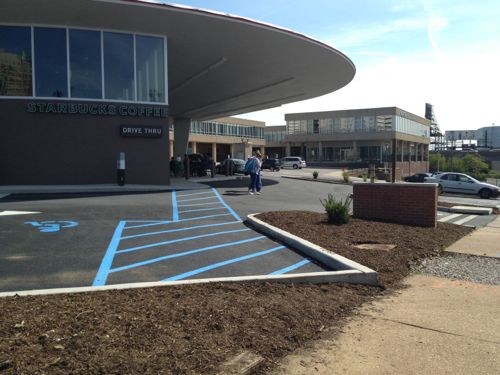
I didn’t rush over on the morning Starbucks opened last week but I was encouraged when I saw a KMOX photo on Facebook with a highly visible blue crosswalk. Encouragement immediately turned to disappointment once I saw it in person.
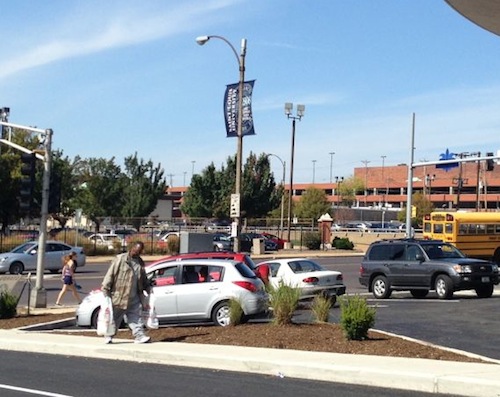
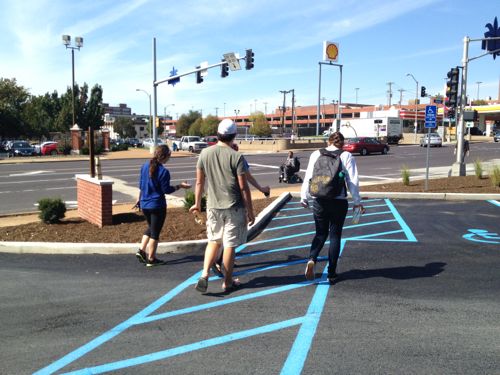
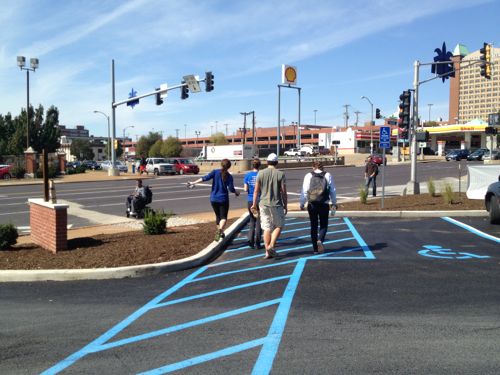
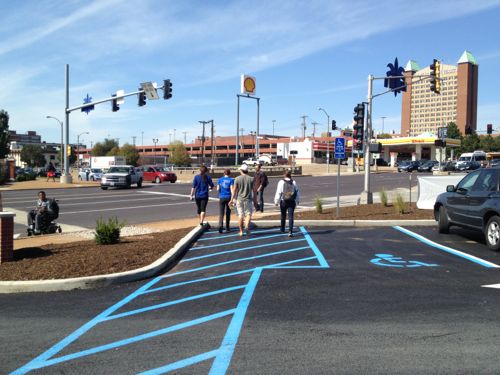
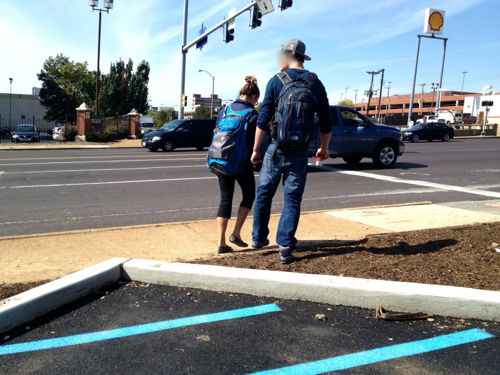
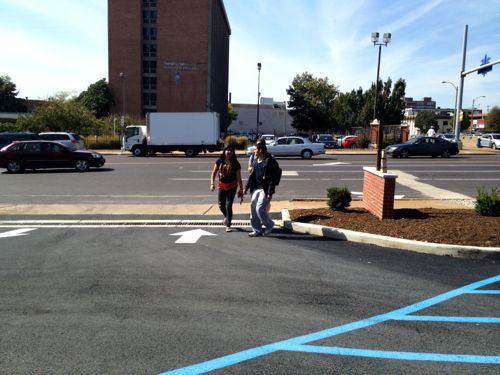
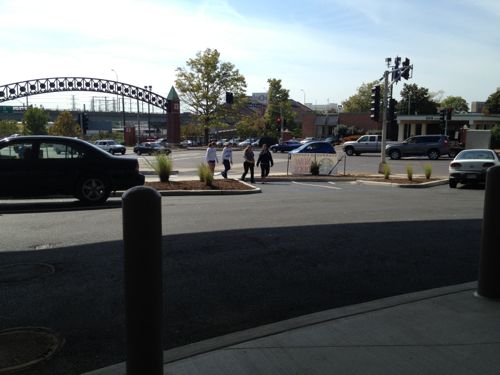
ABOVE: A group of students leaving the Starbucks at the Saucer on opening day. What’s the problem, they’ve got a designated walkway? Note the wheelchair user in the roadway because the public sidewalk still has unpassable areas from the construction.ABOVE: The wheelchair user is further toward the auto exit and the pedestrians are closer to the public sidewalk.ABOVE: Now it’s clear that blue crosswalk serves a disabled parking only.ABOVE: Up close we see these pedestrians using what appears to be a route to the sidewalk along Grand have to step over a newly poured curb and walk through a newly mulched area that’ll presumably have plants.ABOVE: From the public sideway we can see how short the distance actually is, it would’ve been so simple to have the blue stripped walkway connect to the public sidewalk! Two people stand in the driveway because clear pedestrian space isn’t defined.ABOVE: These two decided to walk in through the automobile out lane rather than walk through the mulch. Walking into the path of drivers as they’re just getting their coffee isn’t good, crossing the path perpendicularly in a marked crosswalk is safer.
The Saucer will be a huge draw for students who’ll very likely arrive as pedestrians. Most will come from the north. Others will come from the dorm across the street or from the medical campus to the south. No consideration was given to pedestrian from the west or south and a fix isn’t as simple as to the north.
ABOVE: Students walk over curbs and through mulch, parking & a drive to reach the Saucer.
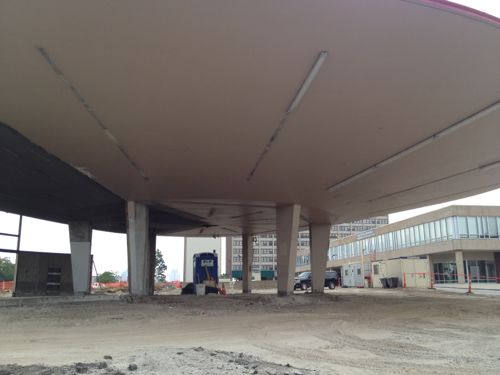
Yeah but it’s hard to make changes when working with an existing building…except if you recall everything was stripped away from the site except the Saucer’s roof structure!
ABOVE: Fast forward to July 20th of this year and the structure was stripped down to just the saucer roof and the columns
This was poorly planned new site work. New curbs, new asphalt. The perfect chance to acknowledge the bulk of customers will be pedestrians from Saint Louis University.
Here are the results from the poll last week:
Q: Initial Reaction To The Updated Flying Saucer (Formerly Del Taco)?
Impressive 62 [46.62%]
I knew it could be great 48 [36.09%]
I favored demolition but this renovation makes me glad it wasn’t razed 8 [6.02%]
Unsure/no opinion 7 [5.26%]
Other: 5 [3.76%]
They still should’ve razed it and built a more conventional building 3 [2.26%]
And the other answers:
Good re-use of an old structure…but not mind blowing.
It’s still a fast food joint.
Could have been cool but disparate design elements are hideous.
Meh
Dishonest architecture doesn’t endure on its own merits.
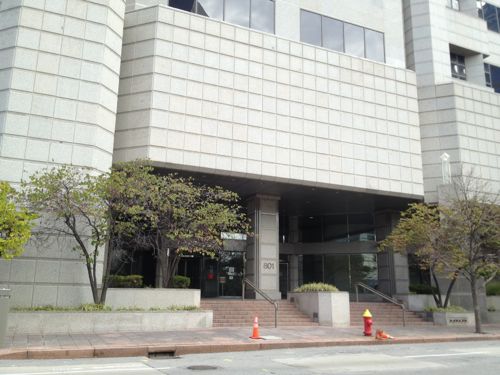
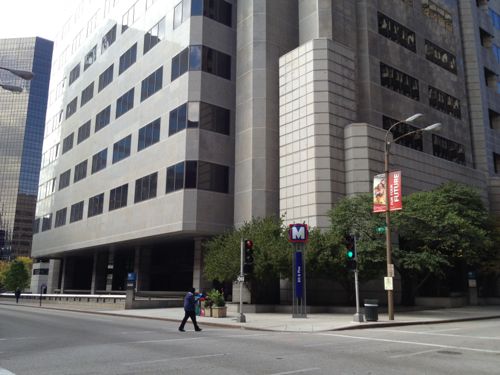
By the late 1980s many architects & planners began to realize a desire to include exterior retail spaces to enliven new buildings that would otherwise be lifeless at the sidewalk. They were right, but their early execution left a lot to be desired. Case in point: AT&T’s data center from 1990.
ABOVE: 801 Chestnut
The building occupies the entire city block bounded by Chestnut on the south, 9th on the west, Pine on the north and 8th on the east (map). The building, built for Southwestern Bell, was designed to accommodate the planned westbound 8th & Pine MetroLink station that opened a few years later in 1993. Good coordination among different parties at least!
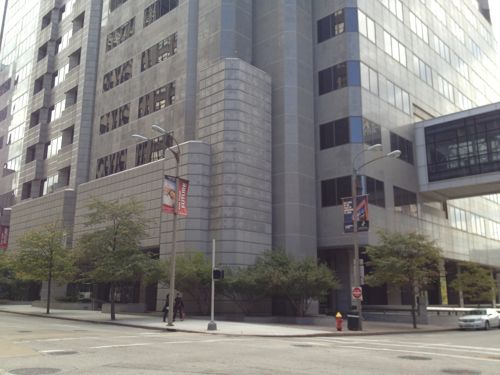
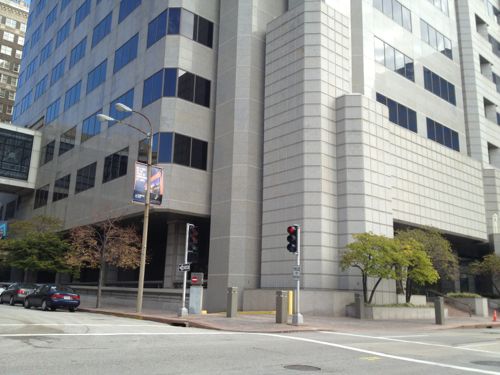
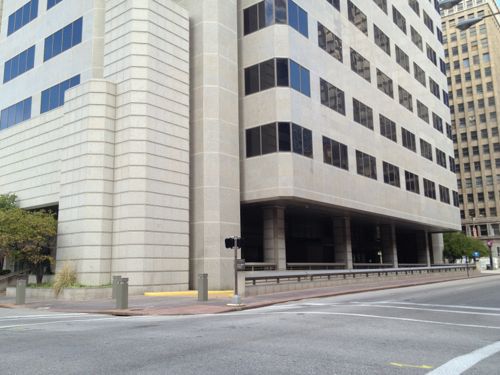
Let’s take a walk around so you can see all four sides.
ABOVE: The NW corner at 9th & PineABOVE: The SW corner at 9th & ChestnutABOVE: The SE corner at 8th & ChestnutABOVE: The NE corner at 8th & Pine, the MetroLink sign is visible
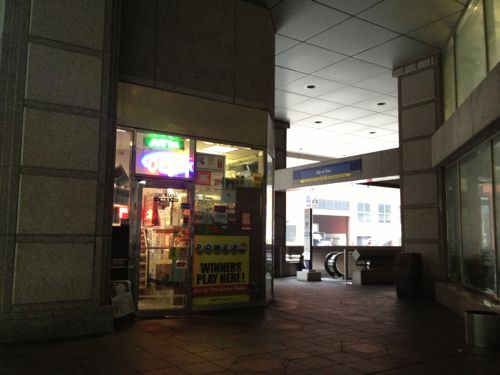
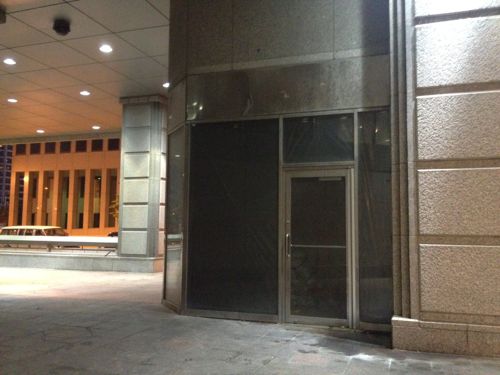
Did you see the three small retail spaces accessible by the general public? You didn’t? Only one is occupied, to my knowledge the other two have never had a tenant. The problem is they don’t face the sidewalks, they are hidden back in the dark recesses.
The occupied retail space is in the corner of the building pictured above, it just isn’t visible from motorists or pedestrians.
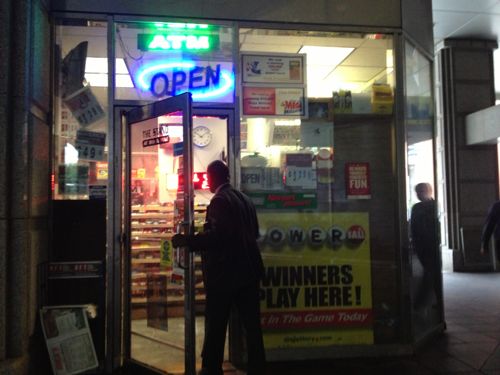
ABOVE: The space at the NE corner of the building, near the westbound 8th & Pine MetroLink station, is the only one that’s occupied. The entrance faces west, not the top of the escalators to the south. Even during the day it is dark in the area.ABOVE: A customers enters the small convenience store while another exits MetroLink
The size of the space is appropriate, we do need more spaces like this adjacent to our light rail stations — but with the windows and door facing the transit users coming & going as well as visibility from adjacent sidewalks. This is not too bad, if you exit the station here you will see the side window and investigate if you are thirsty.
ABOVE: The vacant space at the NW corner, again not facing 9th or PineABOVE: The third space in the SW corner near the main street entrance on Chestnut. But data center employes use the walkway over the 9th street to come and go.
I can just hear people downtown saying retail doesn’t work, using these as their examples. That these are still vacant more than two decades later would have been easy to predict.
Many residents using the new facility, as well as YMCA/Herbert Hoover staff, will drive there. But others will walk or bike there and still others will come from further away riding the #74 (Florissant) MetroBus. I’ll cover all modes but lets start with transit and pedestrians.
ABOVE The southbound #74 MetroBus stops at W. Florissant Ave & Pope Ave, across the street from pedestrian access route.ABOVE: Big beautiful homes on Holly Ave at W. Florissant Ave, two blocks north of Pope Ave
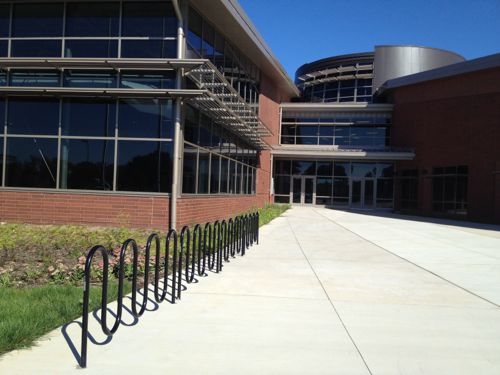
b
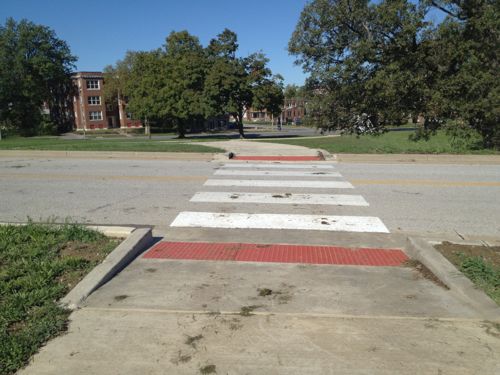
ABOVE: Several well-marked crosswalks allow pedestrians to cross W. Florissant Ave to enter O’Fallon Park. Pope Ave has a traffic signal to stop traffic.ABOVE: A wide sidewalk works its way up the hill from Florissant & Pope.ABOVE: Looking back downhill toward Florissant Ave. & Pope Ave.ABOVE: This sidewalk crosses the main internal park road leading to the recreation center.ABOVE: The sidewalk continues to the front door of the new facility.
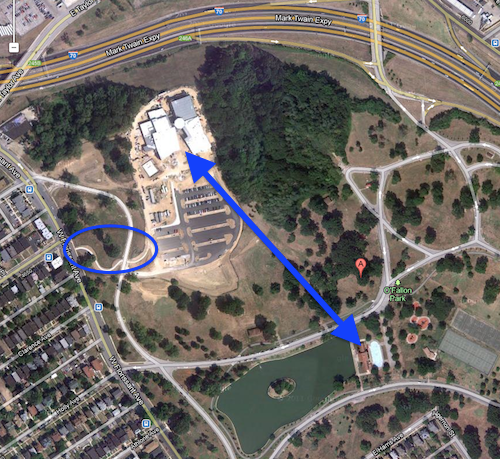
As the pictures above show, the pedestrian access from the nearby neighborhood, Florissant Ave. and MetroBus is excellent. A straighter path would be a shorter but not possible due to the grade change. Besides, if you’re going to work out saving a few steps probably isn’t a priority. Pedestrians just have to cross one internal park roadway, they don’t have to walk in it. Unless they are coming from or going to the O’Fallon Park Boathouse or if you live to the southeast of the park, across Harris & Adelaide Avenues, then access is tricky through the park or requires walking in the park roadway or going out to Florissant Ave and then back in.
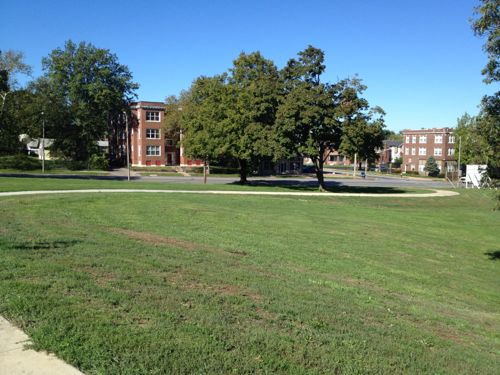
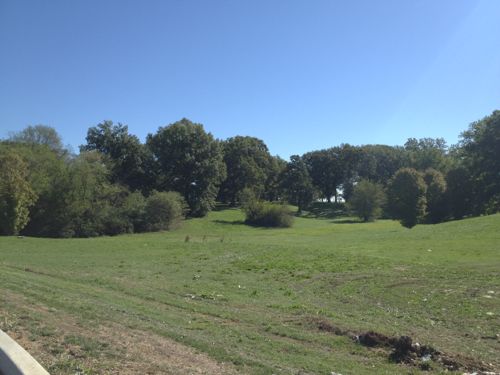
ABOVE: A direct path from the Boathouse to the new Rec Center is needed. Pedestrian access circled in blue. Aerial from Google Maps, click to view.ABOVE: Connecting the new rec center and the historic boat house is complicated by the terrain. but this should’ve been considered when building a $20+ million facility.
On to bicycling and driving. Cyclists can use the roadway so from that perspective their fine but I have serious issues with the bike rack selection and installation.
ABOVE: Empty bike racks in front of the unopened O’Fallon Park Recreation Complex
Architects love this bike rack design, even though it is a poor choice for securing a bike and most of the time they are installed incorrectly, as was the case here. When used as designed they can only secure the frame at one point, they should be loaded from both sides. The four racks shown here are designed to hold a total of 28 bikes. Another area with more of the same rack is to the left.
Better bikes racks would’ve been less expensive. Total failure on the part of the architects and/or client (city parks dept).
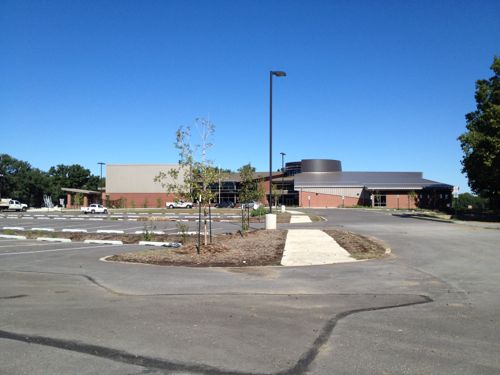
ABOVE: Sidewalks along the outside edges of the parking lot provide a safe path to walk to the building.ABOVE: Bioswales collect rain water runoff from the asphalt parking lot.
With the exception of the choice of bike rack and lack of connection to the O’Fallon Park boat house and adjacent tennis courts I’d say access is very good. It’s far better than trying to reach the sister facility in Carondelet Park from nearby neighborhoods.
The November presidential election is still more than four weeks away but already the March 2013 primary race for St. Louis mayor has begun.
ABOVE: Three-term Mayor Francis Slay (left) and Aldermanic President Lewis Reed (right) are the two known Democratic candidates for mayor in the March 2013 primary — so far.
On Wednesday Aldermanic President Lewis Reed announced what many had long suspected — he’s running for mayor against three-term incumbent Francis Slay.
Only one St. Louis mayor has ever run for a fourth 4-year term, that was Raymond Tucker.
In March 1965, during his bid for an unprecedented fourth term as mayor, Tucker lost to Alfonso J. Cervantes in the Democratic primary. (Wikipedia)
If Slay wins reelection next year it’ll be one for the record books. The two times Slay has been reelected (2005 & 2009) he had weak challengers, so 2013 will be different.
For the poll this week I want to know your thoughts on this competitive race. The poll is in the right sidebar, mobile users switch to the desktop layout.
AARP Livibility Index
The Livability Index scores neighborhoods and communities across the U.S. for the services and amenities that impact your life the most
Built St. Louis
historic architecture of St. Louis, Missouri – mourning the losses, celebrating the survivors.
Geo St. Louis
a guide to geospatial data about the City of St. Louis