St. Louis Should Follow Seattle’s Recycling Efforts

October 26, 2012 Environment, Featured 17 Comments

St. Louis needs to look at taking recycling to the next level, the way Seattle has done. Starting earlier this year restaurants in Seattle had to recycle — no more single-use packaging. This means use of items that can be composted.

The City hopes participation of the new ordinance will help prevent 6,000 tons of food service-ware and leftover food from entering landfills.

The compost process at Cedar Grove takes about eight weeks, depending on the time of year. From there, it sits a few weeks to darken before it can be sold as compost for use in gardens and landscaping. (source)

Seattle is the first to do this.
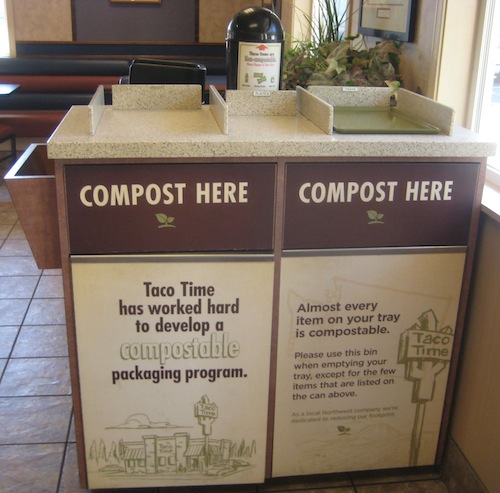
ABOVE: Compost bins replaced trash bins at a Seattle area Taco Time. The tiny black container on top is for hot sauce & ketchup packets which are on the approved discard list.
Photo by Richard Kenney, AIA

Some of you are now upset and having your right to produce waste infringed. As an equal member of society I shouldn’t be burdened by all the waste you produce.  Just look at the amount of stuff you discard at a fast food place that goes into land fills.

From Seattle’s website:

Composting and recycling items that used to be considered waste starts July 1 at Seattle restaurants, coffee shops, food courts, cafeterias and other food service businesses in a major change driven by a new Seattle ordinance.

Customers can now put napkins, paper bags, wooden coffee stir sticks and many types of take-away containers into new in-store compost collection bins. Hot and cold beverage cups and lids will now go into recycling containers instead the trash.

Seattle’s ordinance, which requires all food service businesses to stop throwing away single-use food service ware and packaging, takes effect July 1.

“With our requirement that food service packaging must be compostable or recyclable, Seattle has taken a big step toward a zero waste future,” said City Councilmember Mike O’Brien. “You have to ask yourself why we should make stuff just to throw it away. With compostable and recyclable food containers, we’re closing the loop.”

“For the past year-and-a-half Seattle restaurant businesses and the City of Seattle have collaborated to make the new food packaging requirements work well for the industry, restaurant patrons and the environment,” said Timothy Croll, solid waste director for Seattle Public Utilities. “We hope that customers in coffee shops and quick-serve restaurants will take a moment at the end of their meals to learn the new system. After a few months, we expect it will be routine for everyone.”

“By offering their customers recycling and composting choices, Seattle restaurants will help prevent up to 6,000 tons of food service ware and leftover food from being sent to the landfill every year,” said Croll. “That’s the equivalent of a garbage train more than 100 cars long that will just disappear.”

Taco Time, a northwest chain of 70+ locations, has started implementing these guidelines at locations outside the City of Seattle. National chains that operate in St. Louis & Seattle, like Taco Bell & McDonald’s, must comply.

— Steve Patterson


http://atyourservice.seattle.gov/2010/06/30/seattle-restaurants-switch-to-composting-and-recycling/
 

Hotel Has Used State-Owned Retail Storefront Rent-Free For A Decade

October 25, 2012 Downtown, Featured, Retail 18 Comments

Last month I posted about a vacant retail space in a state-owned parking garage  (see: Storefront Still Vacant A Decade Later, Tax Dollars Wasted?). Some said perhaps the Renaissance Grand Hotel used the space for storage, but that didn’t seen likely to me. Well, turns out the retail storefront has been used by the hotel for storage rent-free for a decade!

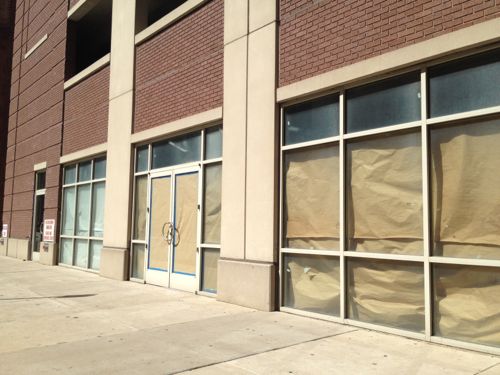
ABOVE: This storefront facing 9th Street has been vacant for years, no leasing information has been posted in the window.

The Missouri Development Finance Board (MDFB) built and owns the garage, the attached ballroom building has separate ownership. The vacant storefront is just to the south of the auto exits from the garage.

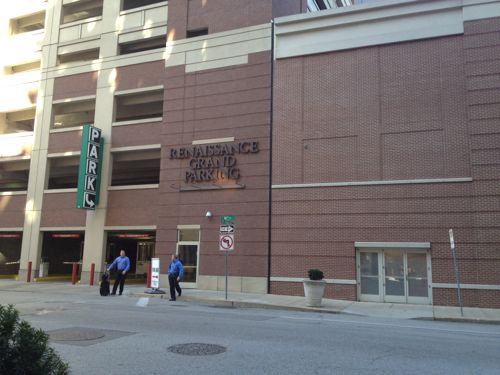
ABOVE: Many hotel guests walk from the garage to hotel daily

For a decade now the state has received $0.00 in rent for this space while visitors to St. Louis see a poorly papered over storefront. The MDFB mission is:

To assist infrastructure and economic development projects in Missouri by providing the critical component of the total financing for projects that have a high probability of success, but are not feasible without the Board’s assistance.

How does leaving this storefront vacant for a decade support their mission?  I talked with a hotel employee in the finance department who said if someone wanted to lease the storefront they’d remove their stuff. Retail spaces don’t lease themselves, it takes work to get tenants.

Even if the space was leased to a business for next to nothing it would be better for the city’s image of the city if it was occupied by an active business. — Steve Patterson


Readers Not Keen On Walmart Express

October 24, 2012 Retail 18 Comments

No majority winner in the poll last week but clearly readers don’t want a typical auto-centric Walmart:

Q: Would You Support Or Oppose Walmart Express Stores In The City Of St. Louis?

  1. Oppose, Walmart is a horrible company 66 [41.77%]
  2. Support, with good design regulations 59 [37.34%]
  3. Support, competition is good 23 [14.56%]
  4. Neutral 4 [2.53%]
  5. Unsure/No Opinion 3 [1.9%]
  6. Other: 3 [1.9%]

The three “other” answers were:

  1. Oppose. Letting them in would likely open Pandora’s big-box.
  2. Not any worse than Family Dollar
  3. I’d have to see one first

The problem is so many of our elected officials like new construction, they add the cost to their tally to brag about investment they attracted. Some do get that we need an overhaul of our regulations to force retailers to use their connected urban prototypes rather than doing the least they have to. These retailers have saturated suburban markets and need new locations to grow.

We can demand better from them!

— Steve Patterson


Eclectic Mile : Chippewa Ave From Jefferson Ave To Grand Blvd

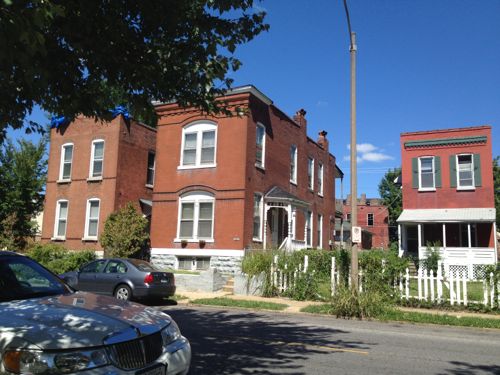
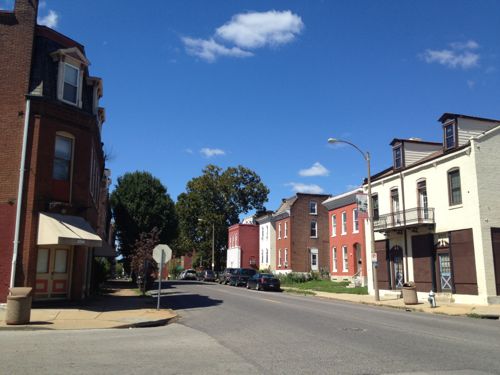
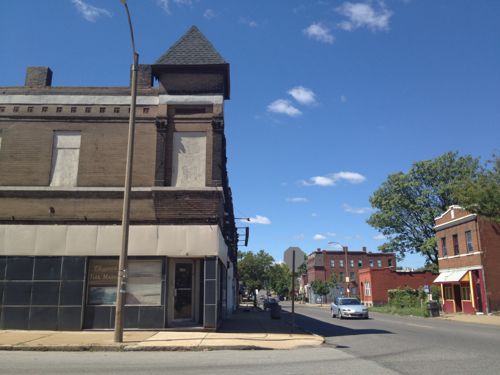
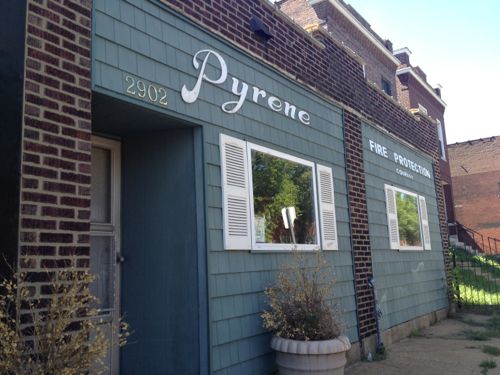
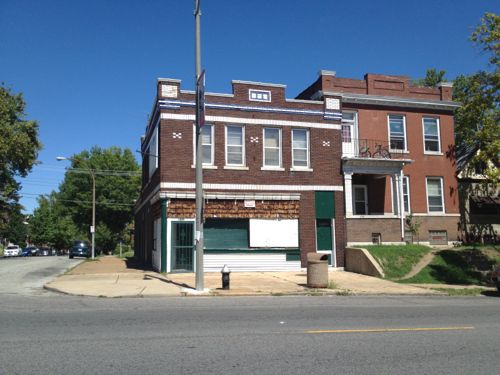
A couple months back I took a look at a mile stretch of South Broadway, from Cherokee to Chippewa (see A Look At South Broadway Through The Marine Villa Neighborhood).  At the time I thought about looking at Chippewa, each time I went down Chippewa on the #11 to/from Target I admired the buildings. For years I’ve admired the mile stretch of Chippewa St between Jefferson Ave and Grand Blvd., I’d even walked, biked and scootered parts years ago. I had to travel it again though.

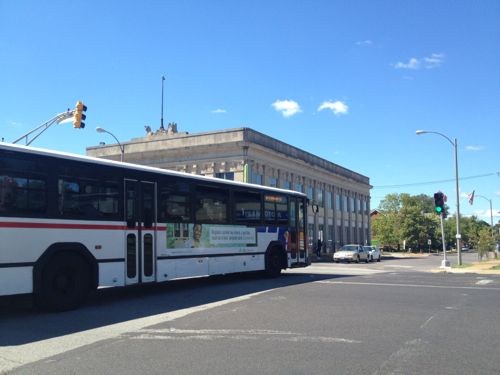
ABOVE: The #11 MetroBus crosses Jefferson Ave. heading west on Chippewa Ave.
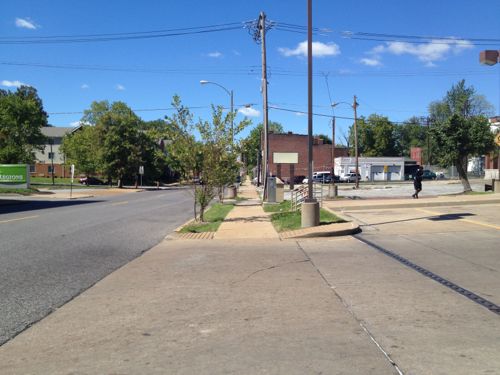
ABOVE: The formerly urban character of the area has been destroyed by an over abundance of surface parking.
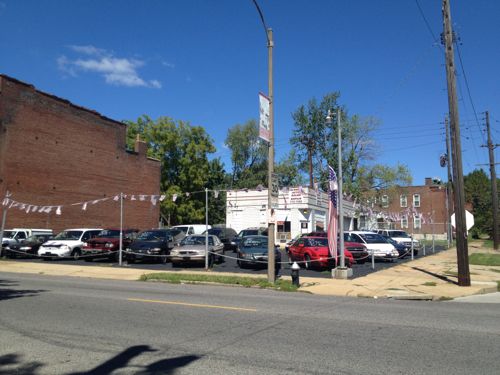
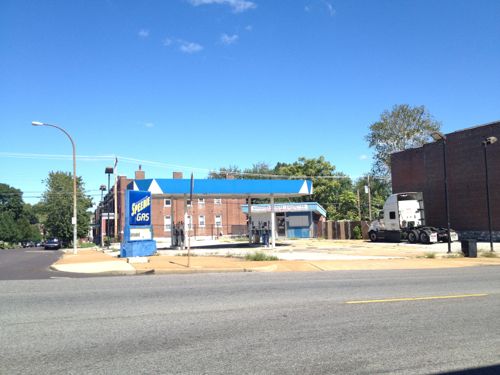
ABOVE: Gas stations used to be much smaller in size, now they are commonly used car dealerships.
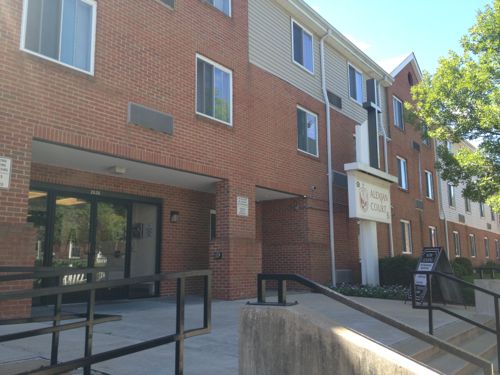
ABOVE: Senior housing, many residents use the #11 bus.
ABOVE: The building ages and styles are varied. Wood side porches like this are very rare these days.
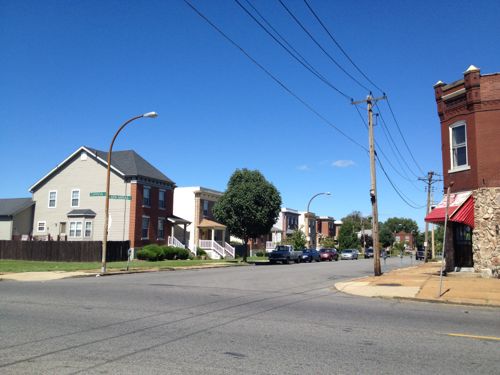
ABOVE: Many corners have large buildings facing them, no consistent setback to buildings but each block has some up to the sidewalk.
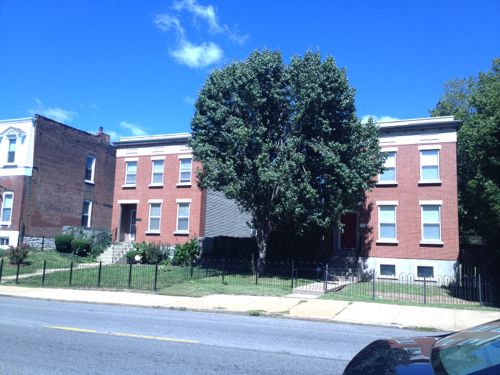
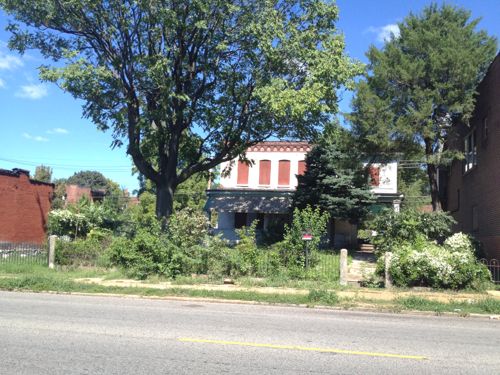
ABOVE: Newer infill housing is spaced too far apart, breaking the established rhythm of the street.
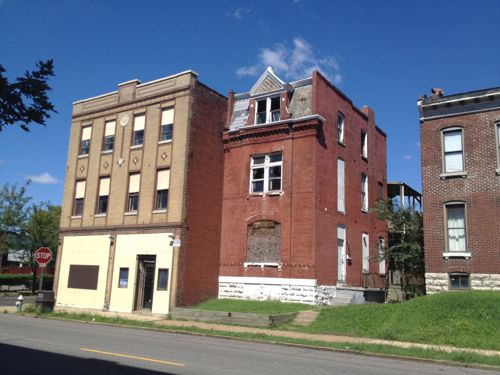
ABOVE: Red bricks vary from building to building, more warm than the new brick used above. The contrast with the beige brick corner building is striking.
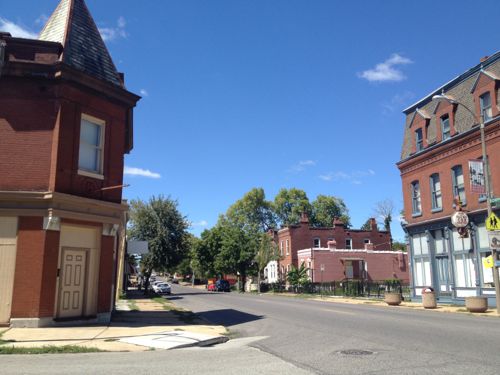
ABOVE: Corner buildings mark the corner in various ways, such as this roof.
ABOVE: A few buildings are set way back from the sidewalk
ABOVE: Again the corner building acknowledges its place on the corner. One, two and three story buildings across Chippewa.
ABOVE: This gem is around the corner, facing Nebraska Ave
Most of the storefronts along Chippewa have been remodeled over the years
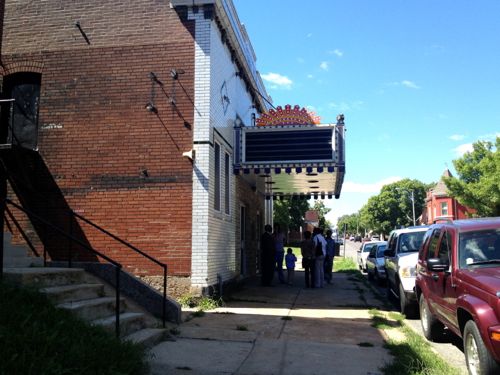
ABOVE: A former theater is now a church
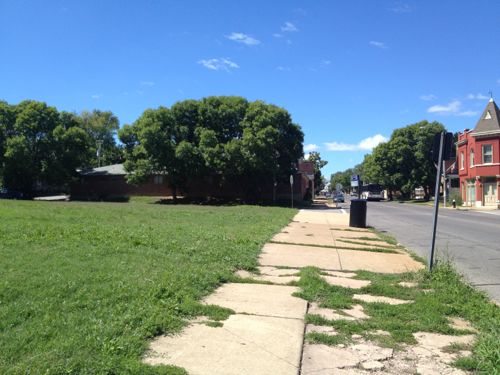
ABOVE: West of the old theater is a large vacant corner, great for an infill structure or two
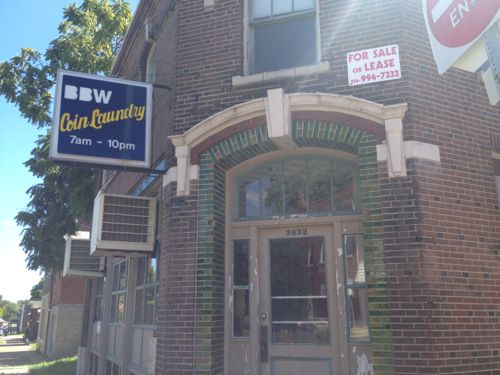
ABOVE: At Minnesota Ave is one my favorite storefront entrances! The storefront is currently vacant.
ABOVE: A closed gas station that hasn’t yet become a used car dealership
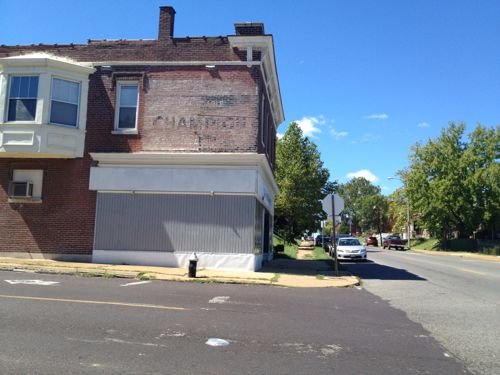
ABOVE: Another storefront altered years ago, love the faded sign
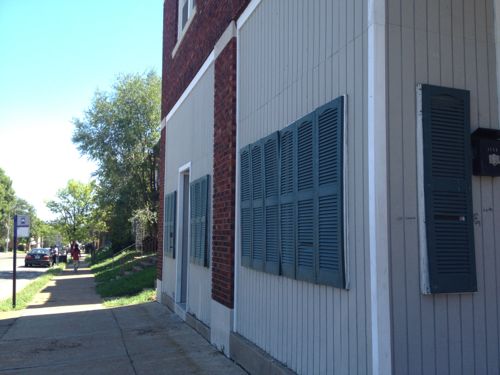
ABOVE: Yet another unwelcoming storefront alteration
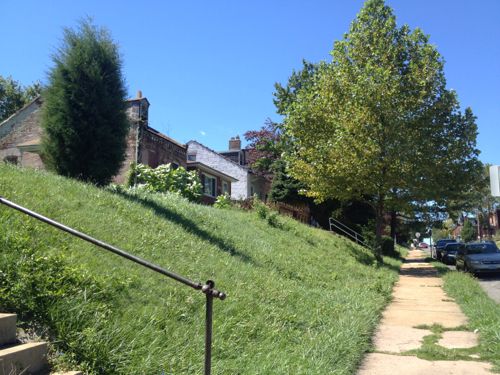
ABOVE: Going west from Jefferson to Grand we’ve been going uphill but in places the building lots are well above the sidewalk.
ABOVE: Another bad storefront that possibly looked like an improvement decades ago. Corner buildings are all at the sidewalk whereas residences vary in setback.
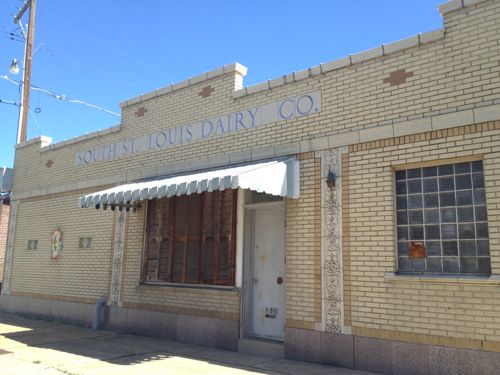
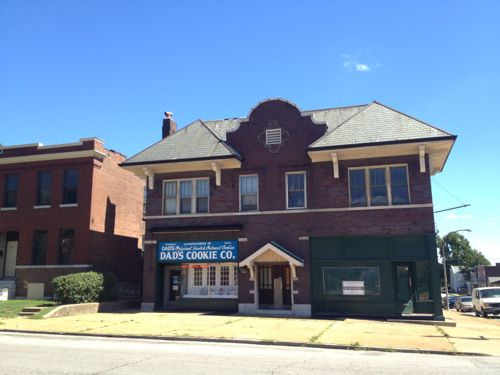
ABOVE: Another quick detour, this time south on Louisiana Ave one block to Keokuk St. to see Dad’s Cookie Co.
ABOVE: Newer houses occupy the former parking lot of the old Sears store that used to be on Grand & Winnebego.
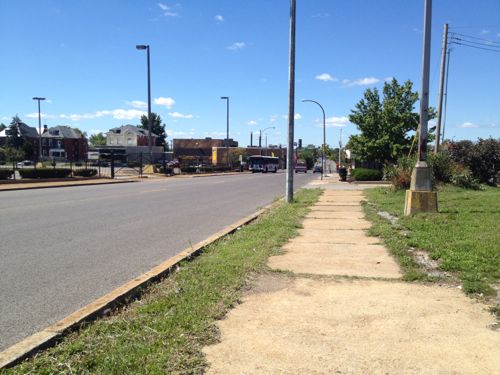
ABOVE: The last block before Grand is a depressing area to walk through, and through is all you’d do.
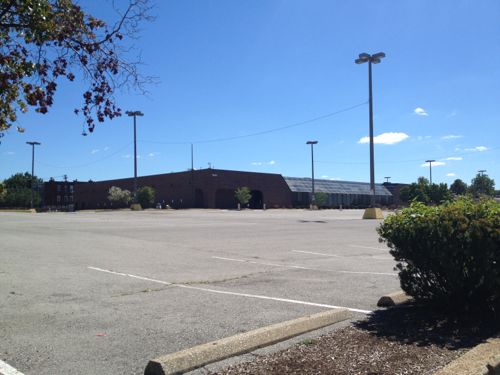
ABOVE: Former grocery store on the SE corner of Grand & Chippewa was built in 1976 after St. Anthony hospital moved to south St. Louis County.
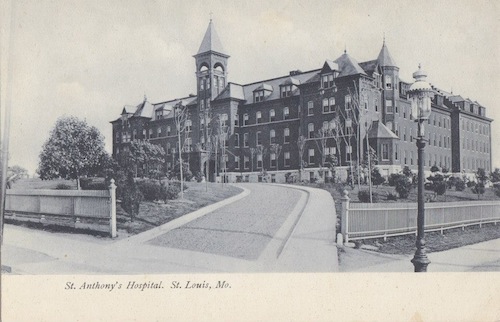
ABOVE: St. Anthony Hospital faced Chippewa, not Grand. 1900-1975. Image source: St. Louis Postcards Facebook group.

Quite a stretch! Chippewa Ave was never a commercial street the way Cherokee St was, and still is, but it had  many neighborhood corner stores. For decades now people have been driving to bigger and bigger boxes to buy merchandise so these storefronts are no longer critical for daily needs.

However, all over this city we’ve seen cafes, niche retailers and others do well in these spaces. With a cohesive marketing plan Chippewa could become a cool street for new businesses. Attract the gays and hipsters to get those vacant storefronts occupied!

Getting someone to take charge will be a challenge though, the south side of Chippewa is in the Dutchtown neighborhood and the north side is in the Gravois Park neighborhood. This gives the mile road a split personality, although neither focus on it because it is an edge.

On the positive side, all but the last block before Grand are in the 20th Ward. I’ve known Ald. Craig Schmid for years and he’s a very nice guy, but I don’t see him leading an effort to attract hip new businesses — they might want serve alcohol in disproportionate quantities to food.

A few years ago, when I was still a real estate agent, I listed and sold the first house on Virginia Ave just south of Chippewa. Thus, I realize the area has real, and perceived, issues but I also think it is worth fighting for. I’m unwilling to write it off, saying the all mighty market has spoken. The market is always changing! In my 22+ years I’ve seen an enormous  amount of positive change because people weren’t willing to just discard entire neighborhoods. With some effort the market could be altered to see this mile Chippewa as an eclectic gem.

— Steve Patterson


AT&T Quietly Reduced Workforce In Downtown St. Louis

October 22, 2012 Downtown, Economy, Featured 21 Comments

When most people see the AT&T office towers at 1010 Pine and 909 Chestnut St. they assume many people work there. The Pine tower is from 1925 and the Chestnut tower was built as the corporate headquarters of Southwestern Bell in 1985, both have just a fraction of the number of employees of even just 5 years ago.

ABOVE: AT&T’s two office buildings downtown, 1001 Chestnut (left) and 909 Chestnut (right). Photo by William Zbaren from American City: St. Louis Architecture (click image for more info)

Two issues: how AT&T reduced the workforce without public layoff notices and the implication for other downtown St. Louis businesses nearby.

Former and current employees tell the same story about how AT&T avoided having to issue layoff notices as required by the 1988 WARN Act. From one source:

AT&T has done a number of outsourcings since 2006-ish to different companies include Accenture, IBM and Amdocs. I was part of a 1,000 person division in IT which was outsourced to Amdocs in 2008.

We were given a very last minute notice about a mandatory meeting in February, 2008 in the Data Center auditorium where we were told we were being outsourced to Amdocs. Our pay & benefits (health insurance, vacation, etc.) were kept the same, with the exception of our pension as Amdocs did not have a pension plan. Instead, we were given an additional 5% match to our 401k. We still worked for the same boss (the outsourcing went up to the VP level, in my instance), at the same desk, doing the same work. The only difference is that our paycheck was coming from Amdocs.

In early February 2009, we received another mandatory meeting invite for the employees in my group. In the data center auditorium, an Amdocs manager (from a different division, located in Champaign, who none of us had ever met) read a prepared statement stating that layoffs were necessary because the amount of work assigned to our group was falling short of what was anticipated at the time of the outsourcing. We should return to our desks and those employees being let go would receive an email while those not being let go would not. About an hour later, I received an email indicating I would be laid off on February 26, 2009. Approximately 500 of the 1000 people in my group were laid off in total.

The significance of that date? It was one year and one day after we had been outsourced to Amdocs. The contract between Amdocs and AT&T specified any employees laid off in the year following the outsourcing would be given severance at the AT&T rate (4% of salary per year of employment). After that date, severance would be paid at the Amdocs rate (1 week per year of employment). To rub salt in the wound, our final paychecks contained pay for 72 hours as we were let go on a Thursday and worked only 9 days out of the 10 day pay period (rather than the usual 86 2/3rs hours as salaried employees).

My source indicated Amdocs issued WARN Act notices in California, where they have stricter requirements, but AT&T and contractors avoided having to announce reductions in St. Louis.

In August 2009 our downtown grocer, Culinaria, opened for business. A year later businesses on the one block of 9th between AT&T and Culinaria  were closing due to lack of customers. Culinaria was blamed but one person I spoke with says this was the height of the reductions.

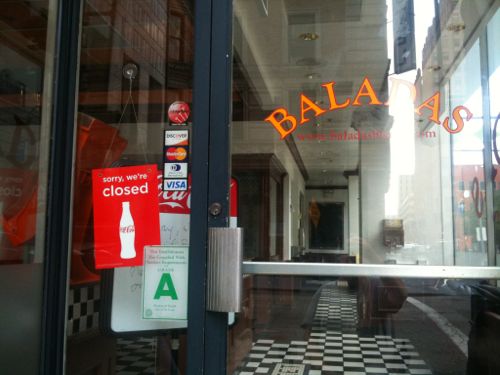
ABOVE: Baladas’s Bistro, 9th & Pine, right after closing in August 2010
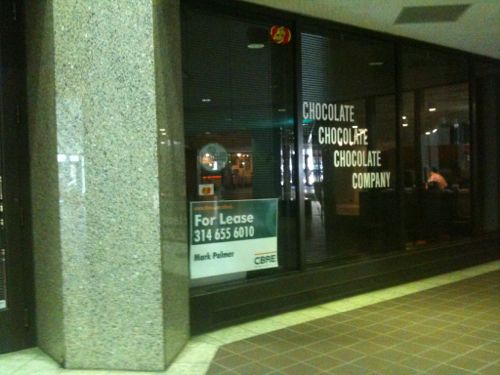
ABOVE: The significant reduction in employees has also resulted in the closure of businesses in the ground floor of 909 Chestnut.

To make matters worse for nearby businesses, many of the remaining employees telecommute from home rather than come into the office.  Reduced property taxes is another issue:

Inland’s affiliate, MB St. Louis, convinced St. Louis assessor Ed Bushmeyer that the AT&T tower is now worth just $135 million – about $70 million less than what it sold for in 2006.

Jerome Wallach, an attorney for MB St. Louis, argues that the building’s value plummeted because AT&T has slashed the size of its workforce there, and low occupancy cuts the building’s market value. The owner would have difficulty selling the half-full building for an attractive price when AT&T’s lease expires in 2017, he added.

But the building is not for sale now, Wallach acknowledged, nor has MB St. Louis given AT&T any rent breaks on the property because of its diminished presence. Wallach argues the rent shouldn’t factor into assessed value, which should be based on what it might sell for now in its half-full state. (stltoday.com from April 2012)

No doubt AT&T plans to completely vacate the 909 Chestnut building after their lease expires, in the meantime the numbers of employees at both buildings will continue to dwindle.

— Steve Patterson


Advertisement


[custom-facebook-feed]

Archives

Categories

Advertisement


Subscribe