This is the fifth post in a series looking at potential development sites along the proposed initial route of the St. Louis Streetcar. The first four parts were:
This post will cover the 0.6 mile stretch of Olive from Jefferson to Compton (map). Let’s start with the North side of Olive at Jefferson:
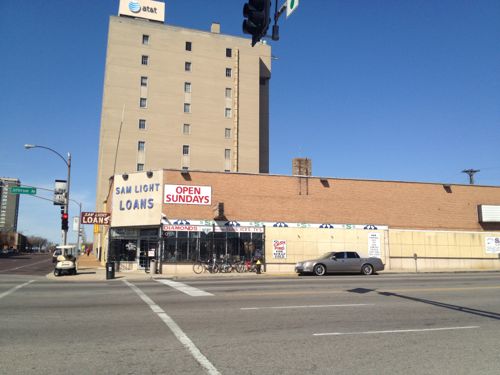
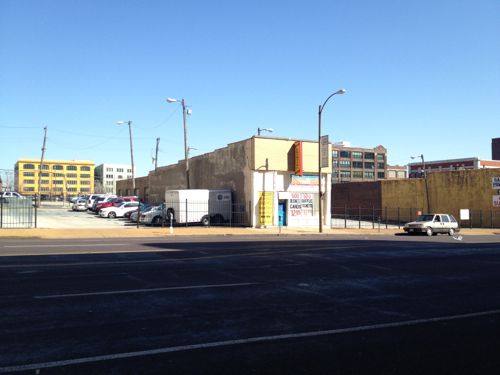
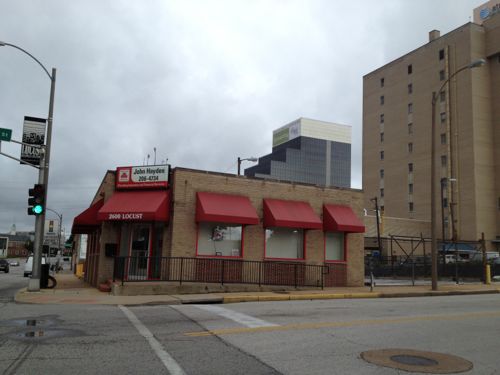
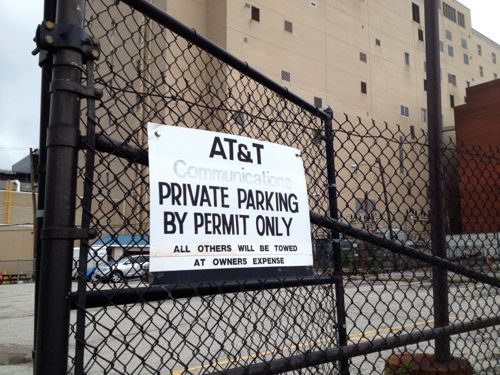
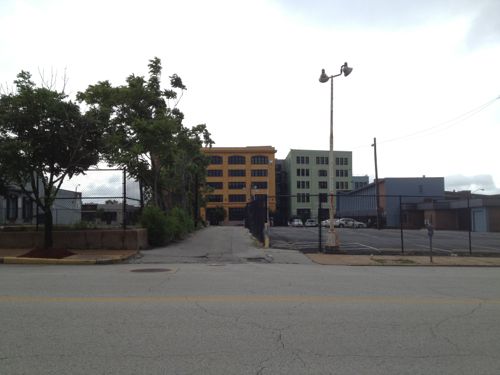
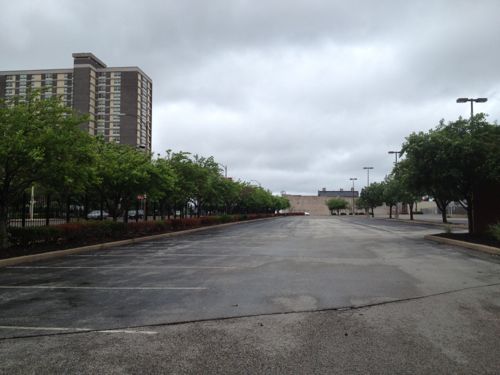
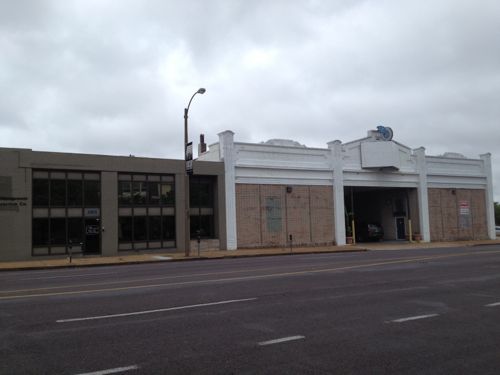
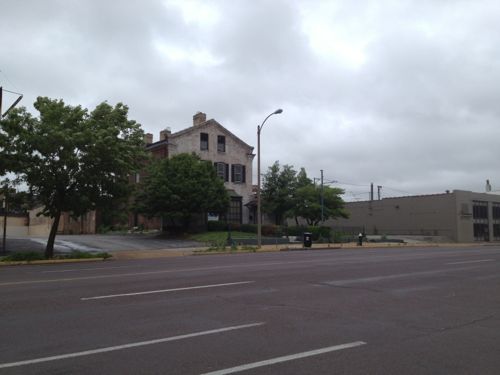
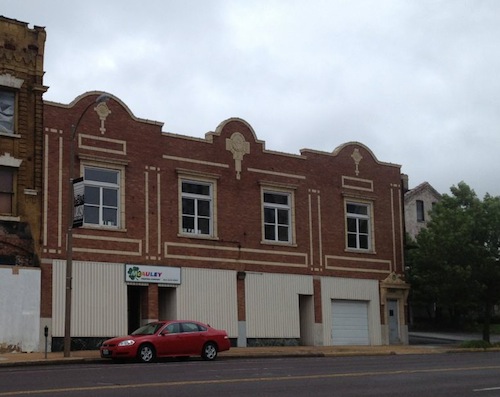
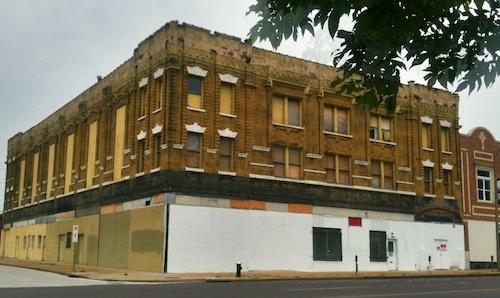
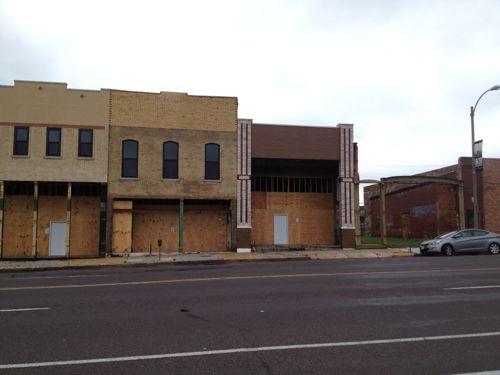
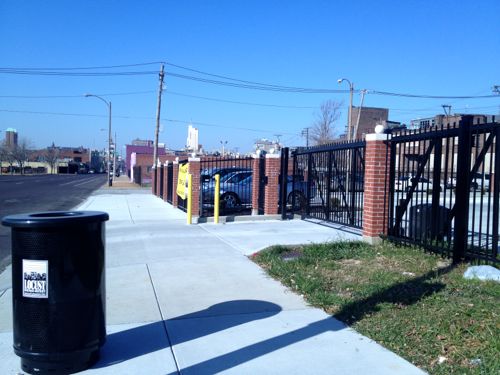
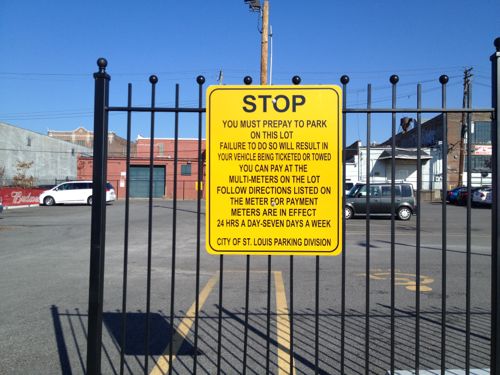
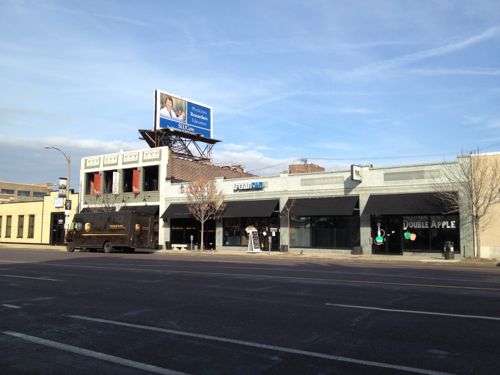
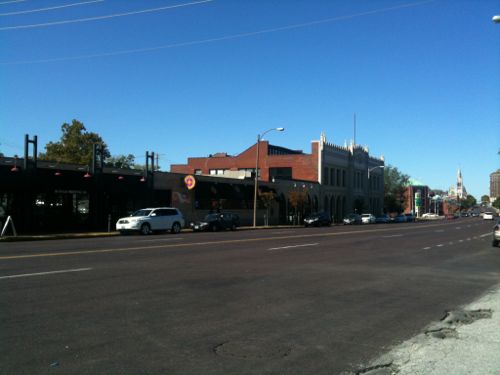
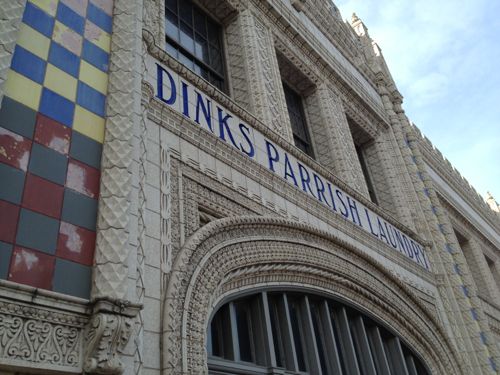
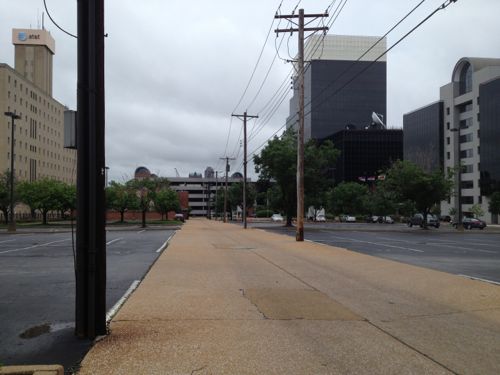
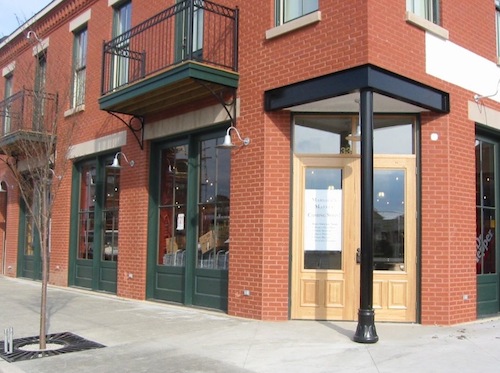
2601 Olive, well known as Sam Light Loans, was built in 1924, according to city records. I wonder if the building got a makeover in the 40s or 50s, it looks too modern foe the 20s.I posted about 2617 Olive in March 2012, it dates to 1883. Click image to see my prior post.AT&T recently built an addition on the long-vacant lot at 2621 OliveThat addition was on the east side of this AT&T Communications building at 2651 OliveThe small insurance office at Locust & Jefferson was built in 1956.AT&T owns much of the block on both sides of Locust, used for parking.Across the street is more AT&T parking on the left. Loft apartments on Washington Ave can be seen in the background.The Wells Fargo lot between Beaumont & Leffingwell could be easily developed if many employees begin riding the streetcar. Perhaps give them the option of a parking pass or a transit pass… More on Wells Fargo when I get to the south side of Olive below.The building on the left is from 1929, the one on the right from 1913. A vacant 30ft lot is to the right @ Leffingwell.2823 Olive was built in 1880, though set back from the street it would be an interesting contrast to keep this structure, while filling in on each side. The side on the left belongs to the next property to the west.This 1925 building at 2831 Olive would look even better with a new glass storefront….and a rooftop restaurantThe Castle Ballroom should get renovated with a streetcar right out front. Click image to see my post from 2011.These buildings in the 29xx block of Olive no longer look like they did 100+ years agoThe Locust Business District recently completed a fenced surface parking lot, this needs to be replaced ASAPThe Treasurer’s parking lot at 3019 Olive also needs a building, not a garage.At Cardinal Ave we have a one story structure from 1997, too new to replace right awayThe last buildings on the north side of Olive before Compton
Some existing buildings aren’t as tall as would be nice but their age/height will be a nice contrast to the new construction we should see go up over the twenty years. In short, lots of opportunities for new construction on vacant land.
OK, let’s cross Olive at Compton and return east to Jefferson. It would be impossible to look at this section of the proposed route without discussing the urban renewal clearance of Mill Creek Valley:
By World War II, Mill Creek’s tenements and faded town houses were home to nearly 20,000 people, many of them poor blacks who had migrated north from the cotton fields. More than half the dwellings lacked running water, and 80 percent didn’t have interior bathrooms.
Tucker proposed knocking over nearly everything and starting over. In 1955, city voters overwhelmingly approved a $10 million bond issue for demolition, on the promise that the federal government would reimburse most of it. The local NAACP endorsed the idea. Work began on Feb. 16, 1959, at 3518 Laclede Avenue, where a headache ball smashed a house that dated to the 1870s.
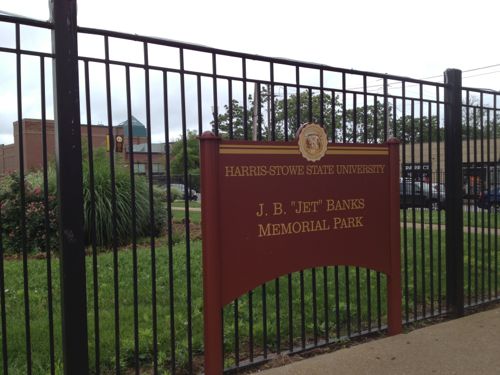
The bulldozers swiftly transformed the city’s “No. 1 Eyesore” into an area derided as “Hiroshima Flats.” Among the few buildings spared was the old Vashon High School, now part of Harris-Stowe State University. When work began in 1961 on University Heights Village apartments, only 20 original families still called Mill Creek home. (stltoday.com – A look back • Clearing of Mill Creek Valley changed the face of the city)
The area from Union Station to Grand was cleared. This area got new construction like the A.G. Edwards HQ, now Wells Fargo Advisors, LaClede Town (razed), Heritage House senior apartments, and the “flying saucer” gas station on Grand at Forest Park, now a Starbucks. n
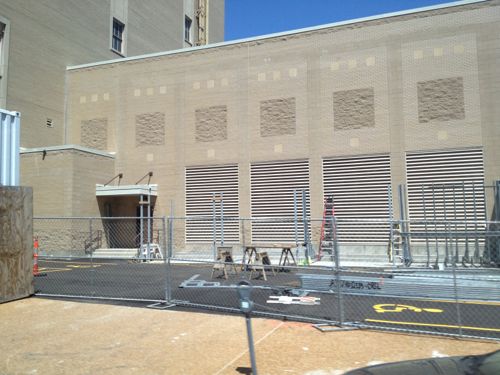
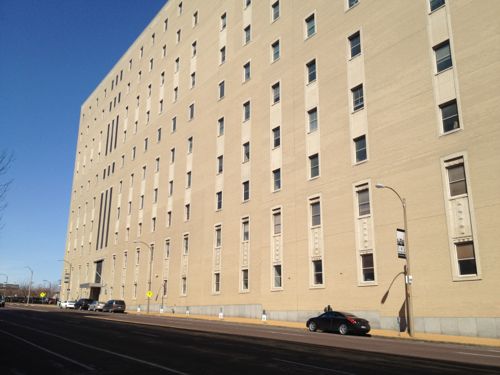
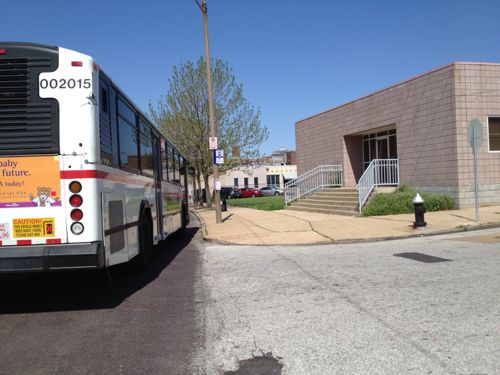
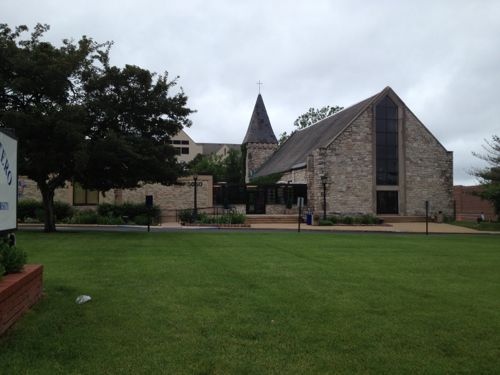
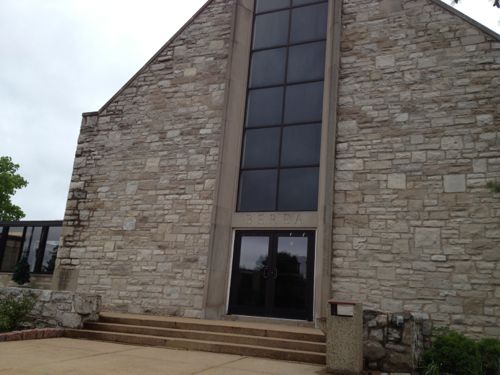
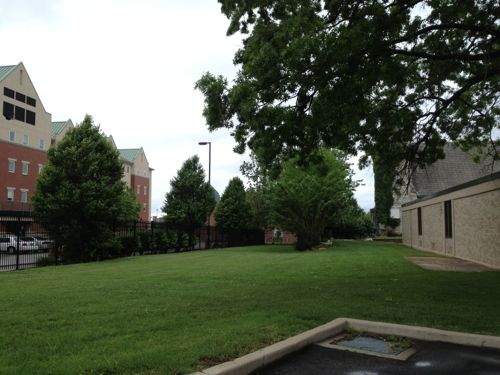
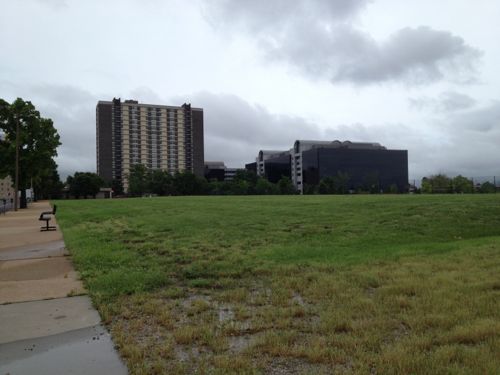
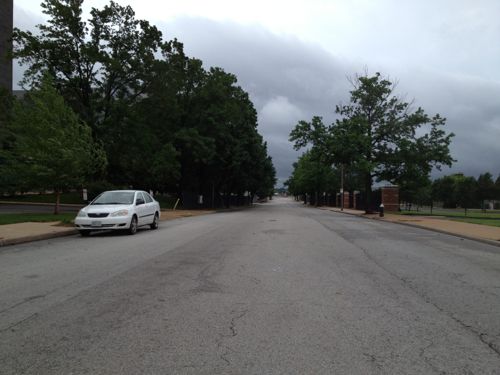
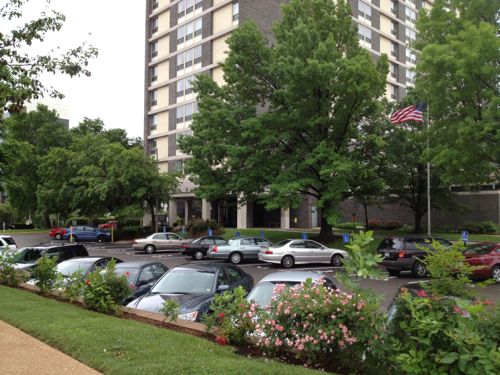
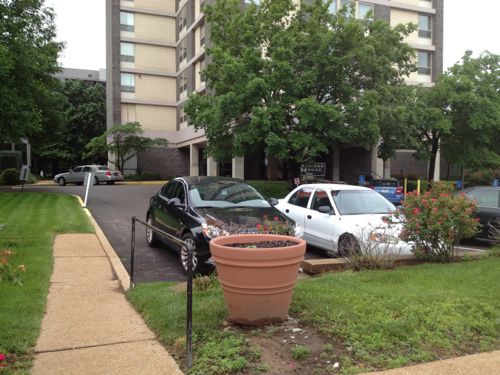
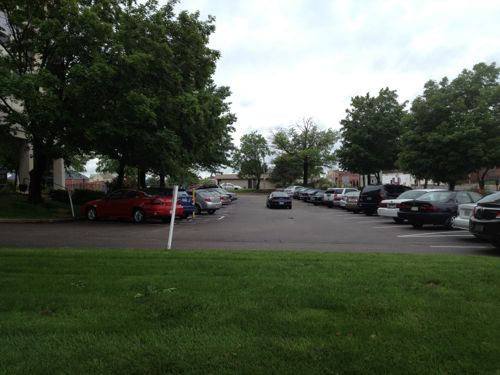
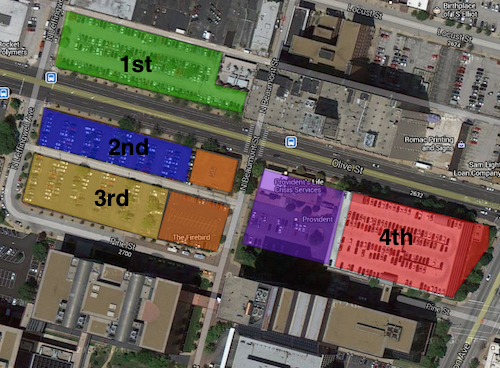
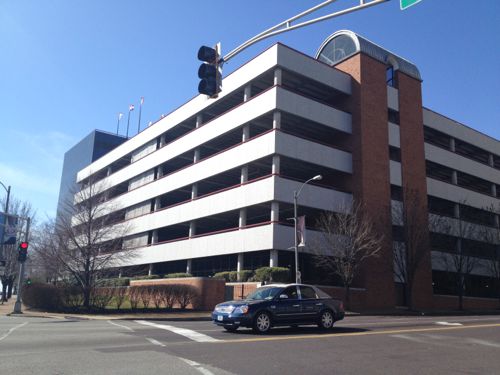
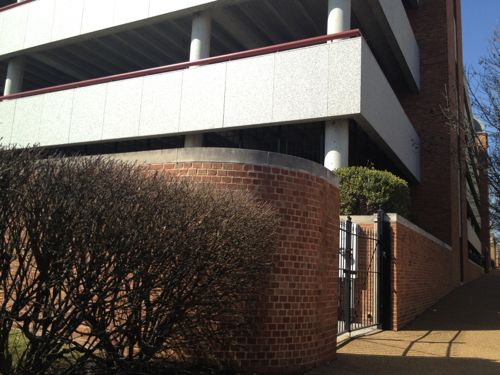
The block between Cardinal & ComptonThis facade was built after the front of the building was removed when Olive was widened. I’d like to see this endureA pocket park along the route would be nice, if it could be accessed.The former Berea Presbyterian Church is now a SLU event spaceThe central glass on the front of this church always looked too modern but I never knew the story.February 1909 Sanborn Map showed the stone (blue) church at 3015 Pine (vacated), between Garrison (vacated) on the east and Cardinal (dead end) on the west. The end facing Olive today was the back! Click image to see more of this map.I’d like to see Pine St replatted from Jefferson to Compton, it would go right through here.Sigma-Aldrich owns the land from the old church to Ewing. Given how the land is platted and fenced it appears they’re leaving a strip along Olive for future development.Ewing Ave looking south toward Market. Wells Fargo Advisors on the left, Sigma-Aldrich on the right. This too-wide street should be lined with storefronts catering to employees of both businesses, as well as students, faculty, & staff at Harris-Stowe, and residents at Heritage House.A non-propfit was formed in 1964 to build & operate low-income senior apartments, Heritage House opened in 1967.The building is well maintained but not well connected to OliveI’d like to see an addition between the sidewalk and tower with underground parking, street-level retail, 2nd floor apartments.An alley remains between Olive & Pine. I can imagine both sides being infilled over the coming decades, see diagram below.My thought of the order Wells Fargo might instill parking lots and finally raze a parking garage. The two orange squares are owned by the Beffa family, the purple by Provident.A parking garage for Wells Fargo Advisers dominates the intersection of Jefferson & Olive.A brick wall sorta hides equipment
I’m excited about the possibly having a modern streetcar line a block away from my loft, but the redevelopment potential in midtown is phenomenal. I’ve been losing sleep for the past week as I picture what this could look like at full build out. The vision must come before the bricks and mortar.
I’m not a preservationist, though I often favor saving old buildings. I do so because they frequently exhibit the urban qualities I think creates a desirable built environment, while new construction rarely has any qualities I find redeeming. Still, new construction is a must. But what should it look like?
[Reporter Tracy] Smith asked Paul Goldberger, architecture critic for Vanity Fair, how we decide what to save: “We want to save the best of every period, ideally,” he replied. “We also want to protect certain kinds of neighborhoods — like Beacon Hill in Boston, or Georgetown in Washington. That’s really important.
The dark underside of historic preservation is that we often preserve not so much because we love what we’re protecting; it’s because we fear what will replace it,” he continued. “And, unfortunately, we’ve been right a lot of the time.” (CBS News)
True, replacements for old urban buildings have often been urban disasters, turning their back on the sidewalk or placing vast surface parking lots between the sidewalk and entrance. In St. Louis if new construction is wrapped in red brick it often gets approved, regardless of form, proportion, etc.
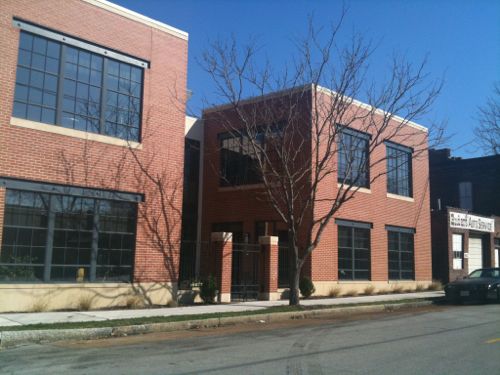
New Town at St. Charles mimics older buildings in St. Charles & St. LouisThis 2008 building at Park Ave & Dolman near Lafayette Park is urban, but not detailed to convince anyone it is old. Or is it?
The CBS story showed new buildings that looked old, well enough to fool many. Some buildings around Lafayette Park are this detailed. Do you think that is good, bad or do you even care?
The poll this week is a rather philosophical one, a question of your aesthetic viewpoint. How do you think new construction should look? The poll is in the right sidebar, you can create your own answer if you don’t like the ones I’ve provided. I’ll present the results on Wednesday June 12th, along with my thoughts on the topic.
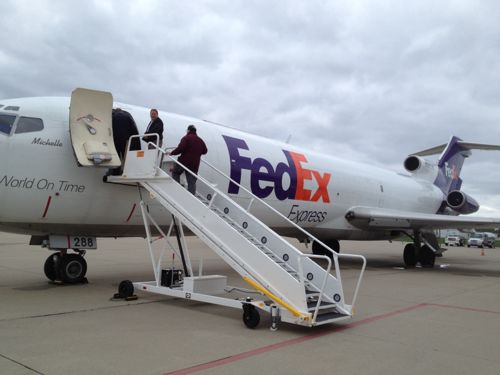
As many of you know, Metro, formerly know as the Bi-State Development Agency, operates our MetroBus and MetroLink light rail service. Metro also runs the trams inside the Arch and operates the Saint Louis Downtown Airport (map). Although MetroBus service does reach the airport, my boyfriend drove me on April 19th to view Metro accepting a Boeing 727 from FedEx Express.
Boeing 727-200F donated by FedEx Express on April 19, 2013
Here is the donated plane will be used:
Although the aircraft’s primary purpose will be to train firefighters and other emergency response force personnel, it will also serve as a classroom and a ground trainer for future pilots and aircraft maintenance technicians, and be made available to researchers and educators for use in their air safety and educational programs.
The pilots’ cockpit will remain intact, just as it is when the pilots stepped out of it, however, changes will be made throughout the rest of the aircraft. The front half of the fuselage will be configured as a standard passenger airliner, complete with a pull-down screen and overhead projector for use in classroom-style presentations to tour groups visiting the airport and the Greater St. Louis Air and Space Museum, and to youth flying with Experimental Aircraft Association (EAA) Chapter 64 in their Young Eagles program. Jet Aviation, which has a history of doing maintenance and repair work for the FedEx corporate fleet at its facilities at St. Louis Downtown Airport, will assist in preparing the aircraft for its new mission.
The rear half of the fuselage will be outfitted to contain a maze of hanging hoses, wires, and other obstructions with cargo containers, boxes, and jumbled seats. During training sessions, non-toxic smoke generators will fill the aircraft with smoke as if the aircraft had made a crash landing. Area firefighters will be able to don their gear and enter the aircraft to search for survivors and complete a myriad of real-world training scenarios. (source)
Firefighters in the region currently get trained in simulated spaces, not with actual aircraft. Once ready for training, firefighters from the region will be able to come practice maneuvers in a more realistic setting.
This plane has a brief St. Louis history:
The aircraft was delivered on October 25, 1979, in full Ozark Airlines’ colors, however, it was transferred to Pan American World Airways that same day. Pan Am operated it as “Clipper Frankfurt” from Oct. 25, 1979, until they ceased operations on Dec. 4, 1991. The aircraft was placed in storage from Dec. 5, 1991, until it was acquired by FedEx Express on April 22, 1993.
Ozark Airlines operated from Lambert until merging with TWA.
AARP Livibility Index
The Livability Index scores neighborhoods and communities across the U.S. for the services and amenities that impact your life the most
Built St. Louis
historic architecture of St. Louis, Missouri – mourning the losses, celebrating the survivors.
Geo St. Louis
a guide to geospatial data about the City of St. Louis