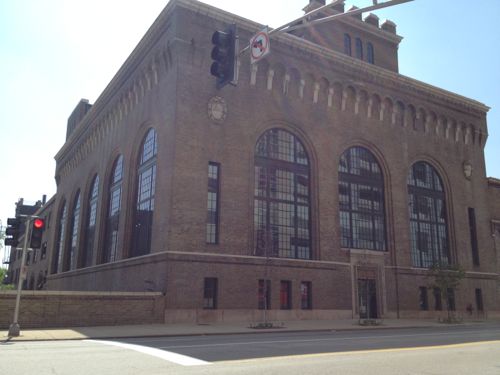
Chouteau Needs To Go On A Diet

Chouteau is too fat! Not the late Auguste Chouteau — I’m talking about the avenue named after St. Louis’ founder. Chouteau Ave has four travel lanes plus generous parking lanes, it’s too wide. I couldn’t find the curb-to-curb width but the public right-of-way (PROW) is a massive 80 feet, encompassing the road and adjacent sidewalks.

Recent road diet projects on Grand and Manchester had the number of travel lanes reduced from four to two. I don’t think that’s necessary or even a good idea on Chouteau. It’s not lined with shops, although some do still exist in places. No need to make Chouteau into a low volume shopping street but there is no reason it’s can’t accommodate the current volume of vehicular traffic AND be less hostile to pedestrians.  This takes a corridor study.

Chouteau Ave extends east to the river and west until it becomes Manchester as it crosses Vandeventer, 3.4 miles long.  The far east end isn’t as wide and is located in what will become Chouteau’s Landing. A corridor study should focus on the 3 mile stretch from S. 4th on the east to Vandeventer Ave on the west. The issues are similar end to end but I’ll use examples for the 6/10th of a mile section between Truman Parkway/18th and Jefferson Ave.
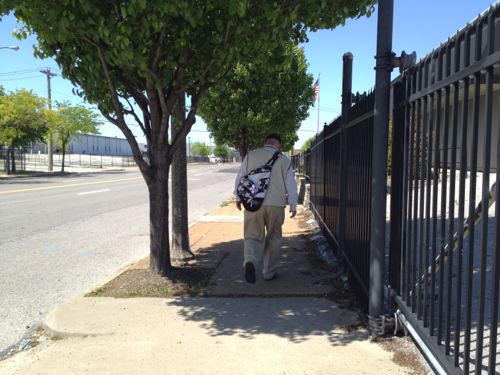
ABOVE: Pedestrians do exist along Chouteau

Chouteau is marked as 35mph, but given the generous widths traffic goes considerably faster.
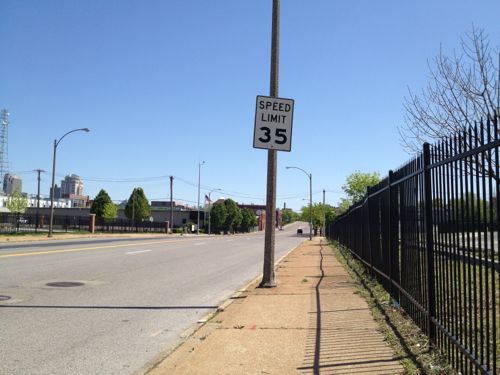
ABOVE: Looking east on Chouteau Ave

Unlike Gravois and other roads, the right side of the outside lane isn’t marked to separate it from the parking lane. Visually this tells drivers the right lane is more than 20 feet wide compared to the 8-10 feet sufficient for a 35mph road.
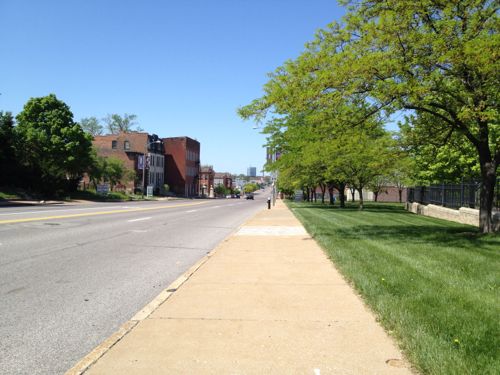
ABOVE: Ameren’s green lawn doesn’t make the pedestrian feel less vulnerable

Only in a few areas does anyone park in the parking lane. , most of the time it’s vacant.  Key to calming the traffic speeds is to visually reduce the perceived width of the road. This is accomplished by striping the outside lane and blub outs from the curb so the parking lane isn’t viewed as another travel lane.
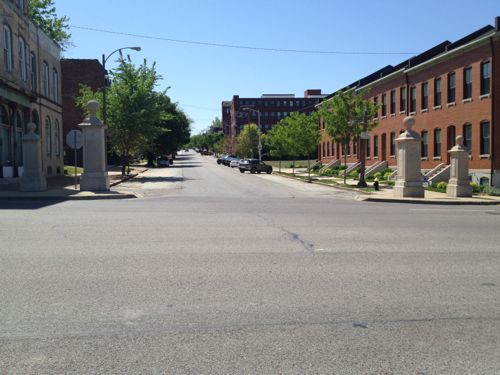
ABOVE: At the end of Mississippi Ave bulbs helped provide room for the monument markers

The bulb outs at Mississippi Ave had nothing to do with calming the speeding traffic but providing room for pedestrians to get around the decorative markers. Still, the push out into Chouteau is helpful but one little spot on one side only isn’t enough. Traffic has a clear shot between Truman Parkway and Jefferson, more than a half mile without a signal, stop sign or even a crosswalk. That’s right, if you live on Mississippi Ave in Lafayette Square the only two safe places to cross Chouteau Ave is Jefferson Ave or Truman Parkway.

If I wanted to have lunch at Eleven-Eleven Mississippi I’d get off the bus at the stop were I took the above picture, cross and head up the street right? Wrong. Even the able-bodied risk getting hit by a car trying to cross such a wide street with fast traffic. For me, using a power chair, I’d have to go 2/10th of mile back to Truman Parkway to cross then 2/10th of a mile back to Mississippi Ave. Realistically I’d get off the bus closer to Truman but you get the point — I wouldn’t cross here because it’s too risky. In fact — I couldn’t cross the street because there aren’t any curb cuts to make it possible.
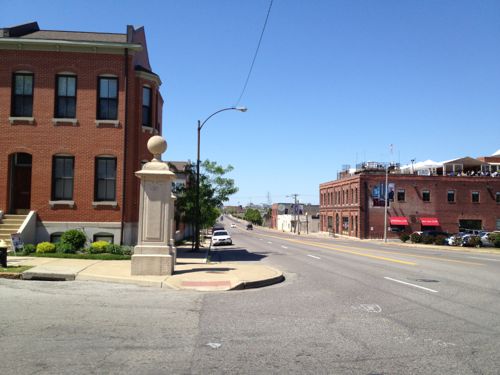
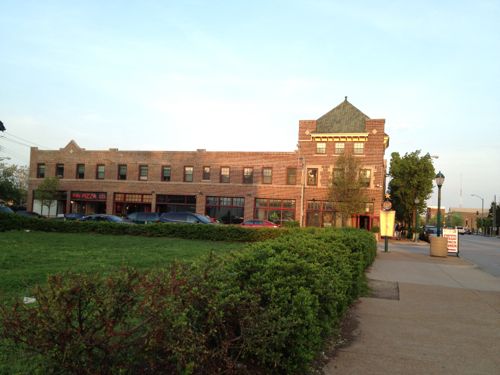
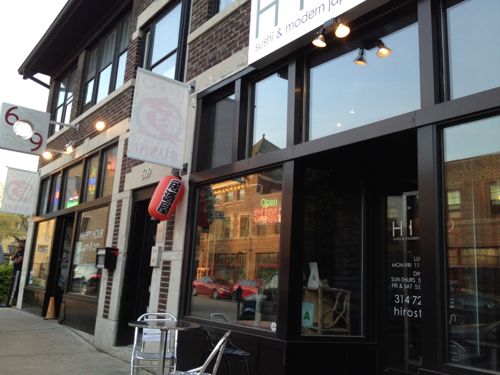
ABOVE: Vin de Set, PW Pizza, etc are popular destinations, causing people to cross Chouteau often

The bulb outs at Mississippi Ave have curb ramps to make it possible to continue parallel with Chouteau Ave. A corridor study of the 3 mile length of Chouteau Ave would identify key points where crosswalks are needed. Those not at intersections, like Mississippi Ave, would have a yellow caution light flashing overhead. In the 6/10th of mile between Truman Parkway and Jefferson Ave I’d suggest two pedestrian crossing points: Mississippi Ave and 22nd Street, this would equally space them 2/10th of a mile apart. Too far apart for a commercial district but adequate for this area.

This came to me recently when I attended an event at the new Sheet Metal Workers hall at Jefferson. Despite all the money spent the sidewalk wasn’t replaced.
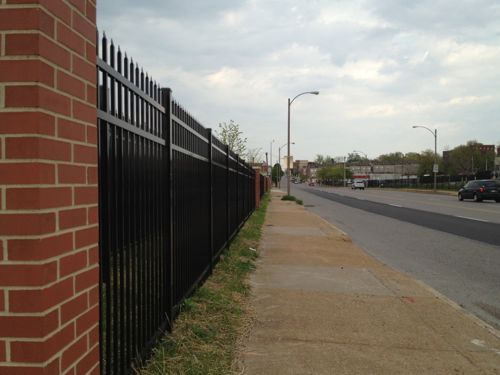
ABOVE: Old sidewalk in front of new union hall

I asked Ald Kacie Starr Triplet about this at the event and she said the city will replace the sidewalk when funds are available. The sidewalk does need replacing but we should do so much more. I wouldn’t eliminate the parking lane but use bulbs to create end caps for parking and bus stop areas.

– Steve Patterson


Washington University Replacing Occupied Buildings, Leaving Vacant Buildings/Land Vacant

ABOVE: Drawing from a February 2010 Student Life article, click image to view

In February Washington University made a big announcement regarding development in the Delmar Loop:

Washington University plans to remake a central part of the Delmar Loop with an $80 million project consisting of stores and apartments for about 550 students.

The project comprises a four- to six-story building of retail space and apartments on Delmar Boulevard at Eastgate Avenue and three new mid-rise apartment buildings on Enright Avenue nearby. Design work will begin soon, and construction could begin in January 2013 with occupancy in August 2014, university officials said. (STLtoday.com)

Numerous existing buildings will be razed to make room for the new buildings. My first reaction was disapproval, razing occupied structures when vacant land and buildings exist just a short distance to the east. But I wanted to wait to blog about the project until I had a chance to see all the buildings that would be razed and to get a feel for the area. First though I want to talk vacant land and buildings.

East of Skinker

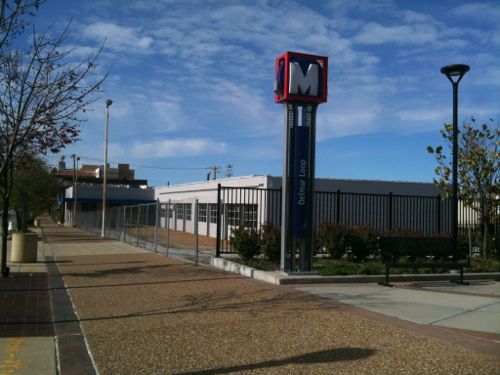
The long closed auto service place located at 6045 Delmar is owned by Quadrangle Management, part of Washington University. The building is the only structure on the block surrounded by Delmar Blvd, Des Peres Ave and Rosedale Ave. This MetroLink station has been open nearly 20 years, I’d hoped this site would be redeveloped years ago.

ABOVE: The closed auto service center was built in 1964. It's adjacent to MetroBus & MetroLink stops. Click image to view in Google Maps.

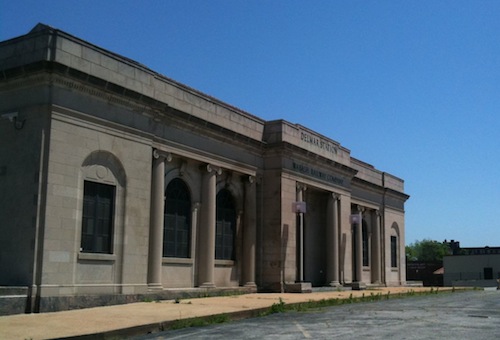
Redevelopment of this site right next to the light rail line and the meeting point for numerous bus lines would be great for the area. The vacant 1928 Wasbash Wabash Station across Des Peres Ave might be renovated and occupied.

ABOVE: Historic Wasbash Wabash Station is owned by Joe Edwards through an LLC. Click image for more information on this station.

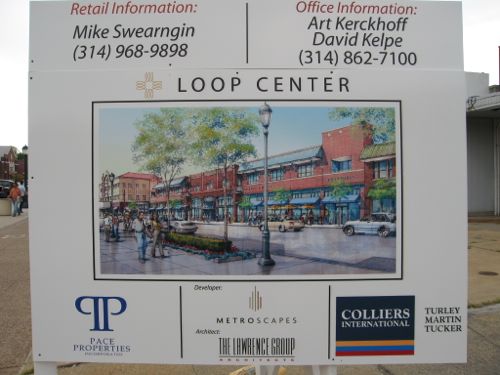
Just to the west of the vacant auto service building is a large parcel of land (6105-23 Delmar) that had been proposed for development in 2006.

ABOVE: Sign for unbuilt "Loop Center" project, April 2006.

The unremarkable structures that existed were razed in 2006 2007 — the land has been vacant since. Neither Washington University or Joe Edwards control this land. Still it just strokes me as wasteful for Washington University to razed occupied buildings when they own an vacant and out of character building right next to a major transit hub. But let’s cross over Skinker and check out what they do plan to replace.

West of Skinker

Let’s take a tour of the site starting with two structures facing Delmar that would be razed then working our way counter-clockwise.

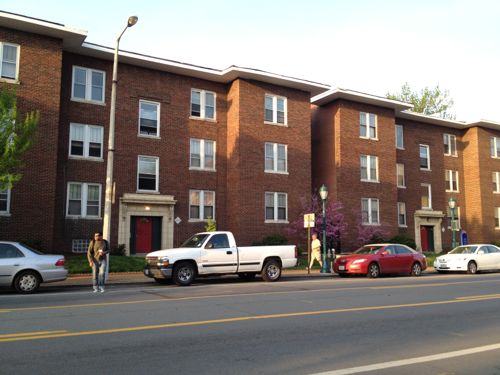
ABOVE: These two apartment buildings from 1928 would be replaced
ABOVE: The vacant lot at Delmar & Eastgate would be developed once again. The building across the street isn't part of the development site
ABOVE: This nice occupied building from 1923 would be razed, 609-611 Eastgate Ave
ABOVE: 6236 Enright Ave was built in 1923 and contains 6 apartments
ABOVE: The remainder of the south side Enright is occupied by University Terrace, apartment/townhouse buildings from 1970
ABOVE: University Terrace building at Enright & Westgate Ave

According to this video the University Terrace apartments on Enright were renovated in 2009. Look like nice housing to me.

Not Part of Project

Continuing our walk around the block we’re at Westgate and Delmar, these buildings are not part of the Washington University project.

ABOVE: The out of place building at Delmar & Westgate was built in 1969, the year before the University Terrace buildings behind it.
ABOVE: This building and parking garage across from the Tivoli will remain. The garage was built in 1998.
ABOVE: East of the garage is a 2-story building from 1920 and the first of a series of 3-story apartment buildings with retail on the first floor, also built in 1920.
ABOVE: More 3-story apartment buildings, with the first floor as storefronts. Built in 1920.
ABOVE: The last 1920 apartment building with retail, the Washington University project will raze the building barely visible on the right.

b

Disclosure: I have NO relationship with Washington University.


http://www.studlife.com/news/facilities-and-construction/2012/03/08/washington-university-investing-80-million-to-develop-apartment-complex-on-the-loop/

http://www.parkviewgardensvision.org/


Poll: Thoughts On The Loop Trolley Project

The project to build a short streetcar line on DeBalivere & Delmar is moving forward:

The Loop Trolley project, having amassed almost all the $43 million it needs, is ready to move into high gear.

Construction is expected to begin late this year, with the trolleys in operation about a year later. (STLtoday.com)

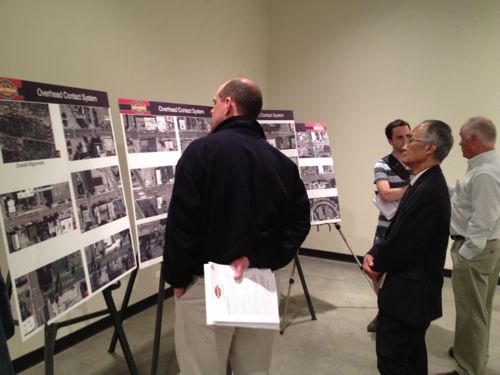
A couple of open houses were held evenly to review the project.

ABOVE: A recent Loop Trolley open house, click image for official website

Not everyone is impressed:

The proposed initial service plan is still less than stellar. It’s still proposed to run 11am to 6pm Sunday to Thursday and 11am to midnight Friday to Saturday. Trains will arrive only every 20 minutes and take 20 minutes to travel end to end. Its fares will not be integrated with Metro, separate tickets will be required. (Gateway Streets)

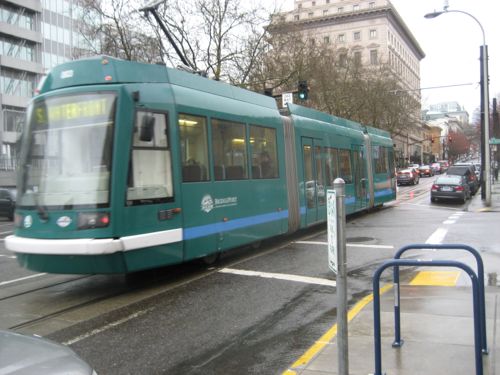
Initial vehicles will be restored “heritage” streetcars, at a cost of about $150,000 each, per the consultant I spoke with. The good news is now the line and maintenance facility are being designed to handle the modern Škoda streetcar in use in cities like Portland OR and Tacoma WA.  These new vehicles cost several million dollars each so the significantly cheaper old vehicles are the only in the initial budget.

ABOVE: Modern streetcar in Portland OR

Even though I love streetcars I haven’t been excited about the Loop Trolley, until now. I know the higher operating costs of the heritage cars will lead to them being replaced in time. Ideally modern cars will be part of an expansion of the line further east on Delmar. Wheelchair lifts on the heritage cars won’t be convenient but the low floor of the future modern streetcars will be great for quick entry/exit of passengers.

The poll this week seeks your thoughts on the project at this point, vote in the right sidebar. Results on Wednesday April 18th.

– Steve Patterson


913 Locust As Narrow As It Looks

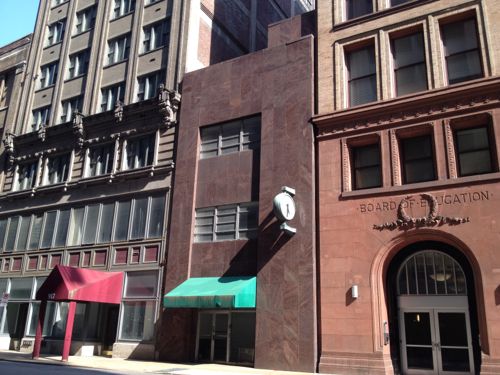
Squeezed in between two taller buildings is the structure at 913 Locust St. The building is only 23 feet 9 inches wide, the full width of the lot.

ABOVE: The little building at 913 Locust was built in 1900

According to city records (Geo St. Louis) it was built in 1900 — after the building on the right but 13 years before the building on the left. Like many buildings downtown it got a new appearance during the 20th century. Anyone out there know more about this building?

– Steve Patterson


Local Green Projects Received Awards

Green design is becoming more and more commonplace such that competition for awards among many green projects is now crowded. Last week I attended the Growing Green Awards hosted by the USGBC Gateway Chapter.

ABOVE: Cannon Design's St. Louis office

One award winner stood out to me because of the horrible condition the building was in prior to the renovation work. The 1928 building was a power house supplying heat to downtown buildings until 1980, when it was abandoned.

AWARDEE: Cannon Design

When Cannon Design chose to relocate their office – they were presented with an opportunity that allowed them not only to reuse and restore a unique and historic structure in the City of St. Louis but also redevelop a Brownfield site and develop an interior space that supports the most forward-thinking workplace while still maintaining the historic integrity of the architectural features. Almost 99% of the existing walls, floors and roof structure were reused while 92% of the construction waste was recycled. While many sustainability measures were taken during the restoration of the former steam generation plant, the one with arguably the biggest impact was Cannon’s commitment to reusing an existing building and identifying the reuse as an opportunity for creation rather than an hindrance of a vision.

Operational Excellence Nominees: Joe Abernathy – St. Louis Cardinals; Barnes-Jewish Hospital; Cannon Design; Graybar; Novus International; Tarlton

For more information on their office click here. Read about all those who received awards here. Congrats to all the nominees and winners.

– Steve Patterson


Advertisement


[custom-facebook-feed]

Archives

Categories

Advertisement


Subscribe