Scooter Sales Were Up In Big in 2011
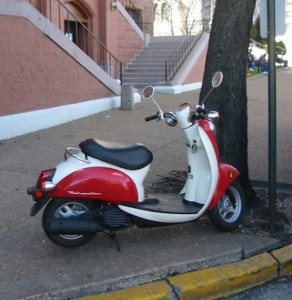
ABOVE: My former 2004 Honda Metropolitan scooter, March 2006

Last year motorcycle sales were basically flat but according to the Motorcycle Industry Council models that sipped gas saw big increases:

Collectively, the dozen leading brands included in the MIC’s Retail Sales Report were up 0.3 percent in 2011, compared to the year before. Fuel-efficient models did especially well. Among these brands, scooter sales rose 11.8 percent and dual-purpose bike sales were up 14.2 percent. The MIC will announce first-quarter 2012 sales for these particular brands, which represent most of the market, on April 20. (Source)

This means other models saw decreases for the total market to remain flat. The scooter I had for nearly three years was great transportation, the miles per gallon was around 80-90!  The last year I owned it I didn’t have a car — it was my only motorized vehicle.

I’ve not kept up on scooters since I had to stop riding in 2008 but there are many models available. Interestingly Honda lists the 2009 Metropolitan as the most recent version of that model.

Laws vary from state to state (list) but I liked that Missouri didn’t require registration of low speed 50cc models like my Metropolitan. Like using transit riding a scooter required you to adjust shopping trips, namely more frequent smaller purchases. The scooter did give me 24/7 mobility on my schedule.

The scooter I had couldn’t exceed 30mph or so. As a result I didn’t venture out of the city often. When I did it was on weekends or I took back routes to reach my destinations. Depending upon where you drive and your storage options a scooter might be a good choice for you.

– Steve Patterson
 

Readers Resist Transit As Gas Prices Rise

I’m not sure if its a love of cars/driving or a dislike of transit but readers in the poll last week indicated it will take a lot to get them to give up driving and use transit.

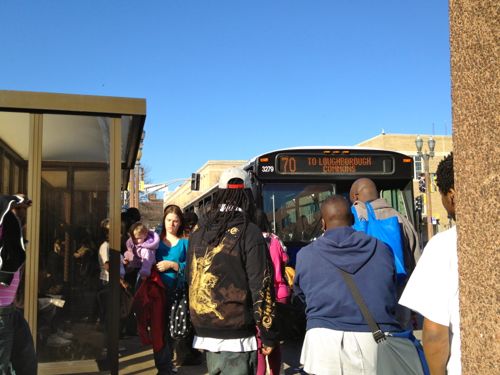
ABOVE: A large crowd waits to board the #70 Grand MetroBus at Union Station

Q: How Expensive Must Gas Get Before You Take Transit Instead of Drive?

  1. I already take transit and/or bike: 39 [33.05%]
  2. I’ll never take transit: 17 [14.41%]
  3. Other: 16 [13.56%]
  4. $10+ 14 [11.86%]
  5. $6 – $6.99: 13 [11.02%]
  6. $5 – $5.99: 10 [8.47%]
  7. $7 – $9.99: 6 [5.08%]
  8. $4 – $4.99: 3 [2.54%]

Wow, really? This tells me we can jack up taxes on gasoline to fund dramatically better transit and most of you will keep driving. Missouri should raise fuel taxes to be on par with neighboring states like Illinois (41.2¢/gallon). The average for the 50 states is 30.5¢/gallon but Missouri is at 17.3¢/gallon, slightly above Oklahoma (Source).

The high number of “other” answers were mostly those feeling guilty and/or defensive about driving:

  1. I can’t take transit to work, not a choice
  2. When I can get from St. Louis County to St. Charles County
  3. I will just work from home
  4. It rarely goes where I need it to – despite proximity to multiple bus routes!
  5. I take transit and walk. 🙂
  6. I’ll be riding my scooter
  7. When it doesnt take 2 hrs to travel, the same distance I can drive in 20 minutes
  8. When it’s cleaner and safer, maybe I’ll consider transit.
  9. i live 3 miles from work, it’s still not an issue for me.
  10. Tranist is not an option in my current job.
  11. I’d take transit now if there was better coverage near my home.
  12. I don’t have convenient transit access
  13. My job requires me to have a car.
  14. transit is not an option for my commute
  15. i’ll take it when it runs 24/7b

Do people only go from home to work and back? No, we don’t. We go to events, shopping, dinner, etc. I’d imagine many of you have made changes to your routines:

Nationally, 84% of those responding to an AAA survey released earlier this month say they’ve changed their routines as a result of soaring fuel prices. Better planning — combining errands into a single trip — was the most common way cited. (USA Today)

It will be interesting to watch as prices continue to rise.

– Steve Patterson


22nd Street Interchange Should Be Completely Eliminated

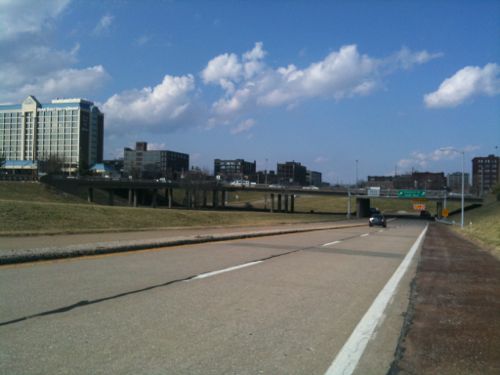
Over the last year or so the ramps on & off I-64 (Hwy 40) at 22nd have been closed as MoDOT makes repairs to infrastructure. Paul McKee’s plans for this area called for a nice boulevard and new on/off ramps at the highway. I don’t think the ramps are needed at all.  See aerial.

ABOVE: Ramp from westbound Pine St onto the 22nd Street interchange leading to I-64/Hwy 40

I use 22nd to get on and off the highway but taking Jefferson Ave is no big deal, I’ve had to do so often over the last 12-18 months when the ramps have been closed.

ABOVE: Only part of a planned highway loop around downtown was built, a huge waste of land to the west of Union Station.

The Jefferson Ave overpass and exits should be rebuilt. Right now on/off ramps only serve the interstate west of Jefferson. I’d add ramps to serve the interstate east of Jefferson and create a single point intersection.  Rather than maintaining this little used, little needed infrastructure the land could be developed.

Such a development could make Union Station part of a new neighborhood of offices and apartments.

– Steve Patterson


Inviting Storefront Design Critical to Revitalizing Old Commercial Districts

Storefront design has a big impact on how we perceive an area. So often formerly inviting storefronts became closed over time as commercial districts went downhill. Lately, in many of these commercial districts, we’ve seen a welcomed return to inviting glass storefronts as the areas become filled with new establishments.

img_0417
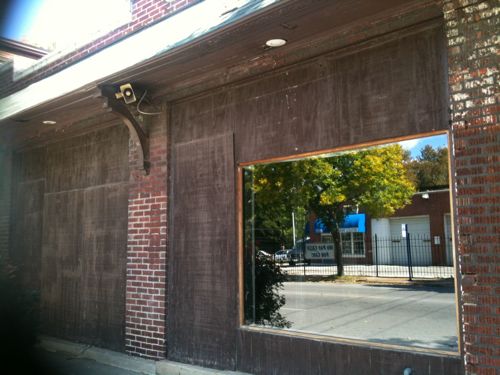
ABOVE: 3108 Morgan Ford Rd in Oct 2010

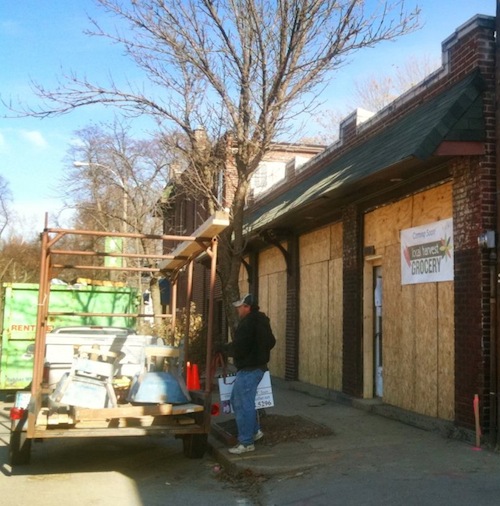
For many years the space behind my favorite bike shop, A&M Bicycles, was used for storage. Down the street Local Harvest Grocery needed to expand beyond their original space, a perfect match. Except for that awful storefront! No business was going to use the space with that front.

img_2415
ABOVE: Work underway in January 2011
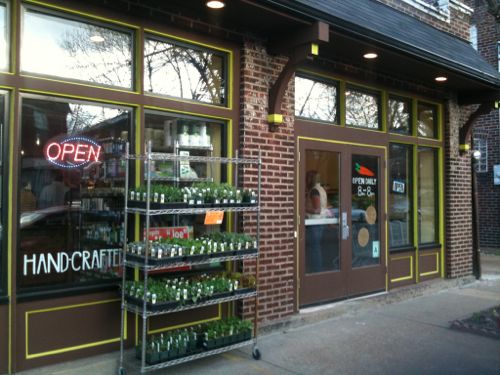
ABOVE: New storefront is inviting, improves district, April 2011

All up and down Morgan Ford Rd old closed storefronts like this one have been replaced by mostly glass storefronts. The visual impact on the commercial district is amazing, no longer does the street feel rundown.

  – Steve Patterson
 

Poll: Are Posted Handbills Urban Art Or Another Form of Graffiti?

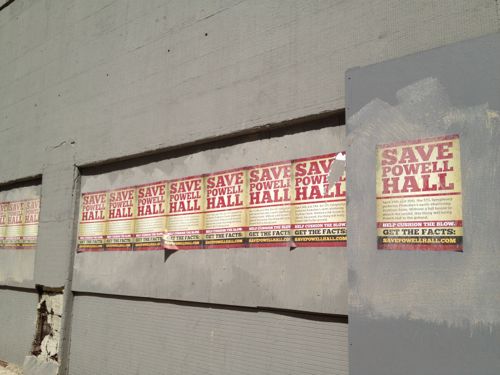
Posted handbills, those posters often tacked up in urban cores, were the subject of a debate on a friend’s picture on Facebook. The photo was of handbills for the St. Louis Symphony’s new campaign called Save Powell Hall.

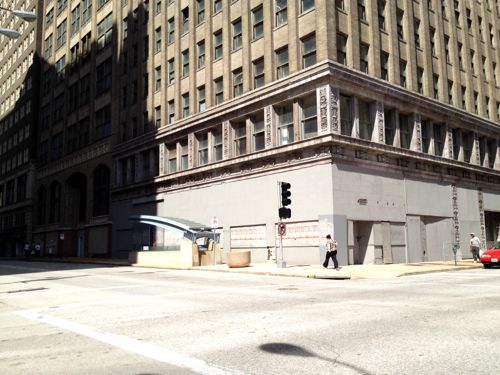
ABOVE: Handbills posted on the Pine side of the Arcade-Wright building

The debate went something like this:

  • Friend A: Destruction of property, resulting in blight.
  • Friend B: Not destructive but more colorful.
  • Friend A: It’s illegal and will cost money to remove.
  • Friend B: I like it, makes it look like something is happening
  • Friend A: It’s ok to deface someone else’s property for your own interests?
  • Friend C: Handbills are different than graffiti, removed by weather
  • Friend B: Better than blank plywood
  • Friend A: Project a negative image
  • Friend D: Plywood isn’t a positive image

The debate continued but you get the point.

ABOVE: Handbills were posted on the Pine St side only (left), the 10th St side wasn't touched

Gangs did “tag” numerous buildings downtown recently with graffiti.

ABOVE: One example of graffiti from late last February

Are handbills and spray paint equal? The poll is in the upper right sidebar, mobile  users need to switch to the desktop layout to vote.

– Steve Patterson


Advertisement


[custom-facebook-feed]

Archives

Categories

Advertisement


Subscribe