St. Louis’ Latest Folly: New NFL Stadium

The Rams Task Force unveiled its proposal for a new open-air stadium in downtown St. Louis last Friday:

The proposed location of the new stadium is on the North Riverfront, adjacent to Laclede’s Landing, sitting on over 90 acres of privately and publicly owned property. The completion date would be set no later than 2020. (KSDK)

The reactions to Friday’s announcement of a proposal for a new stadium were swift and varied; some liked it, others habte it. It was suggested it’ll never happen, it’s just a way for politicians to say they tried their best to keep the Rams from leaving or Kroenke is set on LA, he’ll never go for it. Unlike when we failed to get an NFL expansion team and we had to attract an existing team, now all we need to do make the proposal attractive enough so the NFL owners don’t vote to allow the Rams to leave — except that Kroenke seems willing to build a new LA stadium, move the team, and fight his fellow NFL owners in court. The truth is likely a combination of all these.

Rather than rush out a post, I wanted to visit the area again in person before putting my thoughts down. My previous visit was in May 2012, passing through on Amtrak.
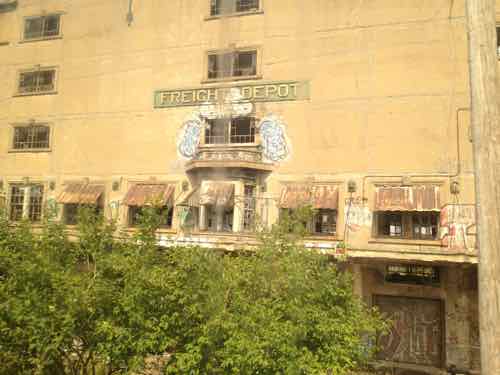
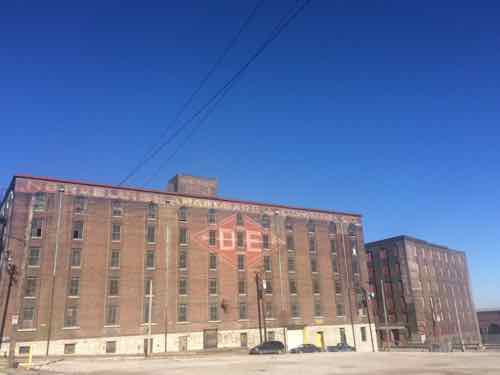
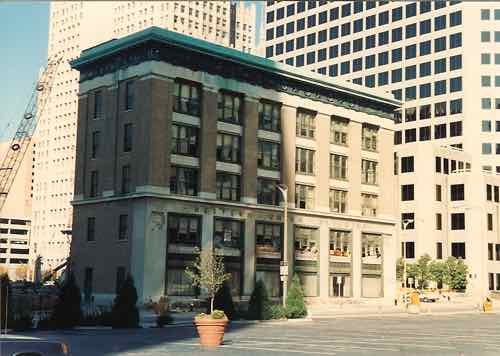
The Cotton Belt is listed on the National Register of Historic Places, click image to see nomination.

Hopefully this won’t go forward, but we must act as if it will to help block it.

The good:

  • Proposed stadium not within the CBD (Central Business District): I’ve been posting for years that NFL has no place in a CBD, they play too few games and the tailgate tradition means surface parking — both bad if you desire a 24/7 downtown.  For these reasons, other cities have placed their stadiums just outside their CBD
  • Recognition of need to connect two areas long separated by highway: Two long-neglected areas on each side of I-44, previously I-70, each need investment and access to each other.
  • Open-air, dual use for soccer: Open air is much nicer than dark and closed (EJD), weather permitting. Major League Soccer (MLS) is expanding, we could get an expansion team if we build a stadium. This sounds vaguely familiar…
  • Would retain the Ashley Street Power House, a city landmark.

And the bad:

  • Bad use of public resources, see Nicklaus: Stadium may sparkle, but it’s not an investment“St. Louis is being asked to pay dearly for the prestige of remaining an NFL city, so I think Peacock described his stadium plan accurately when he called it a “crown jewel.” A jewel can sparkle and make its owner feel good, but it’s hardly a productive use of half a billion dollars.”
  • Would destroy recently completed (April 2013) $10 million+ transitional housing project called Stamping Lofts, halt plans for future phase to create urban farming jobs know as FarmWorks.
  • Would destroy the unique Cotton Belt building (shown above), individually listed on the National Register of Historic Places for over a decade.
  • Would destroy the William Kerr Foundation building, a state of the art green building.
  • Would destroy the Laclede Power building.
  • Would wipe out most of the North Riverfront Industrial Historic District & the North Broadway Wholesale and Warehouse District, both listed on the National Register of Historic Places,in 2003 & 2010, respectively.
  • Would  destroy numerous vacant warehouses that could be used for offices and/or residential.
  • Would force numerous businesses to close or relocate.
  • The railroad isn’t likely to agree to routing their track to the West of this new stadium, in a ditch.  Leaders must’ve forgotten about the legal battles won by the railroad when designers want the track moved for the Arch, see tunnel.
  • Although MetroBus service exists, light rail isn’t close.

Let’s take a look:
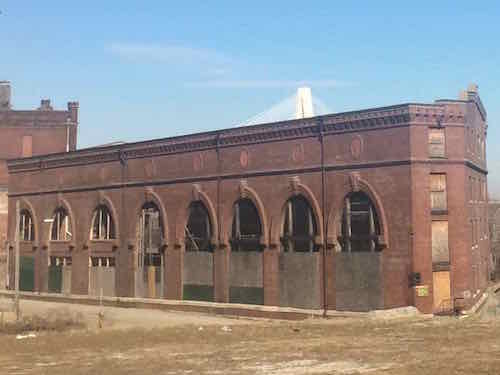
The Laclede Power building, just North of the Ashley Street Power House, a contributing building in the , would be razed
The Laclede Power building, just North of the Ashley Street Power House, a contributing building in the North Riverfront Industrial Historic District, would be razed. Considerable money has been spent over the years to stabilize the building so it might be rehabbed in the future.
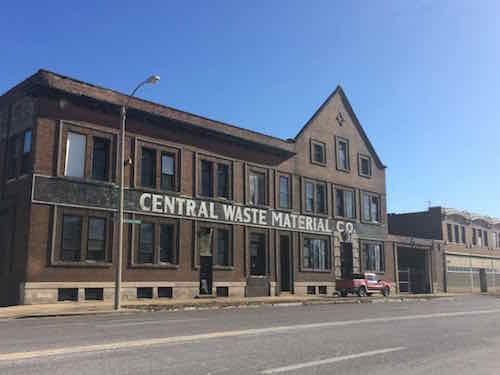
Warehouses in the along Ashley between 2nd and Lewis.
Warehouses, contributing buildings in the North Riverfront Industrial Historic District along Ashley St between 2nd and Lewis.
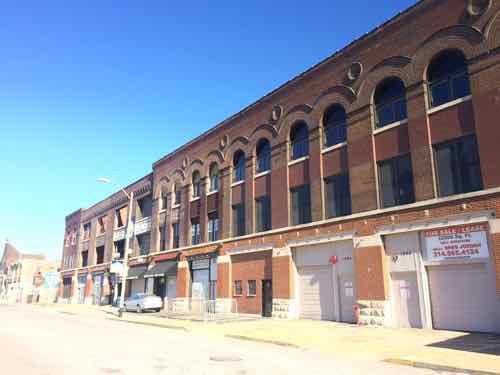
These buildings along North Broadway are the main part of the Wholesale & Warehouse Historic District, the Shady Jacks  Saloon is located in part
These buildings along North Broadway are the main part of the Wholesale & Warehouse Historic District, the Shady Jacks Saloon is located in part
These buildings are part of the same district on the National Register.
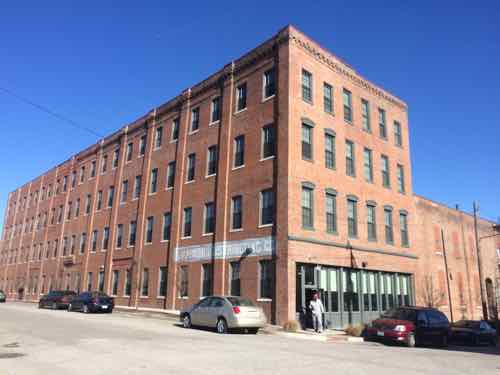
After a $10 million dollar investment, the Stamping Lofts opened in April 2013. Also part of the same historic district.

For years now this area has been coming together, with two National Register historic districts and one individually-listed building, substantial investments have been made to numerous buildings as a result. Don’t our leadership care about the investments, businesses, and year-round jobs? Sadly, as I pointed out yesterday, St. Louis began planning to raze a hotel less than a decade after it opened.

It also seems like every decade our leadership wants to raze a historic building — this would let them take away two entire districts and an individually-listed building. It’s been just over a decade since the wrecking ball began taking down the Century Building, so they’re on schedule I suppose.  This area is also likely targeted because the owners of Lumière Place Casino and Hotels and Bissinger’s don’t like the rest of the area between them.

I’ll end with an open note to Rams owner Stan Kroenke:

Mr. Kroenke:

There are lots of large vacant sites in the St. Louis region where you could build a stadium. I say you build it because you’re a real estate developer, you know the value of owning the real estate. More importantly, I want you to own any new stadium so you’ll reinvest your profits in it as you see fit, also making it harder to walk away in 10-20 years.

You can do something else with your property in Inglewood, CA, but I think you already know prime property like that has many potential projects. Hell, build a stadium on it for another NFL team. But please, don’t accept the task force proposal — we’d lose too much and gain…more public debt.

So build elsewhere in the region or move the team back to LA!

 — Steve Patterson
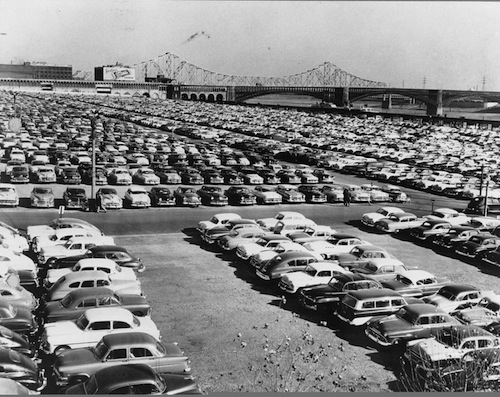
 

State & Local Leadership Have Failed To Learn From Mistakes Of The Last 75+ Years

I’d like to think that after decades of leadership pushing projects that clear many acres of buildings, streets, sidewalks, utilities, etc., that someone in city hall or Jefferson City would realize that such projects are costly follies that never live up to the promises. Some examples:

mage from Jefferson National Expansion Memorial archives.
Forty city blocks sat vacant for over 3 decades, helping to drag down downtown. In the late 60s the Arch opened and in the 70s the site was landscaped. Currently we’re spending hundreds of millions more to correct design flaws that separated the Arch grounds from downtown.   Image from Jefferson National Expansion Memorial archives.
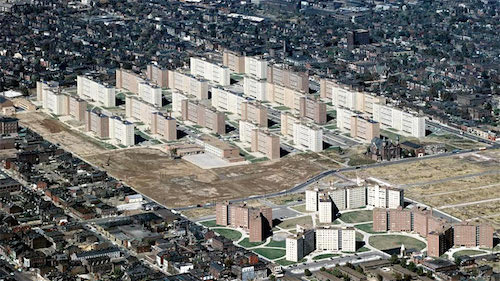
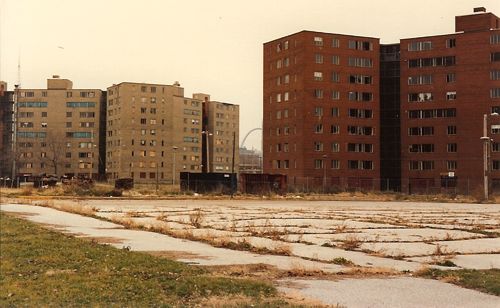
The failed Pruitt-Igoe project is still studied all over the world, the site has been vacant now twice as long as the 33 buildings stood.
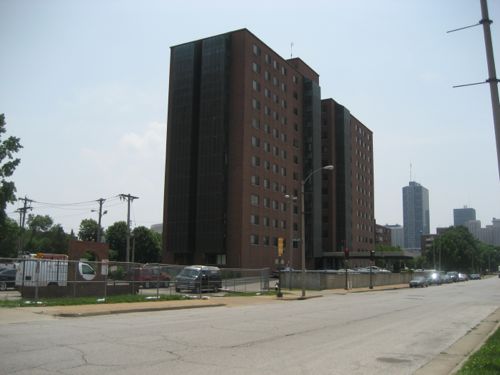
The Darst-Webbe towers on the near south side circa 1990-91, razed
The last high-rise tower from the Cochran Gardens project was razed in 2011
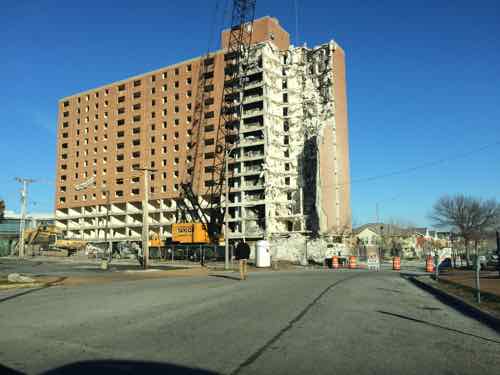
The last Blumeyer tower starting to be razed,, November 2014
Aloe Plaza across from Union Station cleared away "undesirable"  buildings, followed by decades more demolition creating the largely failed Gateway Mall
Aloe Plaza across from Union Station cleared away “undesirable” buildings, followed by decades more demolition creating the largely failed Gateway Mall
The historic Western Union building at 9th % Chestnut was razed in 1993 for a 2-block passive green space as part pf the Gateway Mall.
The historic Western Union building at 9th % Chestnut was razed in 1993 for a 2-block passive green space as part of the Gateway Mall.  Just 15 years later we realized more passive space was a huge mistake, so we got the active 2-block Citygarden.
Looking east along Washington Ave from 7th, February 2006
St. Louis Centre was a huge internally focused indoor mall downtown between two department stores, the mall is now a parking garage
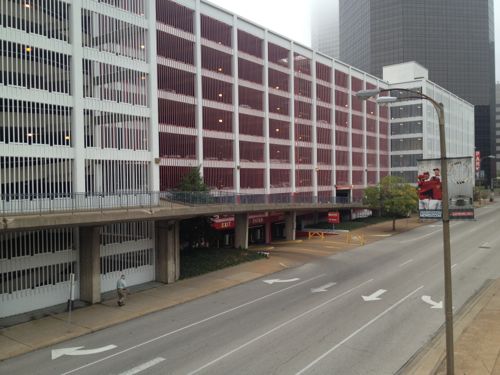
ABOVE: The 8th Street face of the Stadium West garage. The pedestrian ramp to the street crossing isn't ADA-compliant, Stadium East doesn't have a similar ramp.
In 1966 Busch Stadium II project wiped out our Chinatown district, 4 decades later we started over again
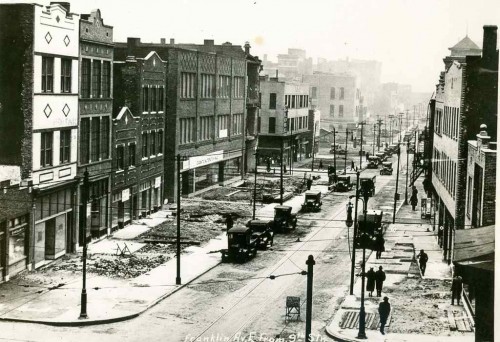
Franklin Ave looking East from 9th, 1928. Collection of the Landmarks Association of St Louis
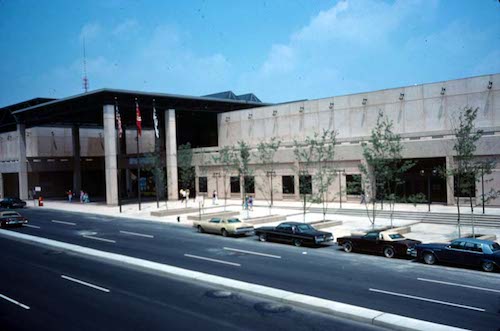
All over the city we tore off the fronts of buildings to widen streets, 4 decades later everything you see was razed for the Cervantes Convention Center. Franklin Ave looking East from 9th, 1928. Collection of the Landmarks Association of St Louis
Cervantes Convention Center. 801 Convention Center Plaza. St. Louis Mo. August, 1977. Photograph (35mm Kodachrome) by Ralph D'Oench, 1977. Missouri Historical Society Photographs and Prints Collections. NS 30747. Scan © 2006, Missouri Historical Society.
Cervantes Convention Center. 801 Convention Center Plaza. St. Louis Mo. August, 1977. Photograph (35mm Kodachrome) by Ralph D’Oench, 1977. Missouri Historical Society Photographs and Prints Collections. NS 30747. Scan © 2006, Missouri Historical Society.

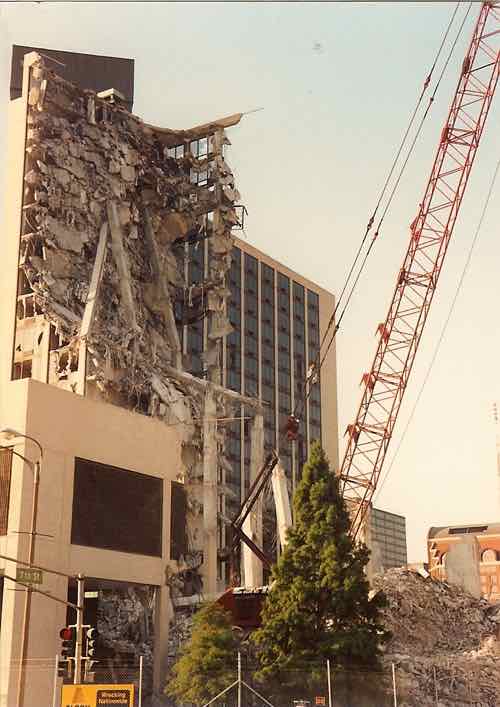
There have been countless other projects; including highways that separated neighborhoods, warehouses that destroyed the street grid, etc. In 1988 the city began discussing buying the Sheraton Hotel, located immediately east of the Cervantes Convention Center to expand and build a football stadium, the 600+ room hotel wasn’t even a decade old when talk began of razing it to expand the convention center and build a domed stadium.

As politicians smiled and sweated in Monday morning’s 89-degree heat, ground was broken for the $260 million stadium expansion of Cervantes Convention Center.  The building, scheduled for completion by October 1995, will seat 70,000 for professional football. With 177,000  square feet of exhibit space on one level, it will accommodate events as large as national political conventions.  During the hour-long ceremonial groundbreaking at Seventh Street and Convention Plaza, demolition crews began swinging a giant ”headache ball” at the old Sheraton Hotel, one block north. Each swipe at the 13-year-old hotel, which sits near the 50-yard-line of the stadium expansion, brought cheers.  But the sturdily built hotel was slow to succumb to the headache ball. (Post-Dispatch Tuesday, July 14, 1992)

I was just 25 when demolition began on a tall hotel that wasn’t even 15 years old, but it was worth a couple of shots on my roll of film.

The Sheraton Hotel being razed in July 1992
The 13 year old Sheraton Hotel being razed in July 1992

Razing the hotel built to serve conventions meant we had to build another convention hotel, the Renaissance Grand has lost money since opening.

“Insanity: doing the same thing over and over again and expecting different results”

— Albert Einstein

Tomorrow I’ll post about the particulars of the latest St. Louis folly: last friday’s proposal for a new NFL/MLS stadium to convince billionaire Stan Kroenke from moving the Rams back to Los Angeles.

— Steve Patterson


Sunday Poll: Reaction to the following: The public should build & own a new stadium to keep the Rams in St. Louis

Please vote in the poll, located in the right sidebar

Friday the two men appointed by Gov. Nixon presented a bid to keep the St. Louis Rams in St. Louis, the new stadium would be publicly owned:

The financing, they acknowledged, is now just a pitch: $200 million from the National Football League. As much as $250 million more from Rams owner Stan Kroenke. Perhaps $130 million from the sale of personal seat licenses to fans. Some tax credits. Plus as much as $350 million from an extension of the $24 million a year in tax dollars that still pay down debt on the Edward Jones Dome, where the Rams now play. (Nixon team proposes open-air stadium, and no new taxes)

Opinions on their proposal are varied, from support to opposition.  Perfect for the Sunday Poll. There are many issues within this, I’ve picked one for the poll: Reaction to the following: The public should build & own a new stadium to keep the Rams in St. Louis.

The poll is in the right sidebar, it’ll remain open until 8pm.

— Steve Patterson


Tree Recycling at Three City Parks

January 9, 2015 Environment, Featured Comments Off on Tree Recycling at Three City Parks

With the cold weather I haven’t gotten out much so I was struggling to think of something positive to post about today, Good News Friday (#GNF). Looking through my pics there it was: recycling of old Xmas trees into mulch continues!

Still have an xmas tree you need to get rid of? If so, take it to one of three city parks: O’Fallon, Carondelet, or Forest Park.

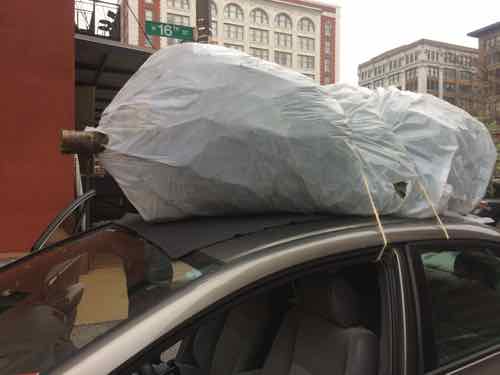
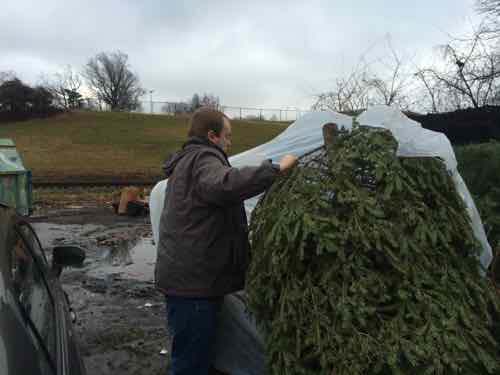
Our neighbor helped my husband get our tree on the roof of our car last Saturday,
At Carondelet Park's recycling area my husband David removes the plastic bag
At Carondelet Park’s recycling area my husband David removes the plastic bag
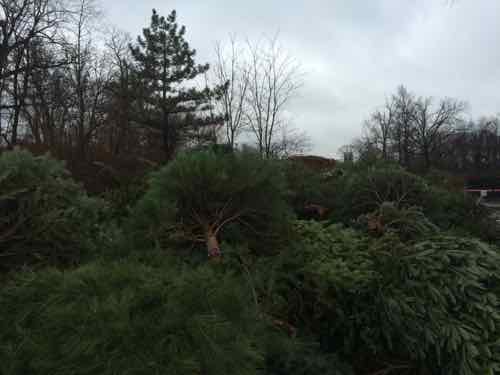
A large stack of trees awaiting the shredder to become mulch

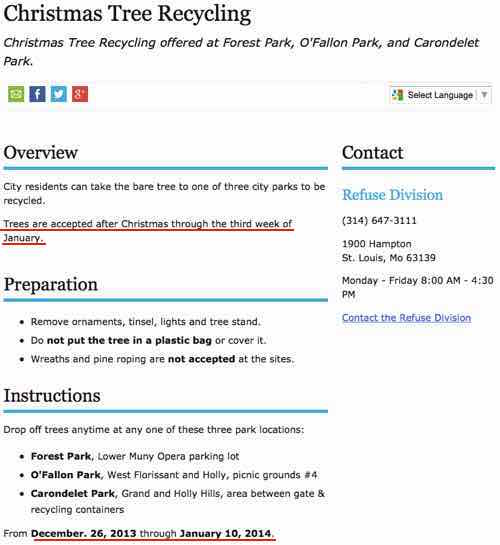
If you have a tree to drop off for recycling you might be wondering how much longer you can procrastinate. Well, I’m not sure. The website, retrieved yesterday, says through the 3rd week of January but it also says through January 10, 2014.

Not sure when this ends, the 3rd week ends on the 17th.
Not sure when this ends, the 3rd week ends on the 17th. Hurry!

In the Spring there’s nothing like the smell of a hot pile of clean xmas tree mulch! Have a great weekend, see you Sunday with a new poll question.

— Steve Patterson


March 2015 Municipal Primary

St. Louis City Hall
St. Louis City Hall

The March primary is when each party — Green, Republican, Democrat — selects their nominee to face each other, and any Independents, in the April general election. Filling to appear on a primary ballot closed last Friday, those seeking to run as an Independent in the April general have until February 16th to submit signatures.

President of the Board of Aldermen

Incumbent Lewis Reed’s only opposition in the Democratic primary is Jimmie Matthews, a regular candidate for city-wide offices. Republican Eric Shelquist will win his primary because he’s the only GOP candidate, he’ll face Green Jeffrey Schaffer — also assured a primary victory —  and the winner of the Democratic primary (cough *Reed* cough) in April.

Alderman Ward 2

Incumbent Democrat Dionne Flowers faces three challengers in the primary: Joyce M. Hall, Jasmine Turnage, & Winfield Scott. Green Elston K. McCowan will win his primary in March due to no other Green being in the race.

Alderman Ward 4

Sam Moore (the incumbent, not the famous Soul/R&B singer) faces Arneatrice Meyers in the Democratic primary.

Alderman Ward 6

Incumbent Democratic Christine Ingrassia, Republican Dan Elder, and Green Jonathan McFarland will each win by default in their respective primaries.

Alderman Ward 7

With the resignation of Phyllis Young last month, this seat is open for the first time since my senior year of high school — 1985. The Democratic primary has three candidates: John (Jack) Coatar, Chelsea Merta, and Samuel J. Cummings III

Alderman Ward 8

Incumbent Stephen Conway faces Kevin B. McKinney in the Democratic Primary.  Republican Robert J. Shelli will win his primary.

Alderman Ward 10

Joseph Vollmer, the incumbent, will win his Democratic primary as the sole candidate, same for Republican Daniel P. Kalaf.

Alderman Ward 12

Incumbent Larry Arnowitz is challenged by Rafael Hernandez in the Democratic primary.

Alderman Ward 14

Incumbent Carol Howard will win the Democratic nomination in the March primary.

Alderman Ward 15

Megan Ellyia Green, just recently elected in a special election, will face Beth Braznell in the Democratic primary. Joshua D. Simpson will win the GOP nomination by default. I wouldn’t be surprised to see former 15th Ward Ald Jennifer Florida, who lost her bid for a full term as Recorder of Deeds in November, run as an Independent in the April general election.

Alderman Ward 16

Donna M. C. Baringer, the incumbent, will win the Democratic primary by default.

Alderman Ward 18

Terry Kennedy, the incumbent, will face Charles Grumbach in the Democratic primary.

Alderman Ward 20

A 3-way race for the Democratic nomination between incumbent Craig Schmid, Cara Spencer, and David A. Gaither. Green Vickie A. Ingram will win her party’s nomination by default.

Alderman Ward 22

Incumbent Jeffrey L. Boyd faces two challengers in the Democratic primary: Deceal Burgess & Angela D. Newson. Renee Keeble will be the Green nominee in the April general.

Alderman Ward 24

I anticipate the 24th Ward being the most interesting race in this primary season with the current one-term alderman being challenged by the previous one-term alderman and a former alderman that was recalled by the voters. Scott Ogilvie was elected as an Independent 4 years ago, defeating Tom Bauer in the general. Bauer had defeated William Waterhouse in the Democratic primary. Waterhouse was elected after voters recalled Bauer. After being in office as an Independent Ogilvie is running in the Democratic primary this year, who’ll win the primary is anyone’s guess.  Republican Peter Schumaker will be the GOP nominee in the general. Hopefully a 24th Ward resident will collect signatures to run in the general as an Independent — they might just get elected!

Alderman Ward 26

The Democratic primary includes incumbent Frank Williamson & challenger Rodney V. Norman. Fred Baines is the only Green candidate so he’ll win the nomination.

Alderman Ward 28

Lyda Krewson, the incumbent, will face William C. (Bill) Haas in the Democratic primary, Green Jerome H. Bauer will represent his party in the general.

Closing Thoughts

The trick to winning a local primary is to run as a Republican or Green. As I’ve said before, having partisan municipal elections increases voter apathy & costs us more money. St. Louis needs to switch to non-partisam elections!

— Steve Patterson


Advertisement


[custom-facebook-feed]

Archives

Categories

Advertisement


Subscribe