Why I’ll Be Voting Against the Sales Tax Increase in November
In November Missouri voters will be asked to raised the state sales tax by three-fouths of a cent, earmarked for transportation projects:
The tax increase would generate an estimated $534 million a year, with 90 percent of the money going to state projects and 10 percent to local projects. It would run for 10 years.
Critics say sales taxes are hardest on low-income people because a higher percentage of their income goes toward buying essential items. However, the 3 percent general fund portion of the current state sales tax of 4.225 percent is not applied to groceries or prescription drugs, and the increase would not be, either. (stltoday: Voters will decide whether to boost Missouri sales tax for highways, transportation)
Missouri’s current fuel taxes are below the national average, and the legislature squashed Gov Nixon’s veto of a state income tax cut measure.
In five annual steps beginning in 2017, the bill will cut the state’s top personal income tax rate to 5.5 percent from 6 percent and provide a new 25 percent deduction for business income reported on individual returns.
The cuts will be implemented only if state general revenue grows by at least $150 million a year compared with the high-water mark of the previous three years. (stltoday – Missouri Legislature overrides Nixon’s tax cut veto)
Back to our low fuel taxes:
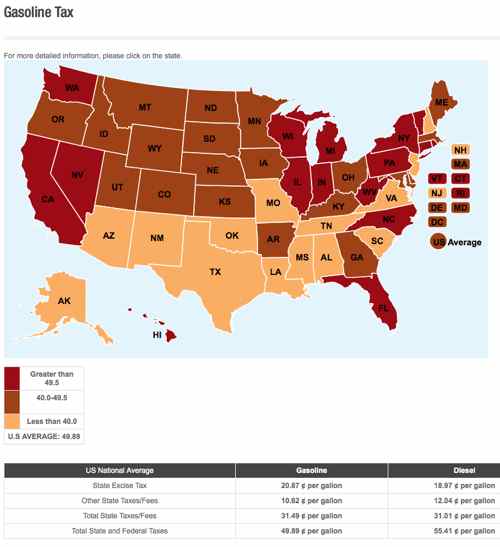
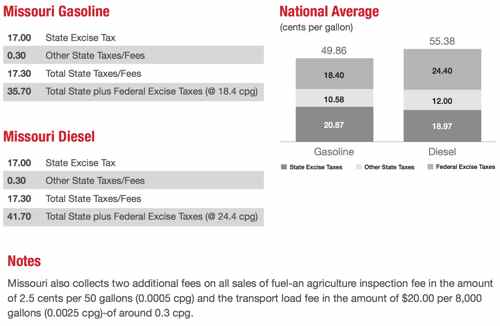
All over the state roads & bridges are crumbling, and I’m a huge fan of investing in infrastructure. So why am I voting no? Simple, the money has to come from somewhere, but sales taxes on necessities (groceries, clothing) is the worst way to fund transportation. The better option is to start by increasing our very low gas & diesel tax:
The gasoline tax has a lot of virtues from an economic point of view. It matches costs and benefits, because drivers who buy the most fuel are also causing the most wear on our roads. It’s easy to collect and hard to evade.
The fuel tax tends to be unpopular with the trucking industry, which would rather have the rest of us pay for the infrastructure that it uses most intensively. And trucking lobbyists tend to have a lot of clout in state capitols, which may be why the Legislature is talking about raising the sales tax instead of the gasoline tax. (stltoday: Sales tax is wrong way to pay for Missouri roads)
What about Oklahoma, why is their gas tax is 3 cents less per gallon? We should do what they do to keep from raising our fuel taxes, you might say. Fine by me!
Oklahoma has 10 turnpikes, more than 600 miles of pavement, making the state second in the nation for miles of toll roads. (Oklahoma Doesn’t Make Profit On Turnpikes; Who Does?)
Tolls, like fuel taxes, makes those who use the infrastructure pay for the infrastructure. I’ve paid more to Oklahoma in tolls than in fuel taxes the last 23+ years of driving back to visit family.
A common misconception is more fuel efficient cars, hybrids, & electric vehicles have significantly reduced revenues collected from fuel taxes. It’s true, cars are more efficient:
Cars and light trucks sold in the United States hit a new record for fuel efficiency last year — 23.6 miles per gallon, on average — in response to still-high oil prices and strict new fuel-economy standards.
That’s a big step up from the 22.4 miles per gallon average for new vehicles in 2011. And overall fuel economy is expected to increase to 24 miles per gallon in 2013, another record. (Washington Post: Cars in the U.S. are more fuel-efficient than ever. Here’s how it happened.)
But that’s not why fuel taxes don’t cover needed work, just look at the federal highway trust fund:
The Fund is paid for by the federal gas tax. The gas tax has not been raised in over twenty years. Many items have doubled or tripled their cost since 1993. For example, a new car cost $12,750 in 1993, yet in 2013 a new car cost $31,252. The easiest explanation is that we are trying to build a 2014 infrastructure system with 1993 dollars. This is obviously an untenable formula. (Highway Trust Fund 101: What You Need to Know)
Yes, the cost to build & maintain our infrastructure have been increasing while the Missouri & federal rate has remained flat. For years inflation was masked because gasoline sales and total vehicle miles driven increased year over year, the funds grew too.
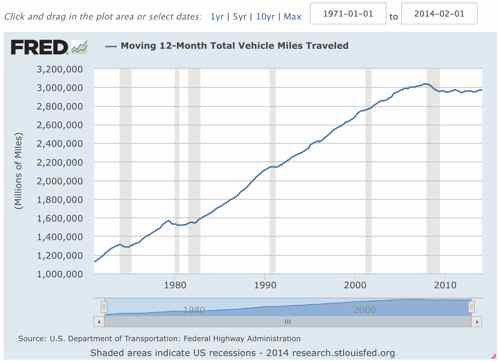
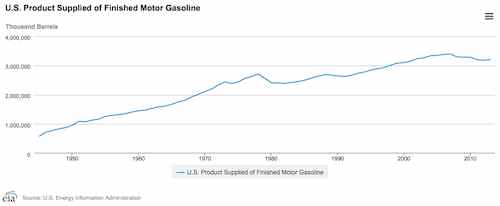
Rising costs and a slight drop in gallons of fuel purchased doesn’t mean we should now start taxing every purchase to maintain roads & bridges. But yes, the number of hybrids and others has increased, but the percentage is small relative to the big picture:
The number of alternative-energy vehicles on the road grew to almost 3.1 million in 2013, compared with 2.5 million in 2012, according to the study. In 2013, nearly 72,000 vehicles were pure electrics and three million were hybrids, compared with 21,000 pure electrics and 2.5 million hybrids in 2012.
Data for the analysis comes from Experian Automotive’s database, which includes information on nearly 700 million vehicles in operation. (New York Times – Experian Study Highlights Differences Between Hybrid and E.V. Owners). I encourage you to contact your elected officials in Jefferson City and Washington D.C to tell them to increase the fuel taxes, not the sales taxes on goods. In November, please vote no on this sales take hike.
— Steve Patterson