ADA Access Into Historic Buildings Is Often Relatively Easy
The Americans with Disabilities Act (ADA) was signed into law just over 22 years ago by President George H. W. Bush. Retrofitting older building for accessibility isn’t always easy but surprisingly some of the monumental buildings from late 19th and early 20th centuries aren’t bad.
So many of these buildings have very grand entrances with multiple series of steps, but the main floor is often enough above grade the basement isn’t excavated at all or very little. Here are some examples.
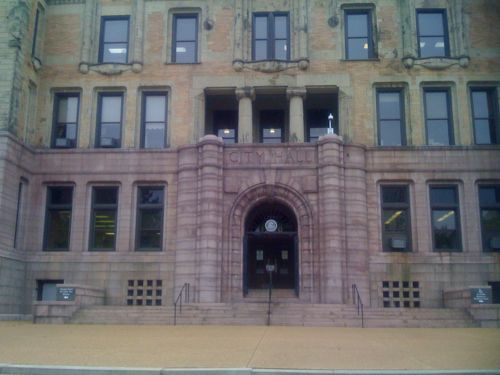
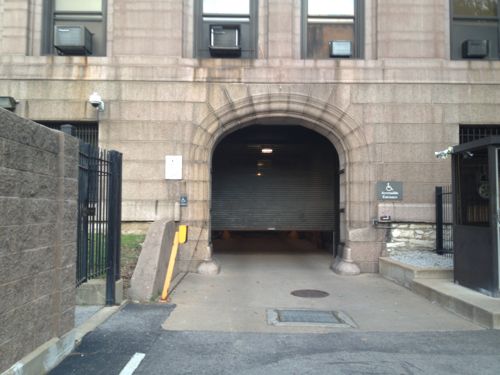
Going in the back way isn’t glamorous but neither would ramps out front. We wouldn’t build this today but it works. But not all basement entrances are around back.
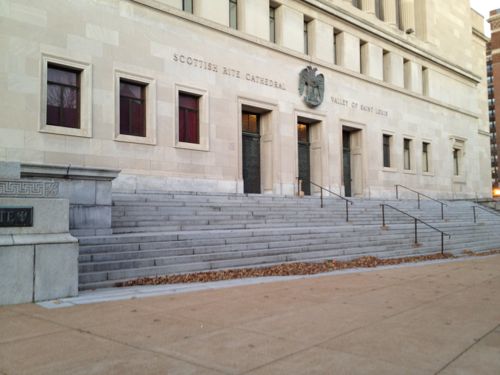
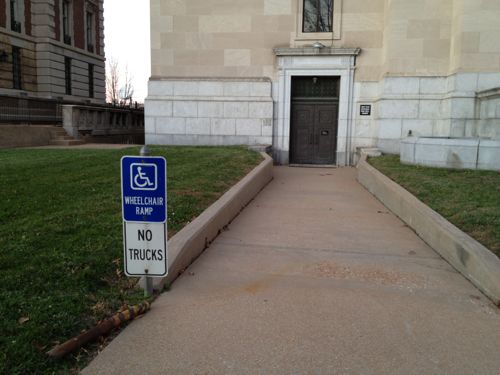
Another example is the building I posted about yesterday — the vacant German House on Lafayette Ave:
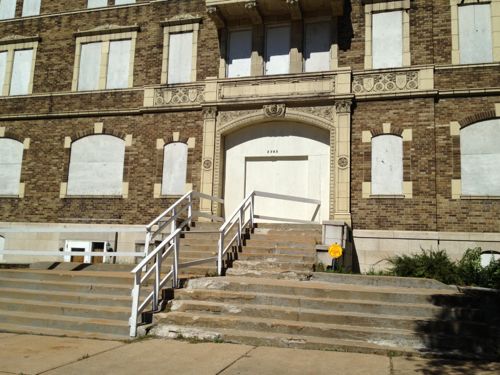
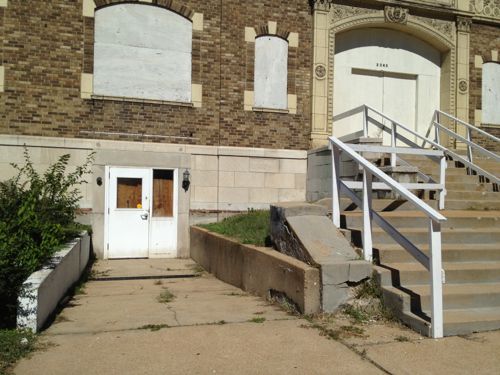
These buildings were built with elevators so going from level to level is also easy, the elevators are generally replaced or modernized during renovation. At times I get to ride in an old elevator though, such as at Scottish Rite, which is fun.
— Steve Patterson
It’s always easy when your making someone else spend their money.
http://www.stltoday.com/business/year-old-german-house-is-under-reconstruction/article_e84b9493-67ac-51f0-9982-dda9439d4347.html
steve
The church of scientology bought the german house and have renovated the interior at a substantial cost.
Thanks for the link – the interior photos (link within the link) are intriguing . . . .