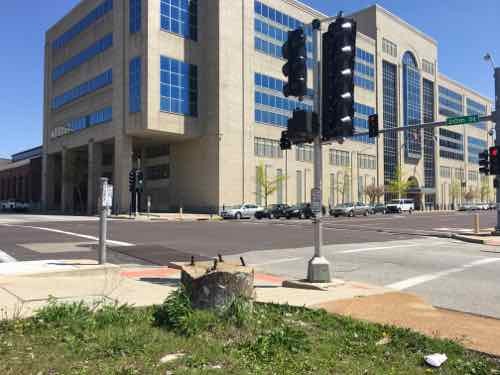
At state & federal levels, money for transportation infrastructure is running out; fuel taxes haven’t been raised in years, vehicles are more fuel efficient, electrics are set to go mainstream, etc. States, like Illinois are looking at other ways to fund construction & maintenance:
There is a proposal in Illinois for the state to put a device on cars to see how many miles citizens are driving.
The state would take that data to use in order to charge a tax on drivers depending on miles driven. It’s all in an effort to make money because the state is losing out on gas tax revenue thanks to more fuel efficient cars on the road. (KMOV)
Other states are testing the same idea, driving more miles costs you more. Which brings us to today’s poll — using alternatives listed in the WSJ:
The poll answers are in random order, open until 8pm.
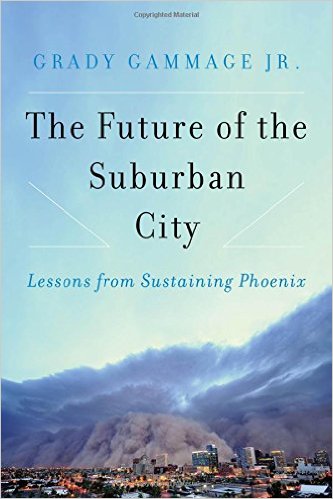
April 22, 2016Books, Featured, Suburban SprawlComments Off on Reading: The Future of the Suburban City: Lessons from Sustaining Phoenix by Grady Gammage Jr.
Click cover image to view publisher’s page — which Reincludes a preview
Many Western cities aren’t as dense as Eastern & rust-belt cities, but residents still desire to live sustainably. Though St. Louis was a dense rust-belt city, bad decisions have turned it into an unsustainable mess largely suburban mess. But, we can learn from others on how to dig ourselves out.
There exists a category of American cities in which the line between suburban and urban is almost impossible to locate. These suburban cities arose in the last half of twentieth-century America, based largely on the success of the single-family home, shopping centers, and the automobile. The low-density, auto-centric development of suburban cities, which are largely in the arid West, presents challenges for urban sustainability as it is traditionally measured. Yet, some of these cities—Los Angeles, Las Vegas, Phoenix, Salt Lake, Dallas, Tucson, San Bernardino, and San Diego—continue to be among the fastest growing places in the United States.
In The Future of the Suburban City, Phoenix native Grady Gammage, Jr. looks at the promise of the suburban city as well as the challenges. He argues that places that grew up based on the automobile and the single-family home need to dramatically change and evolve. But suburban cities have some advantages in an era of climate change, and many suburban cities are already making strides in increasing their resilience. Gammage focuses on the story of Phoenix, which shows the power of collective action — government action — to confront the challenges of geography and respond through public policy. He takes a fresh look at what it means to be sustainable and examines issues facing most suburban cities around water supply, heat, transportation, housing, density, urban form, jobs, economics, and politics.
The Future of the Suburban City is a realistic yet hopeful story of what is possible for any suburban city. (Island Press)
The table of contents:
Prologue. Getting Through the Haboob
Chapter 1. Suburbs, Sprawl, and Sustainability Chapter 2. Just Add Water Chapter 3. Coping with Heat Chapter 4. Transportation and the Suburban City Chapter 5. Houses, Shopping Centers, and the Fabric of Suburbia Chapter 6. Jobs and the Economy of Cities in the Sand Chapter 7. Politics, Resilience, and Survival
Afterword. Planning to Stay
Our regions can’t just keep expanding outward the way they did the last 50-60 years. We must improve existing suburbia.
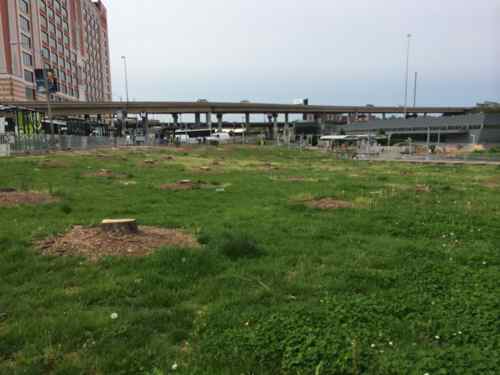
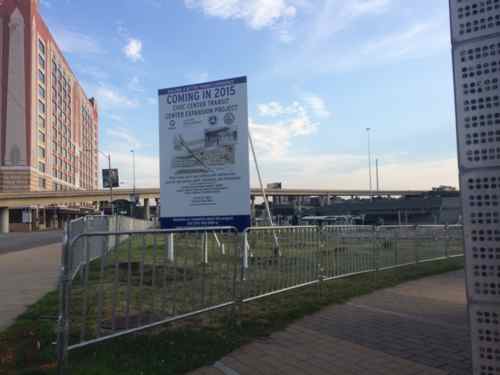
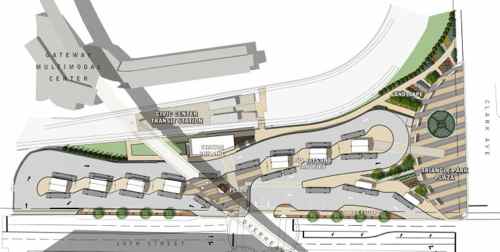
The Civic Center MetroBus Transit Center, at 14th & Clark, is now closed for the next 18 months. It will be redone to handle more buses — and longer buses.
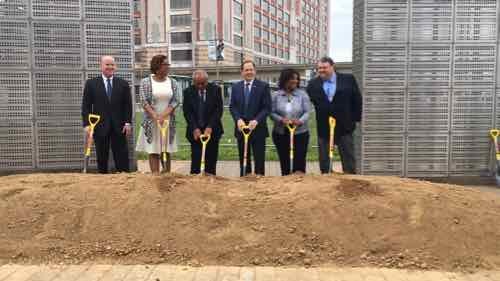
Tuesday 4/19 dignitaries each tossed a shovel of dirt to kick off the new project.
Construction will expand the Civic Center Transit Center and triple the current number of bus bays, which will allow MetroBus passengers to connect with all of their bus routes inside the transit center and out of vehicular traffic on 14th Street. A new building will also be constructed on the site that will feature new passenger amenities, including public restrooms, an indoor waiting area, digital boards with MetroBus arrival times, a concession area and a Metro Public Safety substation.
“It is our duty to ensure that residents, workers, tourists and visitors can travel safely and efficiently throughout the bi-state region,” said Ray Friem, Executive Director of Metro Transit, “and that they enjoy the best possible transit system and experience we can provide.”
Metro successfully secured federal funding to rebuild the Civic Center Transit Center, and those funds will support 80 percent of the total project cost of $10.5 million. “The competition for federal transit dollars is intense,” said Mokhtee Ahmad, Regional Administrator for the Federal Transit Administration, Region VII. “Bi-State Development and Metro are to be commended for being so diligent and fiscally conscientious in maximizing federal transit funds to get taxpayers the highest return on their investment.”
b
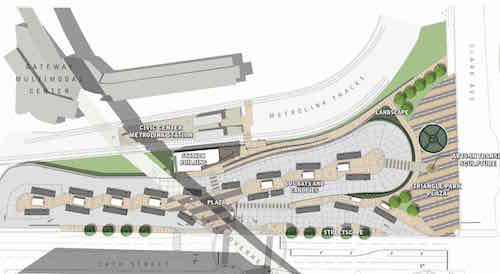
The design has changed.
Latest plan, click image to view larger PDF on Scribd
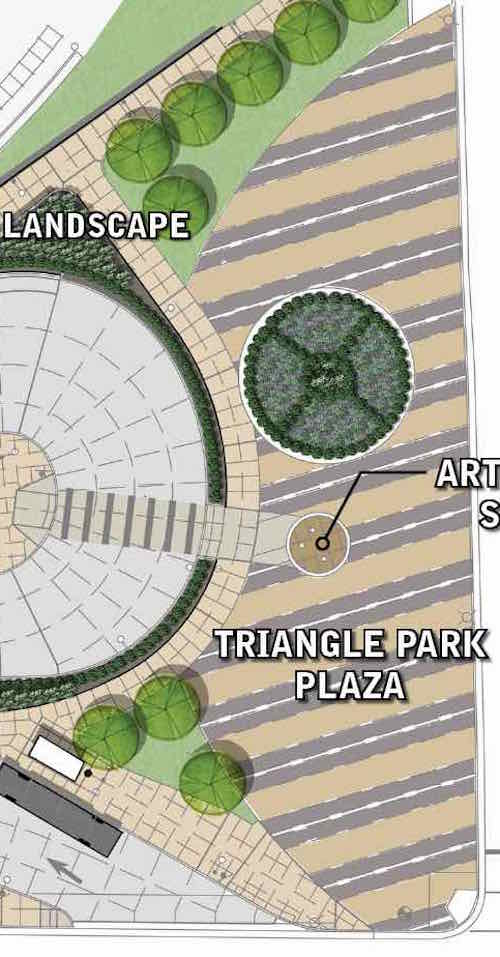
The ramp down to the MetroLink platforms is much more direct — but steeper than previously drawn. The other changes are at the North end. There’s now an accessible route from the center bays/canopies to Triangle Park. The “park” is also different — the metal panels (shown in first photo, above) will go away. A 2nd sculpture is shown right in front of the accessible route — a potential problem.
Close-up of Triangle Park
I also don’t get having a new sculpture next to the existing one.We’ll see how it turns out in 18 months.
The Sunday Poll on medical marijuana got lots of responses — but the results stayed consistent throughout the 12 hours the poll was open.
Q: Medical cannabis/marijuana may be on Missouri’s ballot in August or November, support or oppose such a proposition?
Strongly support 115 [76.67%]
Support 17 [11.33%]
Somewhat support 7 [4.67%]
Neither support or oppose 0 [0%]
Somewhat oppose 0 [0%]
Oppose 2 [1.33%]
Strongly oppose 9 [6%]
Unsure/No Answer 0 [0%]
Less than 10% oppose, but this non-scientific poll isn’t representative of Missouri voters. Still, supporters gathering signatures for a ballot measure believe there is sufficient statewide support for passage in 2016.
Pro-patient: Instead of creating a short and restrictive list of qualifying conditions, this initiative puts power in the hands of a state-licensed physicians, not politicians or bureaucrats, to determine who will benefit from medical cannabis.
Robust System for Access: The initiative creates a statewide system for production and sale of medical cannabis and medical cannabis products. It also provides for limited and regulated patient cultivation.
Small Tax to Benefit Missouri Veterans: The initiative levies a four percent retail tax, and all revenue in excess of the cost of regulating the medical cannabis program will go to help Missouri’s veterans.
Public Safety: The initiative maintains the current prohibition on public use and driving under the influence. It also allows the Department of Health and Senior Services to institute a seed-to-sale tracking system to ensure that the product and money do not reach the illicit market.
Regulatory Framework: Puts Missouri Department of Health and Senior Services in charge of licensing and implementation, but also allows the department to contract with other state agencies when necessary for effective and efficient regulation.
Quick Implementation: The amendment creates deadlines to make the department move quickly to promulgate rules, issue applications, and swiftly implement and award patient cards and industry licenses.
If passed, it could be far more effective than Illinois’ current effort.
Are you one of the few who oppose this? If so, you’re like CNN’s Dr. Sanjay Gupta — before he researched the facts. After looking into the issue, he did a 180.
Below is a short segment from his CNN special called Weed.
The fact is cannabis/marijuana has real medical benefits. Decades of a racist ban has stifled research, but that’s slowly changing. Below is the full Weed documentary.
When the 1937 law prohibiting cannabis was ruled unconstitutional, the Nixon administration included it as a Schedule 1 drug — again, for racist reasons.
We’ve been sold lie for decades — I fell for it too for a long time. It’s time to wake up to the medical benefits of this plant!
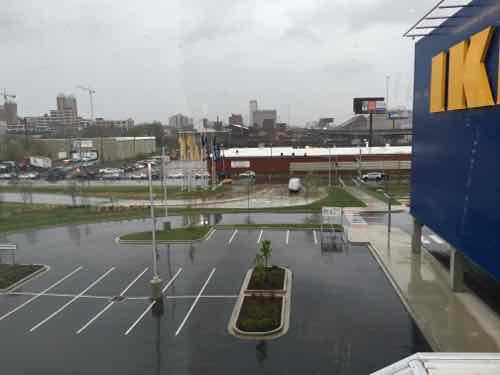
Yesterday, in Part 1, I talked about the two different transit I’d taken (MetroLink, #90 & #32 MetroBus) and issues faced as a pedestrian trying to navigate in between. I’d made it to IKEA for shopping, followed by lunch.
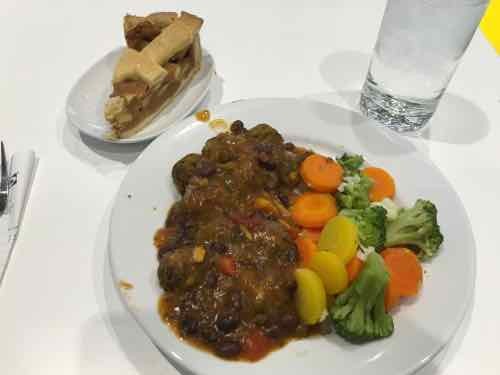
I’m obsessed with food so naturally I took a pic of my plate: Veggies balls with vegetarian black bean sauce,, steamed veggies, Swedish apple cake, and tap water.When I was done with lunch the rain had resumed.
I checked the transit options, it would be a while before a MetroBus stopped out front. Plus, that would only get me to Lindell where I’d have to wait in the rain for the #10. The Grand MetroLink is closer than the CWE MetroLink, but Forest Park is the most direct route and I recall some access issues the last time. Plus, my transfer from earlier was now long expired.
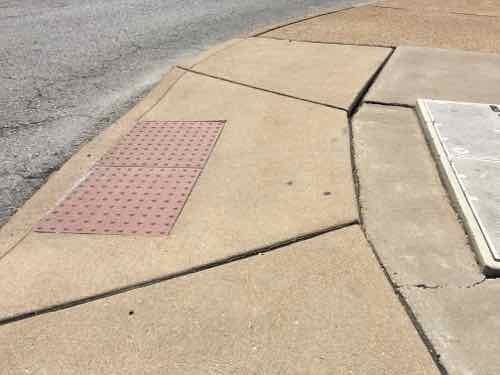
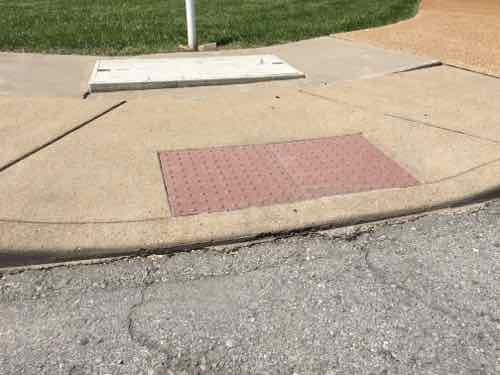
No matter what I’d be in the rain, so I decided to just roll home — 2.9 miles. I’ve done it a few times before, though not in the rain. I’m still wearing a poncho to keep me and the controller on my chair dry. My shoes, however, get soaked. North on Vandeventer to Lindell. I stayed on the West side of Vandeventer because I’m bot sure if the city ever got around to the huge gaps in front of the curb ramps on the NE corner of Vandeventer & Forest Park. At Lindell, I checked the schedule again — I can get home before the next bus would arrive.
Because of the rain I only took a few pictures. The following week I took the bus to Lindell & Spring to backtrack and take pictures of things I saw in the rain.
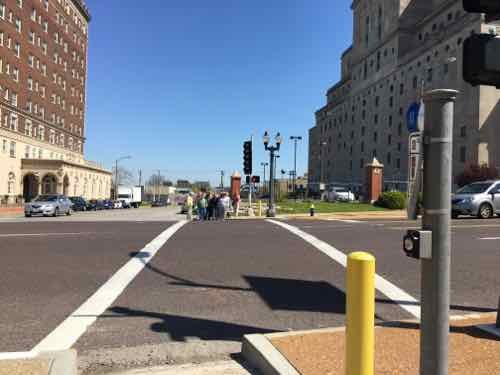
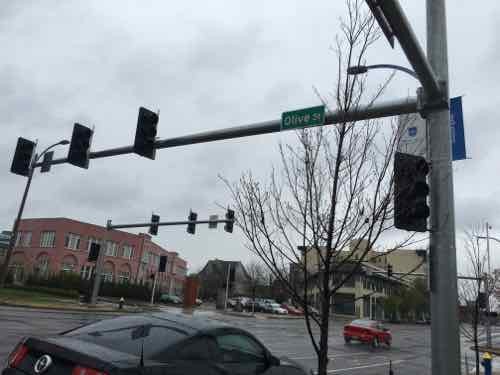
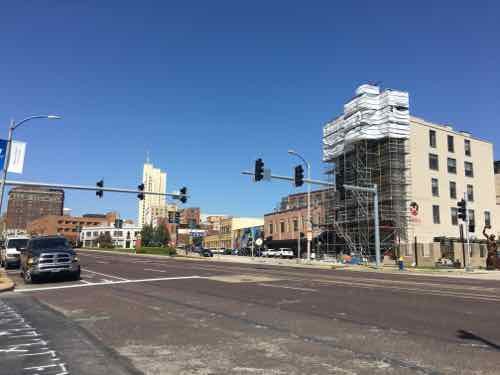
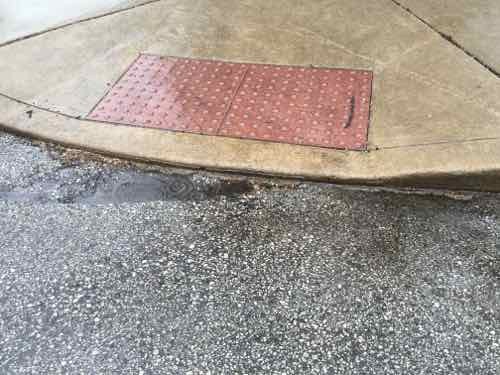
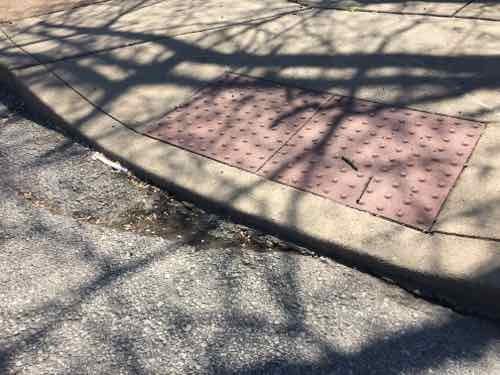
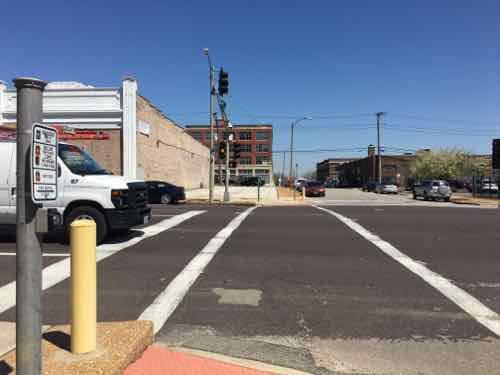
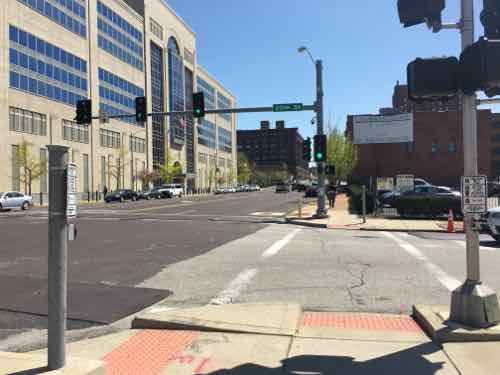
Lindell & Spring, the crowd passed the walk button. Not sure if required.New traffic signals being installed at the Lindell/Olive intersection. April 6thThis signal is long overdue! In the background the Hotel Ignacio is getting its EFIS facade repairedHow many years ago did I post about the need for painted crosswalk lines here? August 2011 — click image for post.Olive & Compton, no need to push the button tho cross Compton. If you want to cross Olive you must press the button.At Ewing is a ramp my powerful chair cannot get up — the vertical height is too much. April 6thThe same ramp again. Like hundreds/thousands of curb ramps it was built too high relative to the paving. Plus, like so many, the paving right in from is partially missing. I have to role in Ewing a little bit to get to a driveway to get onto the sidewalk.The West side at Ewing & Olive is another issue. The concrete at the top has caved in between the top of the ramp and the access panel.I’ve not tried to go up this ramp. it might also be impossibleAt Leffingwell you must press the button to get a walk signal to cross Olive — even when traffic has a green lightAt Olive & 20th I saw the buttons in the rain, they were far away. To cross 20th you needed to be over by Olive and vice versa.When I went back I confirmed no button is needed to cross 20th but you do need to press a button top cross Olive. The signs are wrong, the button next to each crosswalk is what is wired.
Used to be — but no curb ramp is missing for the nearly 3 mile trip. If I tried to use Locust there are many missing curb ramps.
I still fail to understand why all the cost of the buttons when they don’t need to be pushed in the East-West direction. And why have to press a button to get a walk signal when vehicles from side streets get a green light? This is how we’ve spent money — building infrastructure that frustrates this pedestrian!
AARP Livibility Index
The Livability Index scores neighborhoods and communities across the U.S. for the services and amenities that impact your life the most
Built St. Louis
historic architecture of St. Louis, Missouri – mourning the losses, celebrating the survivors.
Geo St. Louis
a guide to geospatial data about the City of St. Louis